
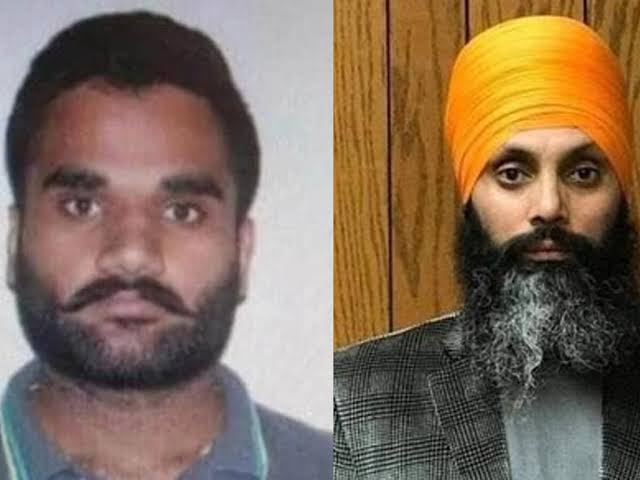
A purported leaked audio recording has brought fresh attention to the 2023 killing of Hardeep Singh Nijjar in Canada, with gangster Goldy Brar allegedly claiming that he and members of his team were responsible for the assassination.
The recording, whose authenticity has not been independently verified, is reportedly from a conversation between Brar and Paramjit Singh Pamma, another figure associated with the Khalistani separatist movement. In the alleged conversation, Brar is heard discussing the reasons behind Nijjar’s killing and claiming that the attack was carried out by his associates.
The development has the potential to add another dimension to a case that became the centre of a major diplomatic dispute between India and Canada. Nijjar was shot dead outside a Sikh religious centre in Surrey, British Columbia, on June 18, 2023. His killing subsequently became the subject of competing allegations and investigations, while relations between New Delhi and Ottawa deteriorated sharply.
According to reports about the purported recording, Brar attributed the alleged attack to a dispute involving drug-related activities and accused Nijjar of supporting individuals who allegedly exploited young people in criminal activities. Brar reportedly claimed that some teenagers were being encouraged or pressured to become involved in drug trafficking and related operations.
He allegedly said that Nijjar had supported people involved in such activities and that this was among the reasons his group decided to target him. The comments, however, remain allegations contained in an unverified recording and cannot independently establish responsibility for the murder.
What the alleged audio says
The purported conversation reportedly contains Brar discussing individuals who allegedly recruited teenagers into drug-related activities. He is said to have accused some people of influencing 16- and 17-year-olds to sell drugs and of pressuring young people to act as informants.
Brar allegedly claimed that Nijjar had supported or strengthened such individuals for his own purposes. He then reportedly linked those allegations to the decision by his group to kill Nijjar.
The alleged remarks are significant because they appear to amount to a direct claim of responsibility. However, the recording’s authenticity, the identity of the speakers and the circumstances in which the conversation was recorded have not been independently established.
Consequently, the claims should be treated as allegations rather than as a verified confession.
The emergence of the audio nevertheless provides renewed focus on the competing theories surrounding Nijjar’s death, particularly the question of whether the murder was connected to criminal and gang rivalries or involved a broader political or state-sponsored conspiracy.
Hardeep Singh Nijjar was killed in Surrey in 2023
Nijjar was shot dead outside a Sikh cultural and religious facility in Surrey, British Columbia, in June 2023. The killing immediately attracted international attention because of Nijjar’s activities and his association with the Khalistan separatist movement.
He had been associated with the Khalistan Tiger Force, which India had designated as a terrorist organisation. Indian authorities had also identified Nijjar as a wanted individual in connection with terrorism-related cases.
His death initially remained an unresolved murder in Canada, but it soon became an issue of international diplomacy.
The case took a dramatic turn in September 2023 when then-Canadian Prime Minister Justin Trudeau publicly alleged that Canadian intelligence had identified a possible link between agents connected to the Indian government and Nijjar’s killing.
India rejected the allegation and repeatedly denied any involvement in the murder. New Delhi described the accusations as baseless and politically motivated.
The dispute resulted in a significant deterioration in India-Canada relations, including diplomatic expulsions, strained political communication and wider disagreements over the activities of Khalistani separatist groups operating in Canada.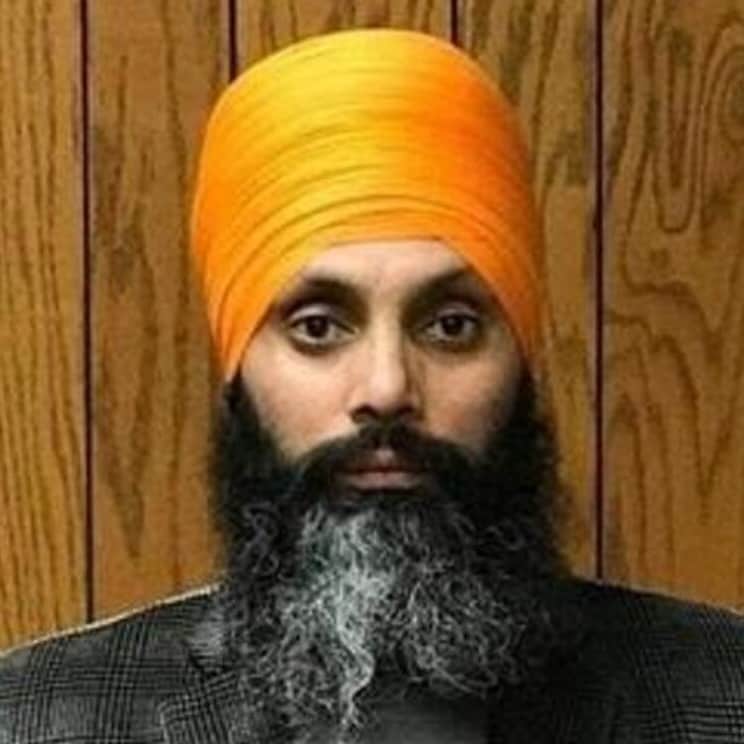
Alleged Brar claim could affect the narrative surrounding the case
The alleged admission is particularly notable because Brar has long been associated with organised crime and has been wanted by Indian authorities in connection with several serious criminal cases, including the killing of Punjabi singer Sidhu Moosewala.
Indian authorities designated Brar as a terrorist under the Unlawful Activities (Prevention) Act in January 2024. His alleged association with organised criminal networks has made him one of the prominent figures in India’s investigation into transnational gangster networks.
If the leaked recording is eventually authenticated and independently corroborated, Brar’s alleged account could become relevant to investigations into Nijjar’s killing. However, an audio recording alone would not necessarily establish the complete circumstances of the murder or rule out the involvement of other individuals.
Investigators would typically need to establish the provenance of the recording, verify the voices, determine when and where the conversation occurred and compare the claims with forensic, telecommunications, financial and other evidence.
Nijjar murder triggered major India-Canada diplomatic crisis
The killing became one of the most contentious issues in India-Canada relations after Trudeau’s allegations in Parliament.
India strongly rejected the suggestion that its government was involved. The dispute escalated as both countries took diplomatic measures against each other’s representatives.
For New Delhi, the broader issue also involved concerns over the activities of Khalistani separatist groups in Canada. Indian officials have repeatedly accused Canada of providing space to individuals and organisations involved in extremist or separatist activities targeting India.
Ottawa, meanwhile, maintained that its agencies were investigating Nijjar’s killing independently and that the allegations against India were based on intelligence available to Canadian authorities.
The competing positions created a prolonged diplomatic standoff that affected trade discussions, consular relations and political engagement between the two countries.
Canadian position has evolved
The controversy surrounding Nijjar’s killing has also developed as Canada’s investigation progressed.
More recent Canadian investigative findings have reportedly failed to establish evidence connecting Indian government officials to the murder. Canadian authorities said earlier this year that they had not found evidence linking Indian government officials to the killing, marking an important development in a case that had previously dominated bilateral relations. That development has added further significance to the emergence of the purported Brar audio. If authenticated, the alleged claim would offer an alternative account of the circumstances surrounding Nijjar’s death.
At the same time, the recording does not by itself constitute conclusive evidence. Its contents would have to be independently verified and tested against evidence gathered by Canadian and other investigating agencies.
Questions that remain unanswered
Several important questions remain unresolved following the emergence of the alleged recording.
The first is whether the voice in the audio is genuinely that of Goldy Brar. The second concerns when and where the conversation took place and whether the recording has been edited or altered.
Another major question is whether the claims made in the conversation correspond with independently established evidence from the murder investigation.
The identity of the alleged attackers, the precise planning of the shooting, the logistical arrangements surrounding the attack and the possible involvement of other criminal or extremist networks remain matters requiring evidence-based investigation.
The alleged recording also raises questions about the extent to which organised crime and extremist networks may overlap in transnational criminal operations.
A case still under intense scrutiny
Nijjar’s killing remains one of the most politically sensitive murder cases involving India and Canada in recent years. The case sits at the intersection of organised crime, separatist militancy, international diplomacy and allegations of foreign interference.
The purported Brar audio has once again placed the case in the spotlight, but its significance will ultimately depend on whether investigators can authenticate the recording and corroborate its contents.
For now, the alleged admission should be viewed cautiously. While Brar is reportedly heard claiming that he and his associates were behind Nijjar’s killing, the authenticity of the recording has not been independently verified, and the allegations contained in it have not been established as fact.
The development is nevertheless likely to renew scrutiny of the circumstances surrounding Nijjar’s death and the competing explanations that have shaped the India-Canada dispute since 2023.
As investigators and authorities continue to examine the available evidence, the central question remains whether the alleged recording represents a genuine admission by Brar or an unverified claim that cannot ultimately withstand independent scrutiny.