
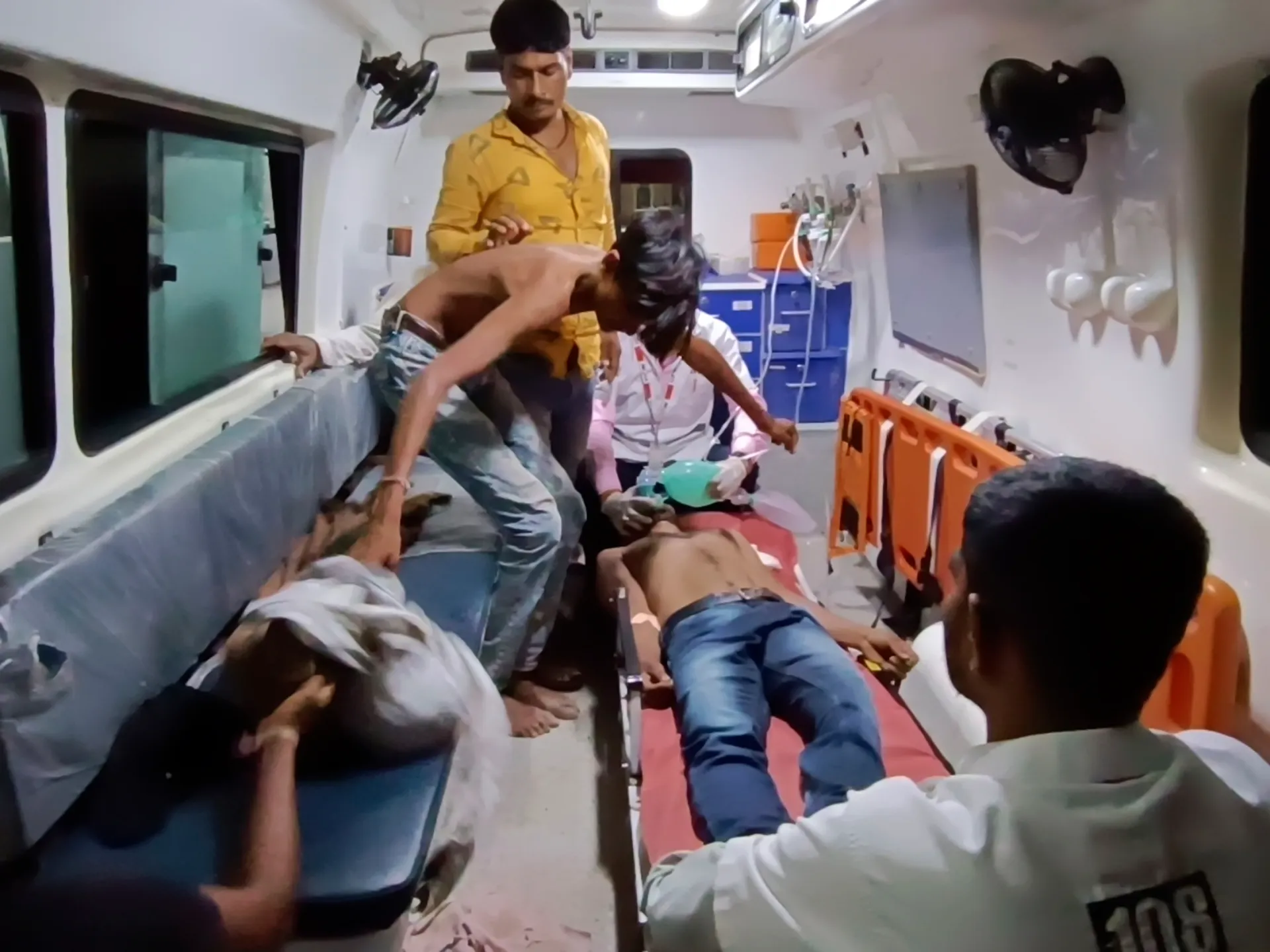
At least four people have died and 19 others have been hospitalised in Gujarat’s Bhavnagar district after allegedly consuming spurious liquor at Kharadi village in Ghogha taluka. The incident, which reportedly occurred on Tuesday night, has triggered a police investigation into the manufacture, distribution and sale of suspected counterfeit liquor.
According to police, the victims began falling ill after consuming liquor that was allegedly being sold as a genuine branded product. The sudden deterioration in the health of several people alerted local residents and authorities, following which the affected individuals were taken to different hospitals for treatment.
The deaths have raised fresh concerns over the dangers posed by illicit liquor networks in Gujarat, a state where the manufacture, sale and consumption of alcohol are prohibited under prohibition laws.
Four people die, 19 undergo treatment
Police said four people have died in the incident, while 19 others remain under medical treatment at different hospitals. The condition of those admitted to hospitals and the exact nature of the health complications are being assessed as authorities continue their investigation.
The incident came to light after several people who had allegedly consumed the liquor began experiencing health problems. The rapid emergence of multiple cases from the same area prompted authorities to investigate whether the victims had consumed liquor from a common source.
Officials are also examining the circumstances surrounding the deaths to establish whether the suspected spurious liquor was directly responsible for the fatalities. Samples of the liquor have been collected and sent for forensic examination.
The laboratory analysis is expected to determine what substances were present in the liquid and whether any toxic or hazardous chemicals contributed to the illnesses and deaths.
Ten suspected bootleggers detained
As part of the initial investigation, police have detained 10 suspected bootleggers for questioning. Investigators are attempting to establish the complete chain involved in the alleged production and distribution of the liquor.
Preliminary findings indicate that a bootlegger from Vartej in Bhavnagar district allegedly worked with another person from Madhya Pradesh to sell the suspected counterfeit liquor. Police suspect that the operation was motivated by the prospect of making quick profits from the illegal sale of alcohol.
Investigators are also trying to determine the exact roles played by each of the suspects and whether the group was part of a larger network operating across state borders.
The suspected involvement of a person from Madhya Pradesh has added an interstate dimension to the investigation. Authorities are examining how the liquor or the bottles used in the operation moved from Madhya Pradesh to Gujarat and how they eventually reached consumers in Bhavnagar.
Fake branded bottles allegedly used
One of the key findings emerging from the preliminary investigation is the alleged use of bottles carrying the label of a recognised liquor brand.
According to police, inferior-quality liquor was allegedly filled into bottles bearing a Royal Stag label. The liquid was reportedly mixed with water before being passed off as genuine liquor.
The use of branded bottles could have been intended to make the product appear authentic to consumers and help those involved in the illegal trade sell the liquor more easily.
Police are now examining the number of such bottles that may have entered circulation. Investigators are also trying to identify where the bottles were distributed and whether additional quantities remain in the market.
The possibility that more people may have consumed the suspected liquor has prompted authorities to focus on tracing the entire distribution network.
Forensic testing crucial to investigation
Forensic examination is expected to play a central role in determining the cause of the tragedy.
Samples of the suspected liquor have been sent for laboratory testing. The analysis will help investigators establish its chemical composition and identify any substances that could have caused poisoning or serious health complications.
The forensic findings could also become important evidence in determining criminal responsibility. If laboratory tests establish the presence of poisonous or harmful substances, investigators could use the findings to strengthen the case against those accused of manufacturing or distributing the liquor.
Authorities are also expected to examine the bottles, labels and other material recovered during the investigation. Such evidence could help establish whether the bottles were reused, whether the labels were counterfeit and how the suspected liquor was prepared and circulated.
Investigation focuses on distribution network
Police are not limiting the investigation to the immediate area where people fell ill. Officers are attempting to determine how many bottles were sold, where they were distributed and who was responsible for their manufacture and supply.
Tracing the movement of the suspected liquor could help authorities identify other people involved in the operation. Investigators are also likely to examine whether the suspects had previously been involved in similar activities.
The inquiry will also seek to establish the source of the inferior-quality liquor and the manner in which it was transported into Bhavnagar.
A clear understanding of the supply chain will be important because the incident may involve more than an isolated sale of counterfeit liquor. If investigators uncover a wider network, further arrests and seizures could follow.
Gujarat’s prohibition law and illicit liquor challenge
The incident has particular significance because Gujarat is a dry state. The manufacture, sale and consumption of liquor are prohibited under the state’s prohibition framework.
Despite the legal prohibition, illicit liquor networks have periodically emerged as a law-enforcement and public-health concern. The illegal nature of such trade can make it difficult for consumers to verify the contents or source of liquor sold through unauthorised channels.
Spurious liquor presents an additional danger because consumers may not know what substances they are ingesting. Unlike regulated products, illicitly produced alcohol does not undergo standard quality checks, creating the possibility of contamination, adulteration or the presence of toxic substances.
The Bhavnagar incident therefore highlights both the immediate danger to consumers and the wider challenge of preventing illegal liquor from reaching vulnerable communities.
Police investigate possible wider circulation
Investigators are now trying to establish whether the suspected liquor was confined to Kharadi village and nearby areas or had been distributed more widely across Bhavnagar.
The number of people hospitalised has increased the urgency of the inquiry, particularly as authorities seek to identify anyone else who may have consumed liquor from the same suspected supply.
Police are also examining the suspected counterfeit bottles and attempting to establish how many were produced and sold. Determining the volume of the operation could help officials assess whether additional consumers may be at risk.
The investigation is still at a preliminary stage, and the exact chemical cause of the illnesses and deaths will depend on forensic examination.
Probe continues as authorities await forensic findings
The Bhavnagar spurious liquor tragedy has left four people dead and 19 others receiving medical treatment, while police have detained 10 suspected bootleggers as they investigate the alleged counterfeit liquor network.
The immediate focus remains on identifying the substance that caused the illnesses, establishing the source of the suspected liquor and determining how it was distributed.
Forensic test results are expected to provide important evidence regarding the cause of the deaths and the medical conditions suffered by the survivors. At the same time, investigators are working to establish the complete network behind the alleged production and sale of the liquor.
The case underscores the potentially fatal consequences of illicit alcohol production and the continuing challenges faced by authorities in preventing spurious liquor from entering communities. Further developments are expected as police question the detained suspects, trace the supply chain and receive the results of laboratory examinations.