
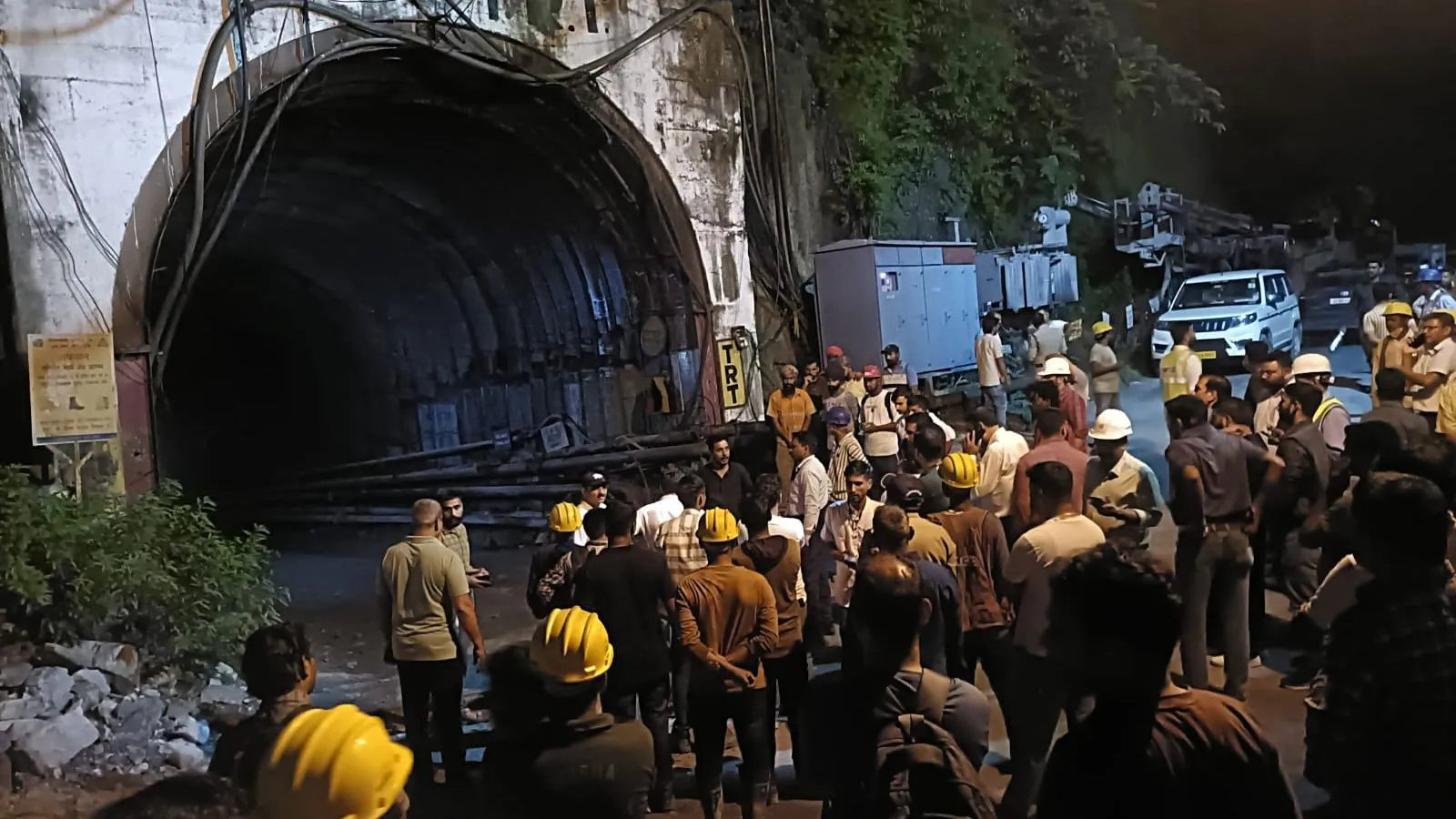
At least seven workers have died and three others remain missing after a sudden inflow of water, mud and debris entered an under-construction tunnel at a hydroelectric project in Uttarakhand’s Chamoli district, triggering an extensive rescue operation.
The accident took place at the Vishnugad-Pipalkoti Hydroelectric Project on Thursday evening. According to officials, 22 workers were inside the tunnel when water and debris suddenly entered the underground passage.
Rescue teams have managed to bring out 19 workers. While 12 were rescued alive and shifted to medical facilities, seven were found dead. Three workers remain trapped or unaccounted for as rescue personnel continue efforts to reach the affected portion of the tunnel.
The incident has once again highlighted the dangers faced by workers involved in large infrastructure projects in the Himalayan region, where difficult geological conditions, landslides, heavy rainfall and sudden water movement can create serious risks.
Sudden Water Inflow Traps Workers
The incident reportedly occurred at around 7 pm when a sudden movement of water, mud and debris entered the tunnel. The flow quickly affected the underground passage and made escape difficult for workers positioned inside.
The sudden nature of the incident left workers with limited time to react. While several managed to make their way out, others were caught in the incoming water and debris.
Rescue officials immediately began efforts to reach the affected section. However, the presence of water and accumulated mud has made movement inside the tunnel extremely difficult.
The tunnel is part of the 444 MW Vishnugad-Pipalkoti Hydroelectric Project, a major infrastructure project in the region.
Seven Workers Confirmed Dead
Seven workers lost their lives in the accident. Their bodies were recovered during rescue efforts and taken to a hospital in Gopeshwar.
Twelve other workers were rescued alive. Those injured were provided medical treatment, while at least one worker required further treatment at a higher medical facility.
The three workers still missing include Lucas Topno from Jharkhand and Chetan Poyam and Devnath from Chhattisgarh.
Their families are awaiting further information as rescue personnel continue searching through the affected section of the tunnel.
Authorities have maintained that the search operation will continue until all missing workers are located.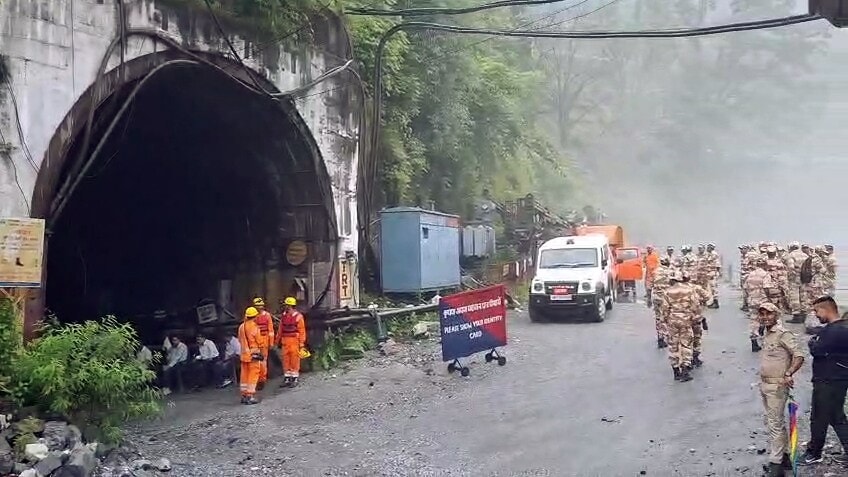
Multi-Agency Rescue Operation Underway
A large number of rescue personnel and emergency teams have been deployed to the site.
The operation involves disaster-response teams, police personnel, fire services and other agencies. Heavy equipment and water-pumping machinery are being used to remove accumulated water and clear the debris blocking access to the tunnel.
Rescuers are working under difficult conditions because of the unstable environment inside the tunnel. The possibility of additional water entering the passage and further movement of debris has made the operation particularly challenging.
Teams are therefore proceeding carefully while attempting to create a safe route toward the area where the missing workers are believed to be located.
The operation could take considerable time because rescuers must simultaneously remove debris, control water levels and ensure their own safety.
Uttarakhand Government Monitors Situation
Uttarakhand Chief Minister Pushkar Singh Dhami visited the area and reviewed the ongoing rescue operation.
The state government has directed officials to coordinate closely with the agencies involved in the search and rescue effort. Authorities are also monitoring the condition of the workers who were rescued and ensuring that injured personnel receive appropriate medical attention.
Officials are expected to investigate the circumstances that led to the sudden inflow of water and debris.
The investigation will be important in determining whether the accident was caused solely by natural geological conditions or whether construction-related factors contributed to the incident.
Difficult Himalayan Terrain Adds to Rescue Challenges
The accident has renewed concerns about construction safety in Uttarakhand’s mountainous areas.
The Himalayan region presents unique challenges for infrastructure development. Geological instability, steep slopes, underground water channels and frequent landslides can make tunnel construction particularly hazardous.
Heavy rainfall can further increase the risk of landslides and sudden water inflows. Construction companies operating in such environments therefore need detailed geological assessments, continuous monitoring systems and effective emergency-response plans.
For workers operating underground, even a minor geological disturbance can quickly become life-threatening if an escape route is blocked.
The latest accident has consequently brought renewed attention to the importance of workplace safety measures in large infrastructure projects.
Previous Tunnel Accidents Raise Safety Concerns
Uttarakhand has witnessed several serious infrastructure-related disasters in recent years.
In 2023, 41 workers became trapped inside an under-construction tunnel in Uttarkashi after a portion of the structure collapsed. The workers remained underground for 17 days before a technically challenging rescue operation successfully brought them out.
The successful rescue demonstrated the importance of specialised equipment, careful planning and coordination between multiple agencies.
The Chamoli incident, however, has once again raised concerns about the risks faced by workers engaged in underground construction in the Himalayan region.
The repeated occurrence of such incidents has prompted calls for stronger geological assessments, improved monitoring systems and stricter enforcement of workplace safety standards.
Focus Remains on the Missing Workers
The immediate priority for authorities is to locate the three workers who remain missing.
Rescue teams are continuing to pump out water and remove mud and debris from the affected section. Machinery is being used to clear the route, while personnel are assessing the stability of the tunnel before moving deeper inside.
The rescue operation remains complicated because conditions underground can change rapidly.
Authorities are also attempting to prevent further risks to the rescue personnel. A secondary accident could make the situation more dangerous and potentially obstruct the rescue operation further.
For the families of the missing workers, the ongoing operation is a period of intense uncertainty. Officials have assured them that all available resources are being used to locate the workers.
Questions Over Infrastructure Safety
The Chamoli tunnel accident is likely to prompt a broader examination of safety standards at infrastructure projects in Uttarakhand and other Himalayan states.
Hydroelectric projects, tunnels, highways and other major construction activities have expanded significantly across mountainous areas. While such projects are important for connectivity and economic development, their construction must account for the region’s complex geological characteristics.
Safety experts have repeatedly emphasised the need for detailed geological mapping, real-time monitoring, proper drainage arrangements, emergency exits and regular safety inspections.
Worker training is equally important. Employees working underground must be familiar with evacuation procedures and emergency communication systems so they can respond quickly when conditions suddenly deteriorate.
Rescue Operation Continues
The Chamoli tunnel disaster has left seven workers dead, 12 rescued and three still missing.
As rescue teams continue their operation, authorities are concentrating on clearing the tunnel and reaching the missing workers. The coming hours remain crucial for the search effort.
Beyond the immediate rescue operation, the incident is expected to raise questions about the safety of workers involved in Himalayan infrastructure projects and the measures required to prevent similar tragedies.
A detailed investigation will be necessary to establish exactly how the water and debris entered the tunnel, whether adequate safety precautions were in place and what lessons can be learned from the accident.
For now, the priority remains clear: locating the three missing workers and ensuring that the rescue operation is completed as safely and quickly as possible.