

Aam Aadmi Party leader and former Delhi minister Saurabh Bharadwaj has levelled serious allegations against the Bharatiya Janata Party-led Delhi government, claiming that a large-scale irregularity involving subsidised rice could have resulted in losses of around ₹22,000 crore over three years.
Bharadwaj alleged that the Delhi government had sought heavily subsidised rice from the Food Corporation of India (FCI) for distribution among economically weaker sections of the national capital. According to him, instead of reaching beneficiaries, the rice was allegedly diverted and sold to a private company in Haryana for profit.
The allegations have raised questions over the proposed mechanism for procurement and distribution of subsidised foodgrains, although the claims made by the AAP leader have not been independently established in the information available.
Allegation of large-scale subsidised rice diversion
According to Bharadwaj, a corporation based in Assam, along with the Delhi government, submitted a formal request to the FCI for a substantial quantity of subsidised rice. He claimed that approximately 31,000 metric tonnes of rice every week was sought for distribution to poor residents of Delhi.
Bharadwaj alleged that the rice was intended to be supplied at highly subsidised rates and subsequently distributed among people who were eligible to receive government assistance.
However, he claimed that the rice did not reach the intended beneficiaries. Instead, according to his allegation, the grain was sold to a private company in Haryana at a significantly higher price, creating an opportunity for substantial profits.
The AAP leader described the alleged arrangement as a planned scheme rather than an isolated incident and argued that the scale of the proposed weekly supply could have resulted in a very large financial impact over several years.
Bharadwaj claims ₹143 crore weekly loss
Bharadwaj further alleged that the proposed arrangement could have generated an estimated financial irregularity of approximately ₹143 crore every week.
He claimed that if such a system had continued for three years, the total value involved could have reached around ₹22,000 crore.
The former Delhi minister also alleged that the corporation involved could have earned a substantial commission from the transactions. In a video accompanying his allegations, he claimed that the commission could have been around ₹70 crore every week.
Bharadwaj said that over a three-year period, the alleged commission could have amounted to approximately ₹11,000 crore.
These figures form part of Bharadwaj’s allegations and would require verification through official records, procurement documents, transaction details and any investigation conducted by competent authorities. 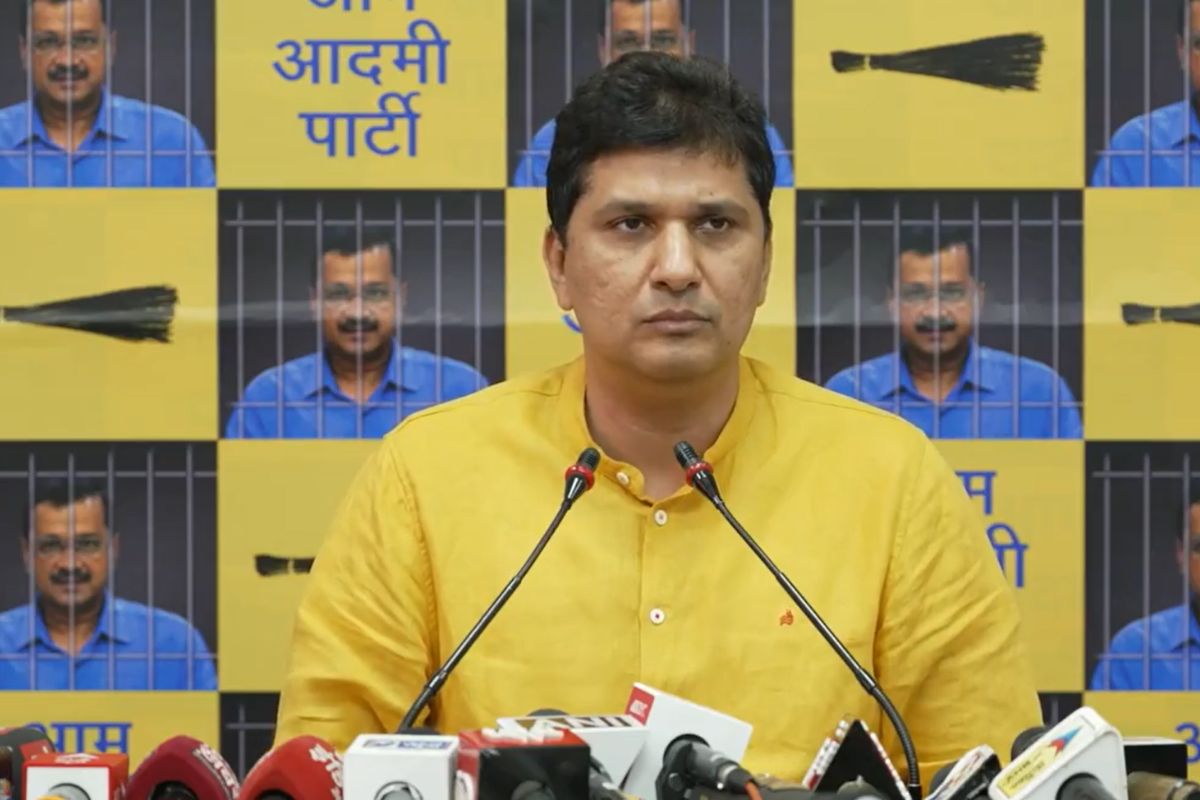
Questions over the role of Delhi’s food department
Bharadwaj specifically referred to the Delhi government’s Food, Supplies and Consumer Affairs Department while making his allegations.
The department is headed by Delhi minister Manjinder Singh Sirsa. Bharadwaj claimed that the department had written to the FCI seeking the weekly supply of 31,000 metric tonnes of rice, which was allegedly to be routed through the Assam-based corporation.
According to Bharadwaj, the arrangement was presented as a mechanism for providing subsidised foodgrains to poor residents of Delhi. He alleged, however, that the actual movement and sale of the rice did not correspond with its stated purpose.
The allegations therefore centre on several key questions: how the rice was procured, which organisation was authorised to receive it, where the grain was ultimately transported, who purchased it and whether the intended beneficiaries received any portion of the subsidised supply.
Claim that rice was sold to a private company
A central part of Bharadwaj’s allegation is that the subsidised rice was allegedly diverted to a private company in Haryana.
He claimed that the grain was sold at a profit rather than being distributed among poor people in Delhi. If verified, such a diversion could raise questions regarding the utilisation of subsidised government resources and the monitoring mechanisms governing foodgrain distribution.
However, establishing such allegations would require documentary and financial evidence, including procurement orders, transportation records, delivery receipts, warehouse records, invoices and details of the final recipients of the rice.
At present, the allegations should therefore be treated as claims made by the opposition party rather than as a conclusively established scam.
Alleged vigilance intervention
Bharadwaj also claimed that a vigilance department of the central government had identified the alleged irregularity.
According to his account, the discovery of the alleged scheme prevented the arrangement from continuing as originally planned.
The claim, if supported by official records, could become an important part of any investigation into the matter. A formal vigilance report, departmental communication or inquiry document could help establish whether authorities had identified irregularities in the proposed rice distribution mechanism.
Such documentation would also be important in determining whether the quantities, financial figures and alleged diversion described by Bharadwaj accurately reflect the transactions involved.
Why the allegations matter
The controversy is significant because subsidised foodgrain programmes are designed to ensure that essential food commodities reach vulnerable sections of society at affordable prices.
Large-scale procurement and distribution systems involve multiple stages, including allocation, transportation, storage, delivery and verification of beneficiaries. Weaknesses at any stage can potentially lead to diversion, financial losses or failure to deliver benefits to the intended population.
The quantity cited by Bharadwaj — 31,000 metric tonnes every week — would represent a substantial movement of foodgrain. Any investigation into the allegations would therefore need to examine the complete supply chain and establish whether the rice was actually distributed according to the stated purpose.
It would also need to determine the identities and roles of the organisations involved, the terms under which the rice was obtained, the prices at which it was purchased and sold, and whether any government rules or procurement procedures were violated.
Political dispute likely to intensify
The allegations have emerged amid political competition in Delhi, with the AAP questioning decisions taken by the BJP-led government.
Bharadwaj’s accusations put the spotlight on the Delhi government’s food distribution policies and the functioning of departments responsible for essential commodities. The matter could become a political issue if further documents, official responses or investigations emerge.
At the same time, allegations involving such a large amount of public money require careful verification. Political statements alone cannot establish the existence or financial scale of a scam.
For the allegations to be substantiated, authorities would need to establish a clear chain of evidence showing the procurement of subsidised rice, its movement through the concerned corporation, its alleged sale to a private entity and the financial benefit generated through the transaction.
Need for transparency and official clarification
The controversy has highlighted the importance of transparency in the handling of subsidised foodgrains. Public authorities may face pressure to clarify whether the alleged procurement request was formally approved, how much rice was actually allocated and whether any quantity was delivered to the intended beneficiaries.
Records relating to the FCI request, departmental correspondence, transportation arrangements and transactions involving the alleged recipient organisation could help establish what actually occurred.
Until such records are examined and any investigation reaches a conclusion, the ₹22,000 crore figure remains an allegation made by Bharadwaj rather than a confirmed financial loss.
The controversy nevertheless places renewed focus on the need for strong monitoring of subsidised food distribution and accountability whenever government resources intended for vulnerable citizens are involved.