
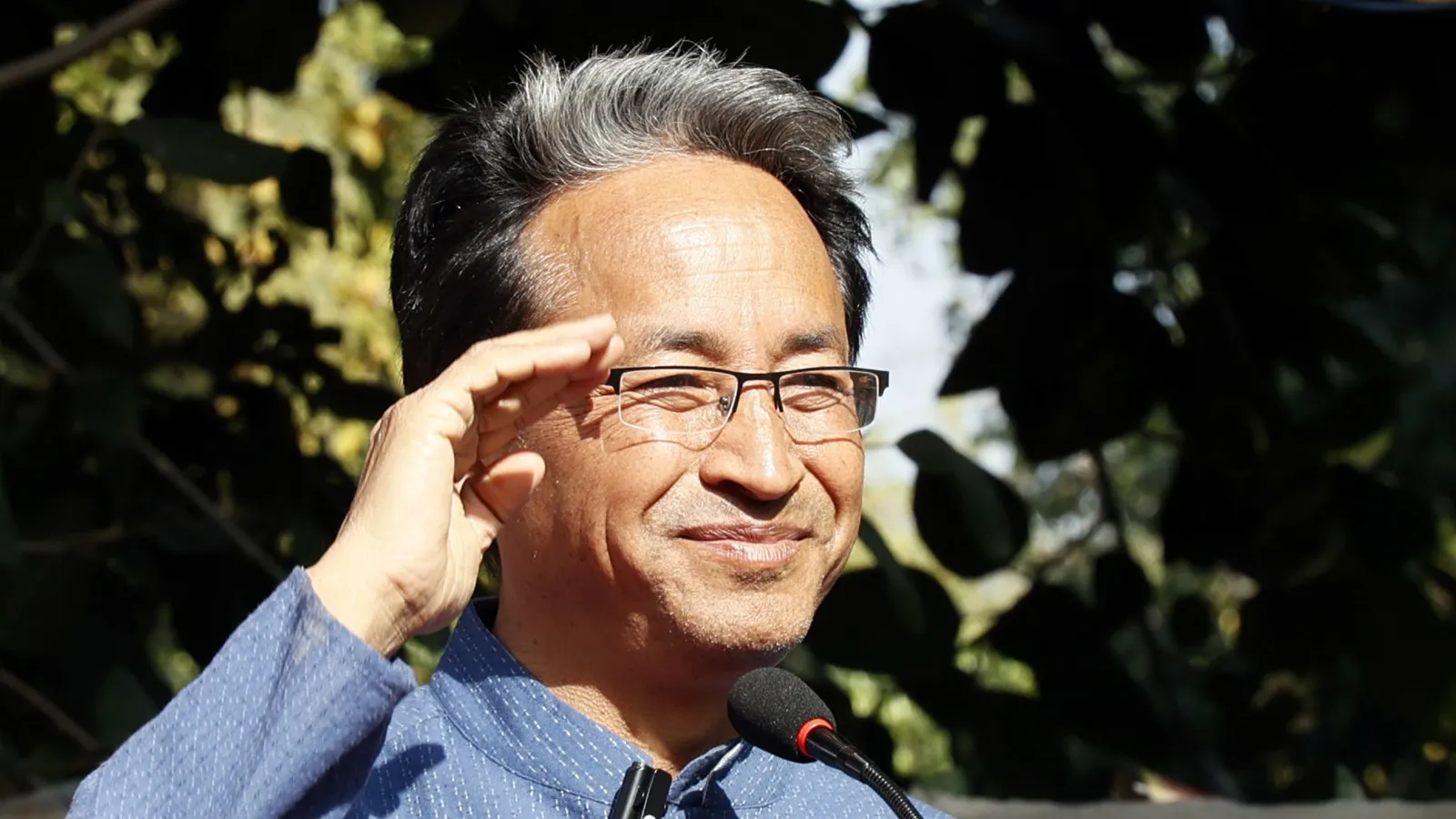
Education reform activist and engineer Sonam Wangchuk has clarified that he does not see himself as the face or “mascot” of any protest movement, even as he expressed solidarity with students in Jharkhand who are demanding action on issues affecting their education and future. His remarks came amid growing public attention over his support for the ongoing student demonstrations and discussions surrounding the role of public figures in people’s movements.
Wangchuk emphasized that democratic protests should remain driven by the people themselves rather than revolving around any individual. He stated that his participation in public causes is based on supporting genuine concerns raised by citizens and students, not on leading or controlling such movements.
Support for Student Concerns
The activist voiced his support for students in Jharkhand who have been protesting over issues related to education, recruitment, and governance. He said that students have every democratic right to peacefully express their concerns and seek accountability from authorities.
According to Wangchuk, the future of young people should remain a national priority. He stressed that when students organize peaceful protests to highlight issues affecting their education and employment opportunities, their voices deserve to be heard instead of being ignored.
He added that his role is limited to standing with people whose demands are rooted in justice and fairness. He reiterated that movements become stronger when they are led by citizens themselves rather than depending on prominent personalities.
Rejects the ‘Protest Mascot’ Label
Responding to discussions surrounding his growing association with various public movements across the country, Wangchuk firmly rejected the idea that he is becoming a symbolic face of protests.
He remarked that he does not wish to be viewed as a “protest mascot,” explaining that every movement should have its own independent leadership. In his view, meaningful democratic campaigns emerge from collective participation and local leadership instead of relying on nationally recognized individuals.
He also suggested that attaching movements to one individual can distract from the actual issues being raised by protesters. The focus, he said, should remain on solving problems rather than creating personalities around campaigns. 
Criticism of Political Culture
During his remarks, Wangchuk also took a swipe at sections of the political establishment by referring to what he described as the “Cockroach Janta Party” or “CJP.” The comment drew attention online as he criticized political practices that, according to him, prioritize power over addressing people’s concerns.
His statement appeared to reflect broader dissatisfaction with political responses to public grievances and highlighted his belief that governments should engage more constructively with citizens instead of dismissing peaceful protests.
While the phrase generated discussion on social media, Wangchuk maintained that his primary concern remains the issues raised by ordinary people rather than political rivalries.
Emphasis on Peaceful Democratic Participation
Throughout his interaction, Wangchuk underscored the importance of peaceful, democratic engagement. He encouraged students and citizens to continue expressing their views through constitutional and non-violent means while remaining focused on constructive dialogue.
He observed that democratic societies grow stronger when governments are willing to listen to public concerns and when citizens actively participate in shaping policy through peaceful engagement.
The activist reiterated that public movements should not depend on celebrities or well-known campaigners. Instead, he believes lasting change comes when communities organize themselves, remain united around common objectives, and persist through democratic means.
Growing Public Influence
Over the years, Wangchuk has emerged as one of India’s most recognizable voices on issues ranging from education reform and environmental conservation to regional development and governance. His public interventions often attract significant national attention, particularly when he speaks on matters involving youth and public policy.
However, his latest remarks indicate that he prefers to act as a supporter of citizen-led initiatives rather than their central figure. By distancing himself from being labeled the face of protests, he reinforced his belief that democratic movements gain legitimacy from the people who directly experience the issues, not from the personalities who endorse them.
Broader Significance
The comments come at a time when student-led protests continue to influence public debate across different parts of the country. Wangchuk’s position reflects a broader argument that public participation, grassroots leadership, and peaceful democratic engagement remain essential for addressing governance and policy challenges.
His message also serves as a reminder that while influential public figures can amplify important issues, the success of any movement ultimately depends on the determination and participation of the people directly involved. By encouraging students to remain focused on their demands while rejecting attempts to make him the central figure, Wangchuk sought to keep the spotlight firmly on the issues that prompted the protests in the first place.