
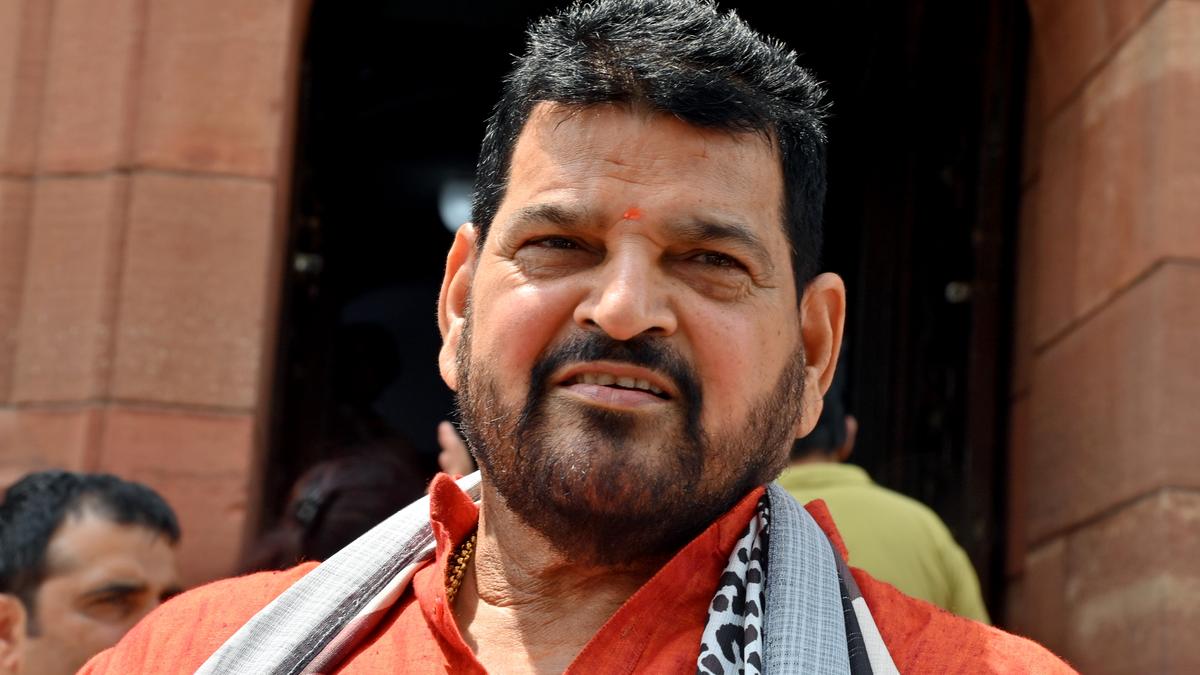
A Delhi court has acquitted former Wrestling Federation of India (WFI) chief and Bharatiya Janata Party (BJP) leader Brij Bhushan Singh in the widely debated sexual harassment case filed by several women wrestlers. The verdict has reignited political debate across the country, with opposition parties launching strong criticism against the BJP while the ruling party welcomed the court’s decision.
The case, which drew nationwide attention and sparked one of the largest athlete-led protests in recent years, had become a significant issue in discussions surrounding women’s safety, accountability in sports administration, and political responsibility.
Court Finds Insufficient Evidence
The court acquitted Brij Bhushan Singh after concluding that the prosecution had failed to establish the allegations beyond reasonable doubt. According to the judgment, the evidence presented during the trial was not sufficient to support a conviction under the applicable provisions of law.
The court examined witness testimonies, documentary evidence, and other materials submitted during the proceedings before arriving at its conclusion. As per the judgment, the prosecution was unable to prove the charges to the legal standard required in a criminal trial.
The acquittal marks the end of a legal battle that remained under close public and political scrutiny for an extended period.
Background of the Case
The controversy began when several women wrestlers accused Brij Bhushan Singh of sexual harassment and inappropriate conduct during his tenure as Wrestling Federation of India president. The allegations led to widespread protests by some of India’s top wrestlers, who demanded his arrest, removal from the federation, and an independent investigation into the complaints.
The protests attracted national attention as leading athletes staged demonstrations in New Delhi, arguing that they were seeking justice and institutional accountability. Their movement also received support from various civil society groups, political leaders, and sports personalities.
Following the complaints, law enforcement agencies registered cases and conducted investigations before filing charges in court. Throughout the proceedings, Brij Bhushan Singh consistently denied all allegations, maintaining that he was innocent and that the accusations against him were politically motivated. 
Opposition Criticises BJP Following Verdict
Soon after the court delivered its judgment, opposition leaders strongly criticised the BJP, alleging that the outcome reflected the ruling party’s approach toward issues concerning women’s rights and accountability.
Several opposition figures claimed that the verdict exposed what they described as the government’s failure to stand with the protesting athletes during their struggle. They argued that the women wrestlers had endured prolonged legal and public battles while seeking justice.
Opposition leaders also referred to the treatment of the protesting wrestlers during the demonstrations, stating that the controversy had raised broader concerns about the response of authorities to athletes who sought legal action against influential individuals.
Political parties demanded greater institutional reforms to ensure that women athletes can raise complaints without fear and that sports bodies remain transparent and accountable.
BJP Welcomes the Court’s Decision
The BJP welcomed the court’s verdict, stating that the judgment reaffirmed confidence in India’s judicial process. Party leaders asserted that the legal system had independently evaluated the evidence and delivered its decision based on established legal principles rather than political considerations.
Supporters of Brij Bhushan Singh argued that the acquittal vindicated his long-standing claim that the allegations lacked sufficient legal basis. They emphasised that the court’s findings should be respected and that judicial decisions must not be viewed through a political lens.
The ruling party also urged political opponents not to misuse judicial outcomes for political narratives.
Legal Process and Public Debate
The case became one of the most closely followed legal proceedings involving Indian sports administration in recent years. Beyond the criminal allegations, it triggered widespread discussions about athlete welfare, mechanisms for reporting workplace harassment, governance standards in sports federations, and institutional accountability.
Legal experts have noted that an acquittal in a criminal case reflects the prosecution’s inability to prove charges beyond reasonable doubt and should be understood within the framework of criminal law. At the same time, the public debate surrounding athlete safety and grievance redressal mechanisms is likely to continue independently of the verdict.
Impact on Sports Governance
The controversy had already prompted broader conversations about reforms in sports administration and the need for stronger internal complaint mechanisms within sporting organisations. Athlete welfare, gender sensitivity, and transparent governance emerged as central themes during the protests and subsequent legal proceedings.
Many experts believe that regardless of the court’s decision, the events have highlighted the importance of creating safe environments for athletes and ensuring that complaints are handled fairly, impartially, and promptly.
What Lies Ahead
While the criminal proceedings against Brij Bhushan Singh have concluded with his acquittal, the political debate surrounding the case is expected to continue. Opposition parties are likely to keep raising questions regarding the government’s response to the protests, whereas the BJP maintains that the judiciary has spoken through its verdict.
The judgment closes a significant chapter in one of India’s most high-profile sports-related legal cases, but discussions on athlete protection, institutional accountability, and governance reforms are expected to remain central to future policy and political discourse.