
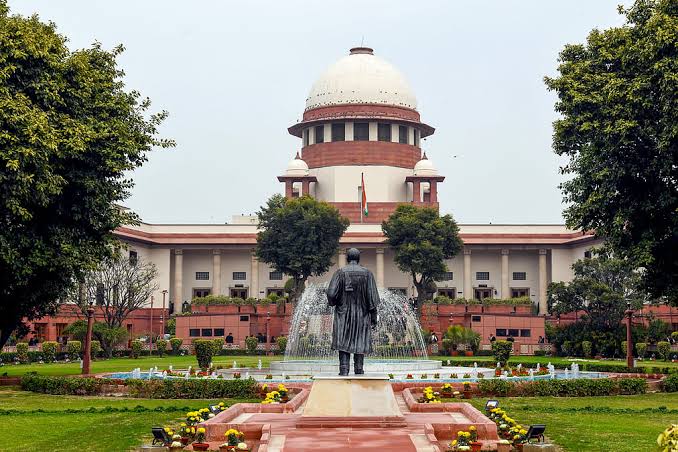
In a landmark decision reinforcing the importance of constitutional rights and judicial fairness, the Supreme Court has granted bail to two alleged members of the banned terrorist organisation Indian Mujahideen who had remained behind bars for nearly 12 years while awaiting the completion of their trial. The court observed that prolonged incarceration without the conclusion of legal proceedings violates the fundamental right to life and personal liberty guaranteed under Article 21 of the Constitution.
The ruling underscores that while terrorism-related offences are among the most serious crimes, constitutional safeguards cannot be ignored simply because an accused is charged under stringent anti-terror laws.
Court Highlights Importance of Speedy Trial
The Supreme Court observed that every accused person is entitled to a fair and speedy trial. The bench noted that keeping individuals in custody for an extended period without significant progress in the trial cannot be justified, regardless of the seriousness of the allegations.
According to the court, the criminal justice system must ensure that undertrial prisoners are not subjected to indefinite detention due to delays in judicial proceedings. It stated that prolonged incarceration without a verdict effectively undermines the constitutional promise of personal liberty.
Nearly Twelve Years in Custody
The two accused were arrested in connection with a terror-related case registered in 2011 and have remained in judicial custody for almost 12 years. During this period, the trial progressed slowly, with many witnesses yet to be examined and the proceedings far from reaching their conclusion.
The Supreme Court took note of the unusually long period of detention and observed that there was no immediate likelihood of the trial ending. The bench held that continued imprisonment under such circumstances would amount to an unreasonable restriction on the accused persons’ constitutional rights. 
Bail Does Not Affect the Trial
While granting bail, the Supreme Court made it clear that the order should not be interpreted as a finding on the merits of the case. The allegations against the accused remain subject to judicial examination, and the trial will continue before the appropriate court.
The accused will be required to comply with the bail conditions imposed by the court and remain available for all future legal proceedings. The prosecution will continue to present its evidence, and the final determination of guilt or innocence will be made only after the completion of the trial.
Balancing National Security with Individual Rights
The judgment reflects the judiciary’s effort to balance national security concerns with the constitutional rights of individuals. The Unlawful Activities (Prevention) Act contains stringent provisions governing terrorism-related offences and the grant of bail. However, the Supreme Court reiterated that constitutional courts retain the responsibility to protect fundamental rights when extraordinary circumstances arise.
The bench observed that prolonged judicial delays cannot become a reason for indefinite detention and that courts must ensure justice is delivered within a reasonable timeframe.
Broader Legal Significance
Legal experts believe the ruling could have wider implications for other undertrial prisoners facing prolonged incarceration in cases involving special anti-terror legislation. The judgment reinforces the principle that a speedy trial is an essential component of the right to life and personal liberty.
The decision also serves as a reminder to investigating agencies and trial courts of the need to expedite proceedings in cases involving serious criminal charges. Timely justice not only protects the rights of the accused but also strengthens public confidence in the judicial system.
While the Supreme Court acknowledged the gravity of terrorism-related offences, it maintained that constitutional protections must remain central to the administration of justice. The court concluded that prolonged detention without the completion of trial cannot be permitted to override the fundamental rights guaranteed under the Constitution.