
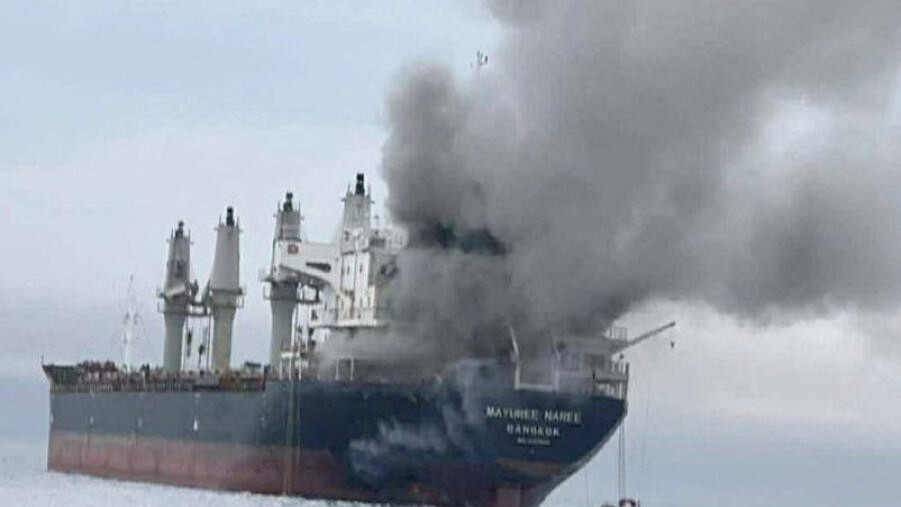
Two Indian seafarers have gone missing in the Black Sea after reportedly jumping into the water when their cargo vessel came under attack from drones while sailing near the mouth of the Danube River, authorities said on Monday.
The missing crew members have been identified as Chandra Ram Dubey and Deepak Kumar Gupta. They were among four Indian nationals serving aboard the Palau-flagged cargo vessel MV AGN Ragnar, which was struck during its passage through the conflict-affected maritime region.
According to maritime authorities, the vessel was targeted by three drones on Saturday evening while it was leaving the Bystre Mouth of the Danube River. The attack triggered a dangerous situation on board, prompting some crew members to abandon the vessel and jump into the Black Sea.
The two Indian seafarers remain untraced, while search and rescue efforts were initiated following the incident. However, the operation was temporarily suspended because of the continuing threat posed by drone attacks in the area. Authorities said rescue teams would resume the search as soon as security conditions allow.
Seven other crew members, including two additional Indian nationals, were safely evacuated from the vessel along with the ship’s pilot. The Ukrainian Coast Guard was involved in bringing the surviving crew members ashore.
The incident has renewed concerns over the growing security risks faced by Indian seafarers working aboard commercial vessels operating in and around the Black Sea, where the ongoing conflict has increasingly exposed merchant shipping to missile and drone attacks.
Four Indians Were on Board the Cargo Vessel
Four Indian nationals were reportedly part of the crew of MV AGN Ragnar when the vessel came under attack. Following the incident, two Indians were confirmed safe, while the whereabouts of the remaining two — Dubey and Gupta — remain unknown.
The latest information has prompted continued efforts to locate the missing seafarers. Search teams face significant challenges because of the volatile security environment in the region and the possibility of further attacks.
The incident has also highlighted the difficult circumstances faced by commercial shipping operators attempting to maintain maritime trade routes through waters affected by armed conflict. Merchant vessels travelling through the region can face sudden and unpredictable threats, even when their primary purpose is the transportation of commercial cargo.
Black Sea Shipping Route Faces Growing Threats
The attack on MV AGN Ragnar is the latest in a series of incidents involving commercial ships in the Black Sea. The frequency of such attacks has raised concerns among shipping companies, maritime authorities and seafarers about the safety of international merchant crews operating in conflict-affected waters.
The latest incident follows two other major attacks in the region since the middle of July that resulted in the deaths of five Indian seafarers.
On July 18, the general cargo vessel MV Omorfi, which was sailing under the flag of Saint Kitts and Nevis, was hit by two drones while transiting the Black Sea. The ship was carrying 10 crew members, including three Indians. Indian Chief Officer Sagar Gupta was killed in the attack, while the other two Indian crew members survived.
The following day, another cargo vessel, MV Golden Leo, was struck by three missiles while operating in the Black Sea. The attack resulted in 10 deaths. The ship was carrying 17 crew members and a Ukrainian pilot, with the crew comprising five Indian and 12 Syrian nationals.
Two Indian seafarers who died in that attack were later identified as Chief Officer Akhil Jovan and Ordinary Seaman Abhishek Nishad. The identities of several other victims remained unresolved because the recovered bodies had suffered severe burns.
DNA testing was subsequently undertaken as part of the identification process for the unidentified victims. The case underlined the serious human cost of the escalating dangers facing merchant shipping in the region. 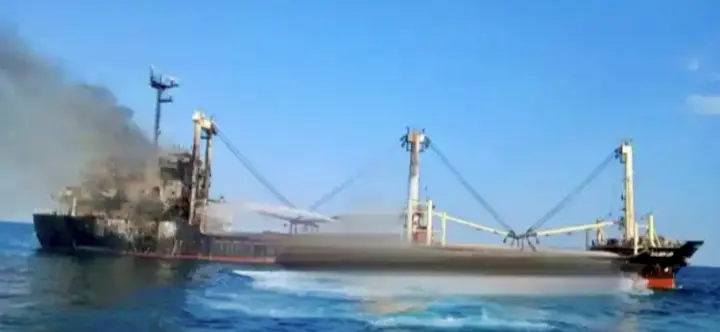
Indian Government Issues Safety Advisory
Following the latest attack, the Indian government urged its citizens working on merchant vessels operating in or passing through the Black Sea and nearby maritime areas to exercise heightened caution.
The government warned that the security environment in the region remains highly volatile because of the continuing conflict. Commercial ships travelling through these waters face risks from drone and missile strikes, with attacks on merchant vessels reportedly increasing since April.
Indian seafarers have been advised to carefully evaluate security conditions before accepting assignments involving vessels operating in conflict-affected maritime zones.
The advisory also urged seafarers to obtain detailed information from employers, recruitment agencies and ship operators before joining a vessel. This includes understanding the planned route, ports of call, security arrangements, insurance provisions and emergency response procedures.
The government has also stressed the importance of ensuring adequate insurance coverage and maintaining proper emergency preparedness for those who continue to work in high-risk maritime areas.
Authorities Warn Against Deploying Indian Seafarers in High-Risk Waters
The latest incident comes shortly after maritime authorities issued guidance to Indian shipowners and recruitment agencies regarding the deployment of Indian seafarers in high-risk areas.
Authorities had advised against sending Indian crew members aboard vessels operating in the Black Sea and Yemen waters, citing the sharp rise in missile and drone attacks targeting commercial shipping.
The repeated attacks have created an increasingly difficult environment for international shipping companies and their crews. While merchant vessels are not directly involved in military operations, their presence in strategic maritime corridors can expose them to the consequences of regional conflicts.
For Indian seafarers, who form a significant part of the global maritime workforce, the developments have raised fresh concerns about occupational safety and the responsibilities of shipping companies when assigning crews to dangerous routes.
Search for Missing Indians Continues
The immediate priority remains locating Chandra Ram Dubey and Deepak Kumar Gupta. The two seafarers have not yet been traced, and rescue efforts are expected to continue once the security situation permits.
The incident has once again brought attention to the risks faced by civilian crews navigating conflict zones. The fate of the two missing Indians is being closely watched as authorities work to determine what happened after they entered the Black Sea.
The latest attack also reinforces concerns over the need for stronger safety protocols, better emergency preparedness and comprehensive risk assessments for commercial vessels operating in areas affected by armed conflict.
As search and rescue efforts remain dependent on the security situation, the families of the missing seafarers continue to await information about their whereabouts. The incident serves as another stark reminder of the dangers confronting merchant seafarers who continue to operate along vital international shipping routes despite escalating security threats.