
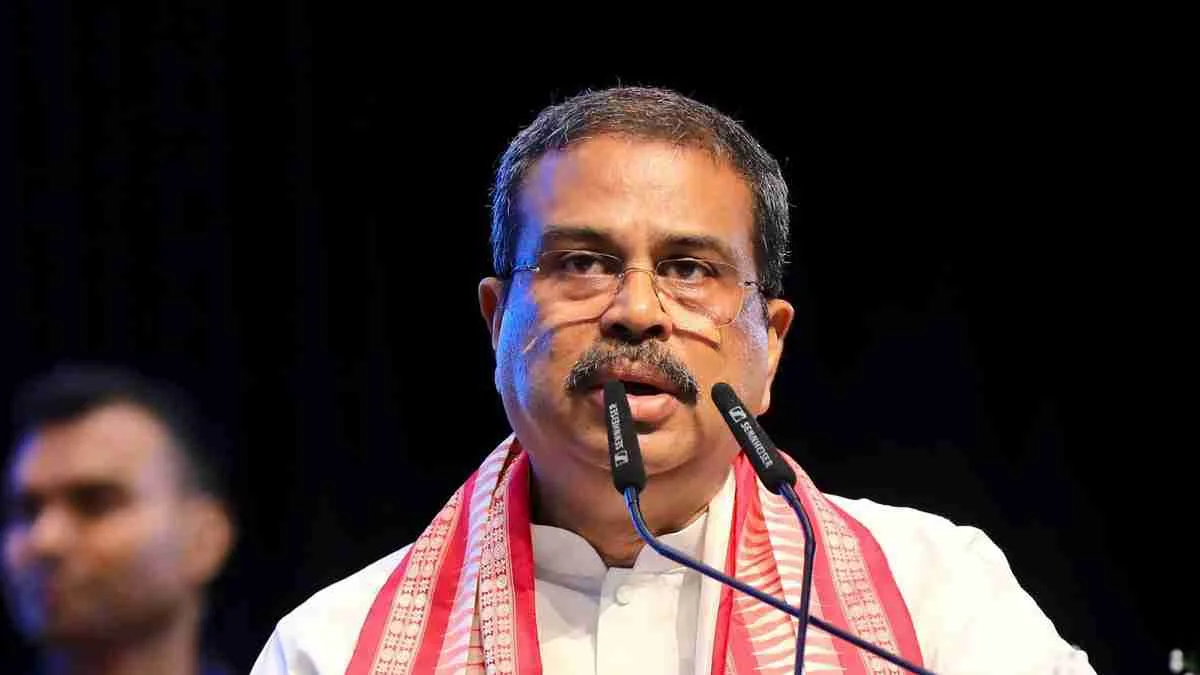
In a move that has sent ripples through India’s political establishment, Union Education Minister Dharmendra Pradhan announced his resignation on Saturday, citing a desire to prevent the ongoing unrest over examination irregularities from being hijacked by what he described as “anti-national forces.” The senior Bharatiya Janata Party leader confirmed that he had formally submitted his resignation letter to Prime Minister Narendra Modi, bringing an abrupt end to his tenure at the helm of the education ministry during one of its most turbulent periods.
A Resignation Rooted in National Unity
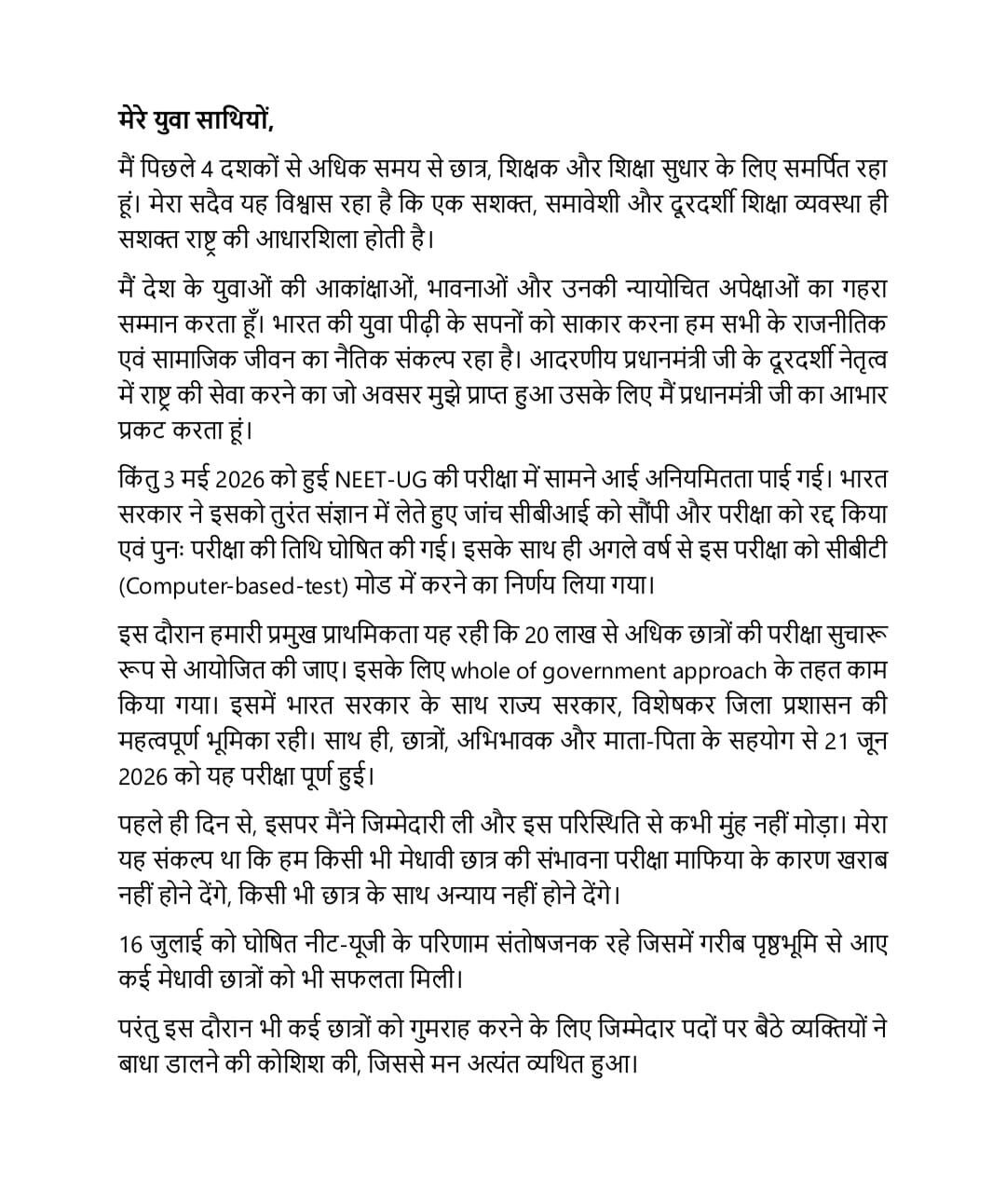
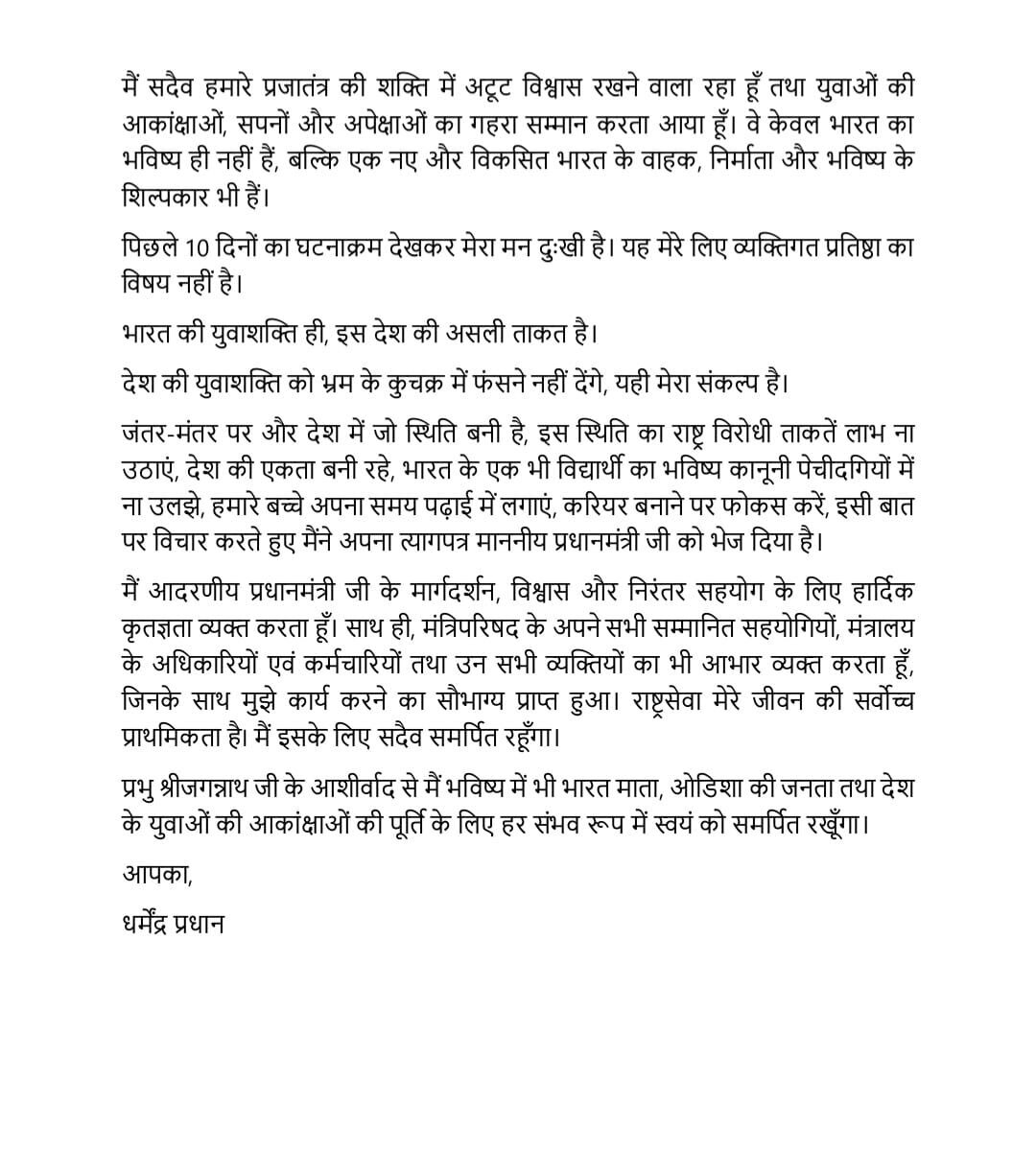
Pradhan disclosed the development through a detailed letter posted on the social media platform X, in which he articulated the reasoning behind his sudden departure. He expressed concern that the demonstrations unfolding at Jantar Mantar and in other parts of the country risked being manipulated by elements working against national interests.
“The situation that has emerged at Jantar Mantar and elsewhere in the country should not be exploited by anti-national forces. The unity of the country must remain intact. The future of every student in India should not get entangled in legal complications,” Pradhan wrote, framing his resignation as a step taken in the broader interest of preserving social cohesion and safeguarding the academic futures of millions of young Indians.
He further stated that after weighing these considerations, he had chosen to formally tender his resignation to the Prime Minister, effectively stepping away from a portfolio he had overseen through several high-profile controversies.
Backdrop of Prolonged Protests and a Hunger Strike
The resignation arrives against the backdrop of sustained nationwide agitation over alleged irregularities in competitive examinations, a controversy that has dominated headlines for weeks. Central to the unrest has been a 26-day hunger strike staged by activist Sonam Wangchuk at Jantar Mantar in the national capital, a protest that drew significant public attention and mounting pressure on the government to act.
In his letter, Pradhan reflected on the emotional weight of the past ten days, describing the period as deeply troubling on a personal level. He emphasized that his concern was never about protecting his own reputation but about ensuring that the trust and aspirations of India’s youth were not undermined.
“My heart is saddened by the sequence of events over the last 10 days. For me, this is not a matter of personal reputation. The youth power of India is the real strength of this country. It is my resolve that we will not let the country’s youth power get trapped in a vicious cycle of confusion,” he wrote, underscoring what he called an unwavering faith in India’s democratic institutions and a deep respect for the ambitions of the country’s younger generation.
He described students as more than just symbols of India’s future, calling them the architects and creators of a developed nation, language that reflected the government’s broader messaging around youth empowerment even as it faced criticism over the handling of the examination crisis.
The NEET-UG Controversy That Triggered the Crisis
At the heart of the political storm lies the NEET-UG examination, the standardized test that determines admission to medical colleges across India. According to Pradhan’s account, irregularities were detected in the examination conducted on May 3, 2026. Following the discovery of these lapses, the central government moved to hand over the investigation to the Central Bureau of Investigation, subsequently cancelling the compromised examination and announcing that a fresh test would be held.
Pradhan defended his ministry’s handling of the crisis, insisting that responsibility was accepted from the outset rather than deflected. “From the very first day, I took responsibility for the situation and never turned away from it. My resolve was that we would not allow the prospects of any meritorious student to be harmed because of the examination controversy, and that no student would be subjected to injustice,” he stated in his letter.
He went on to detail the logistical scale of the government’s response, noting that the re-examination — which involved more than two million students nationwide — was successfully conducted on June 21. He credited the achievement to coordinated efforts between state governments, district administrations, students, and their families, describing it as a demonstration of institutional resilience under pressure.
Shift Toward Computer-Based Testing
Looking ahead, Pradhan revealed that the NEET-UG examination would transition to a Computer-Based Test format starting next year, a structural reform apparently aimed at reducing the risk of paper leaks and other forms of examination fraud that have plagued the testing process in recent years. The announcement suggests that even as Pradhan exits the ministry, the policy changes set in motion during his tenure are expected to continue.
Gratitude to the Prime Minister and Reflections on Service
Before closing his letter, Pradhan expressed appreciation for Prime Minister Modi’s guidance throughout his time in office, describing national service as the paramount priority of his life. He reiterated his respect for the aspirations and legitimate expectations of India’s youth, calling the realization of their dreams a moral commitment embedded in the nation’s political and social fabric.
“I deeply respect the aspirations, emotions, and legitimate expectations of the country’s youth. Realizing the dreams of India’s younger generation has been a moral commitment of our political and social life. I express my gratitude to the Honorable Prime Minister for the opportunity I received to serve the nation under his visionary leadership,” Pradhan wrote in his concluding remarks.
Government Prepares Stronger Anti-Paper Leak Legislation
Separately, and in what appears to be a parallel effort to address the systemic issues that fueled the protests, the central government is reportedly preparing to introduce a more stringent anti-paper leak law. According to sources familiar with the matter, the proposed legislation would establish Special Fast-Track Courts alongside a dedicated Special Task Force, both designed to expedite the investigation and prosecution of examination-related fraud across the country.
The move signals that the administration intends to pair Pradhan’s resignation with concrete legislative action, potentially aimed at reassuring students, parents, and opposition critics that structural reforms are being pursued alongside the change in ministerial leadership.
Political and Public Reaction
Pradhan’s resignation has already begun generating reactions across the political spectrum, with opposition figures and activist groups weighing in on the development. The move comes at a politically sensitive moment, with student groups and civil society organizations having sustained pressure on the government for weeks over what they characterized as a systemic failure in examination integrity.
As the situation continues to evolve, attention will now turn to who the Prime Minister selects to lead the education ministry through the remainder of the reform process, and whether the proposed anti-paper leak legislation will be sufficient to restore public confidence in India’s examination systems.