
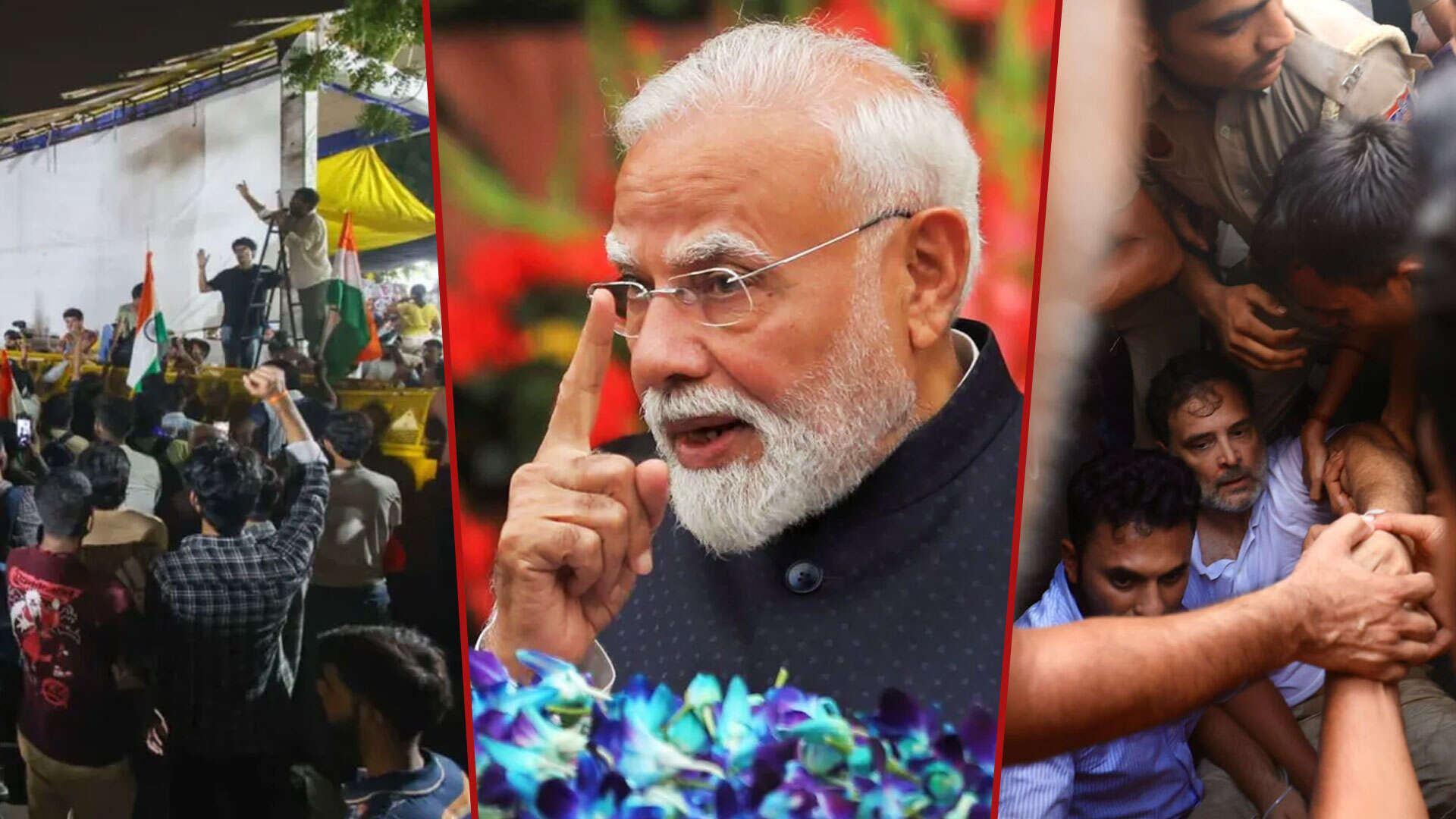
Prime Minister Narendra Modi has announced a fresh set of measures to tackle examination paper leaks and irregularities, including a proposed legal framework for fast-track courts and stricter punishment for those found responsible. The announcement came amid growing protests in Delhi over alleged irregularities in competitive examinations and demands for greater accountability from the authorities.
In a rare late-night video message, Modi directly addressed the concerns of students and parents, acknowledging the seriousness of the issue and saying that paper leaks had caused considerable distress among lakhs of young people and their families.
The Prime Minister said the government understood the consequences of examination irregularities for students whose academic and professional futures depend heavily on competitive examinations. He emphasised that the administration’s immediate priority had been to ensure that students did not lose an entire academic year because of disruptions surrounding the examination process.
According to Modi, authorities had taken several concrete steps during the previous two-and-a-half months against individuals allegedly involved in examination paper leaks. He said those accused in connection with such cases had been arrested and were in custody.
The Prime Minister’s intervention came as a protest movement at Delhi’s Jantar Mantar gained momentum. The demonstrations have focused on alleged examination irregularities, concerns over paper leaks and demands for accountability from the government. Protesters have also been seeking action against those responsible for compromising the integrity of examinations.
Government Plans Fast-Track Legal Action
The most significant announcement in Modi’s message was the government’s plan to introduce provisions aimed at speeding up legal proceedings in cases involving examination fraud and paper leaks.
The Prime Minister said he had instructed the concerned departments to prepare a draft framework for fast-track courts and stringent penalties. According to him, officials worked through the day and submitted a draft by late night.
The proposed legislation is expected to be discussed by the Union Cabinet before being finalised. The government intends to introduce the Bill in Parliament when the Monsoon Session resumes and make efforts to secure its passage at the earliest opportunity.
The proposed measures are aimed at strengthening the legal response to examination-related crimes. Paper leaks and organised cheating networks have repeatedly raised concerns about the fairness of recruitment and entrance examinations, particularly because a single compromised examination can affect the careers of a large number of students.
A faster judicial process could potentially allow cases involving examination fraud to be dealt with more quickly, while tougher punishment could act as a deterrent against those attempting to profit from leaked question papers or other forms of organised malpractice.
Protecting Students’ Academic Year Was a Priority
In his address, Modi stressed that protecting students from losing an academic year was one of the government’s primary responsibilities during the crisis.
He said examinations involving approximately 22 lakh students had been completed within a short period, with authorities working to minimise disruption to the academic calendar.
The Prime Minister also referred to the declaration of examination results and said that the completion of the process did not mean the government’s responsibility ended there. He indicated that addressing the larger problem of examination integrity remained important.
For students, examination delays and cancellations can have consequences extending far beyond a single test. Many candidates spend months or even years preparing for competitive examinations, often investing substantial financial and personal resources. Any cancellation caused by a paper leak can force them to repeat the process, potentially affecting admissions, employment opportunities and future career plans.
The government’s proposed legal measures therefore come against the backdrop of wider demands for a more secure and transparent examination system. 
Protest Movement Gains Momentum in Delhi
The Prime Minister’s message came as demonstrations at Jantar Mantar intensified. The protest movement, which began as a satirical response to controversial remarks attributed to Chief Justice of India Surya Kant, gradually evolved into a broader youth-led campaign focused on issues including examination irregularities and government accountability.
The group associated with the protest adopted the name “Cockroach Janta Party”, turning a phrase that had sparked anger among sections of young people into a symbol of protest.
The movement quickly gained visibility through social media and subsequently expanded into demonstrations across multiple locations. Its organisers later announced an extended protest at Jantar Mantar, with demands that included accountability over alleged examination irregularities and calls for the resignation of Union Education Minister Dharmendra Pradhan.
The demonstrations intensified further after climate activist Sonam Wangchuk joined the protest and began a hunger strike. His participation drew additional attention to the movement and its demands.
Wangchuk later ended his fast following discussions with Union ministers. His decision came after assurances regarding the concerns raised by protesters, adding another significant development to the ongoing agitation.
Tensions Around Jantar Mantar
The protests have also led to heightened security arrangements in central Delhi. On several occasions, large groups of demonstrators attempted to move towards Parliament, prompting security personnel to intervene.
The situation at times escalated, with reports of clashes between protesters and security forces. Authorities deployed additional security personnel and used measures including tear gas and baton action to control the crowds when protesters attempted to move beyond designated protest areas.
Restrictions were also reported in parts of central Delhi during periods of heightened tension, including temporary limitations on internet services and changes to access at some Metro stations.
The developments have highlighted the growing sensitivity surrounding examination-related controversies, particularly among young people preparing for highly competitive tests.
A Rare Direct Response From the Prime Minister
The Prime Minister’s decision to issue a direct video message in response to the ongoing protest was notable. While Modi has frequently addressed the public on national issues, a standalone message focused specifically on an active protest movement is relatively uncommon.
The message appeared aimed at reassuring students and parents that the government was taking the allegations seriously and was willing to pursue stronger legal action.
By announcing the proposed fast-track court mechanism and tougher penalties, the government has sought to demonstrate that those responsible for examination malpractice would face serious consequences.
However, the effectiveness of the proposed measures will depend on their implementation. A robust examination system requires not only strict laws but also strong preventive mechanisms, secure question-paper management, reliable technology, transparent investigations and timely judicial proceedings.
Examination Integrity Remains a Major Concern
The controversy has once again placed the issue of examination security at the centre of public debate. In India, competitive examinations play a crucial role in determining access to higher education and government employment. As a result, allegations of paper leaks can undermine public confidence in the entire examination system.
For students, the issue is not limited to the inconvenience of a postponed or cancelled examination. A compromised examination can create uncertainty about merit, fairness and equal opportunity.
The proposed legislation, if approved by Parliament, could mark an important step towards strengthening the legal framework dealing with examination fraud. Fast-track courts could help reduce delays in trials, while tougher punishments may increase the risks for organised groups involved in leaking examination papers.
At the same time, the government will face pressure to ensure that the proposed measures are accompanied by institutional reforms that prevent leaks from occurring in the first place.
As the protest movement continues to draw attention, the focus is likely to remain on how quickly the proposed legislation moves through the parliamentary process and whether it addresses the concerns raised by students, parents and protesters.
For now, the Prime Minister’s announcement has brought a fresh political and legal dimension to the controversy, with the government signalling that examination paper leaks will be treated as a serious offence requiring faster investigation, prosecution and punishment.