
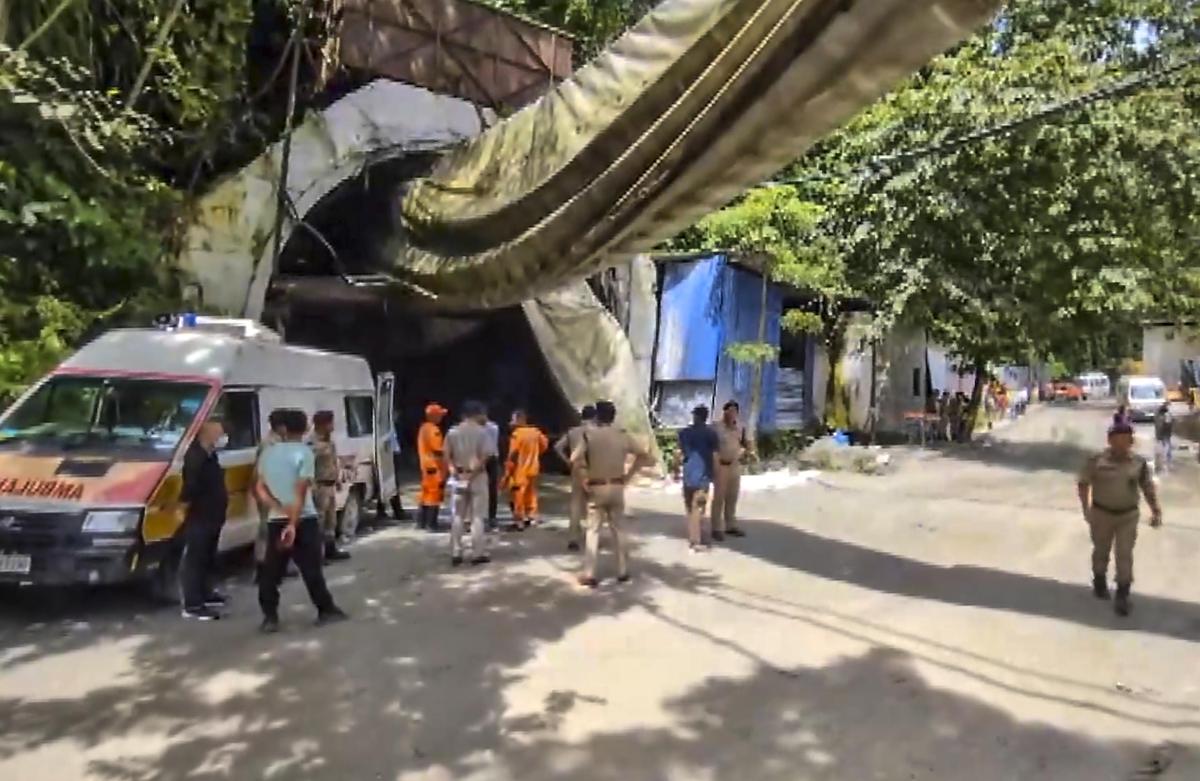
The death toll in the Sikkim tunnel disaster has continued to rise as rescue teams recover more bodies from an under-construction hydropower project tunnel in the State. The operation has been complicated by waterlogging, debris and the presence of toxic gases, creating extremely dangerous conditions for personnel working inside the tunnel.
The incident took place at the under-construction Teesta Stage-VI Hydroelectric Project in South Sikkim’s Namchi district. A sudden explosion inside the tunnel, suspected to have been triggered by methane gas trapped within or released from underground rock formations, was followed by a collapse that left workers and project personnel trapped underground.
Rescue agencies have been working continuously to reach the affected section and recover those still trapped. However, the accumulation of water and mud inside the tunnel has significantly slowed the operation. The presence of hazardous gases has added another major challenge, forcing rescuers to take additional safety precautions while entering the affected area.
The disaster unfolded on Monday when the suspected methane release led to an explosion inside the tunnel. The blast reportedly generated dense smoke and toxic fumes, while the subsequent collapse blocked access routes and made it difficult for rescue personnel to reach those caught inside.
As rescue operations progressed, teams from multiple agencies were deployed to the site. The National Disaster Response Force, State Disaster Response Force, local authorities, project personnel and specialised rescue teams have been involved in the search and recovery operation. Efforts have focused on removing accumulated water, clearing obstructions and carefully reaching sections of the tunnel where trapped workers are believed to be located.
Officials have indicated that the rescue operation is being conducted under highly challenging circumstances. The water collected inside the tunnel has made the movement of equipment and personnel difficult, while unstable conditions and toxic gases continue to pose risks to rescuers. Teams have therefore been required to proceed cautiously as they search through the damaged sections.
The incident has caused widespread grief among the families of workers associated with the project. Relatives have been waiting anxiously for information about their loved ones as rescue teams continue their efforts at the disaster site. Emergency medical teams and ambulances have also been kept ready to provide immediate assistance to anyone who may be brought out of the tunnel.
The tragedy has also renewed concerns over safety in major infrastructure projects being constructed in the Himalayan region. Sikkim’s mountainous terrain is geologically fragile, while heavy monsoon rainfall can increase the risk of landslides, flooding and other hazards. Construction activities involving deep underground excavation can become particularly challenging when workers encounter unstable rock formations or gases trapped beneath the surface.
The exact circumstances that led to the explosion and subsequent collapse are expected to be examined through a detailed investigation. Authorities will need to establish how the suspected methane accumulation occurred, whether adequate monitoring systems were in place and whether all necessary safety procedures were being followed before the incident.
The disaster has once again highlighted the risks faced by workers involved in large-scale construction and hydropower projects in difficult geographical conditions. Such incidents underline the importance of continuous gas monitoring, emergency evacuation plans, tunnel ventilation, structural assessments and strict adherence to workplace safety standards.
The State government has announced financial assistance for the families of workers who lost their lives, while additional compensation has also been announced for those injured in the incident. The measures are intended to provide immediate support to affected families as rescue and recovery operations continue.
Despite the difficult circumstances, rescue personnel have remained engaged in the operation, working to recover those trapped inside and bring the search to a conclusion. The focus remains on ensuring that the tunnel is made as safe as possible for rescuers while continuing efforts to locate and retrieve the remaining victims.
The Sikkim tunnel disaster is likely to prompt renewed scrutiny of safety practices in underground construction projects, particularly in ecologically and geologically sensitive Himalayan regions. As authorities assess the circumstances surrounding the incident, questions about risk assessment, emergency preparedness and worker protection are expected to remain central to the investigation.
For families waiting at the site and elsewhere, the continuing rescue operation remains a deeply emotional and uncertain period. The recovery efforts are being closely monitored as teams work through debris, water and hazardous conditions in an attempt to complete the search operation and account for everyone affected by the tragedy.