
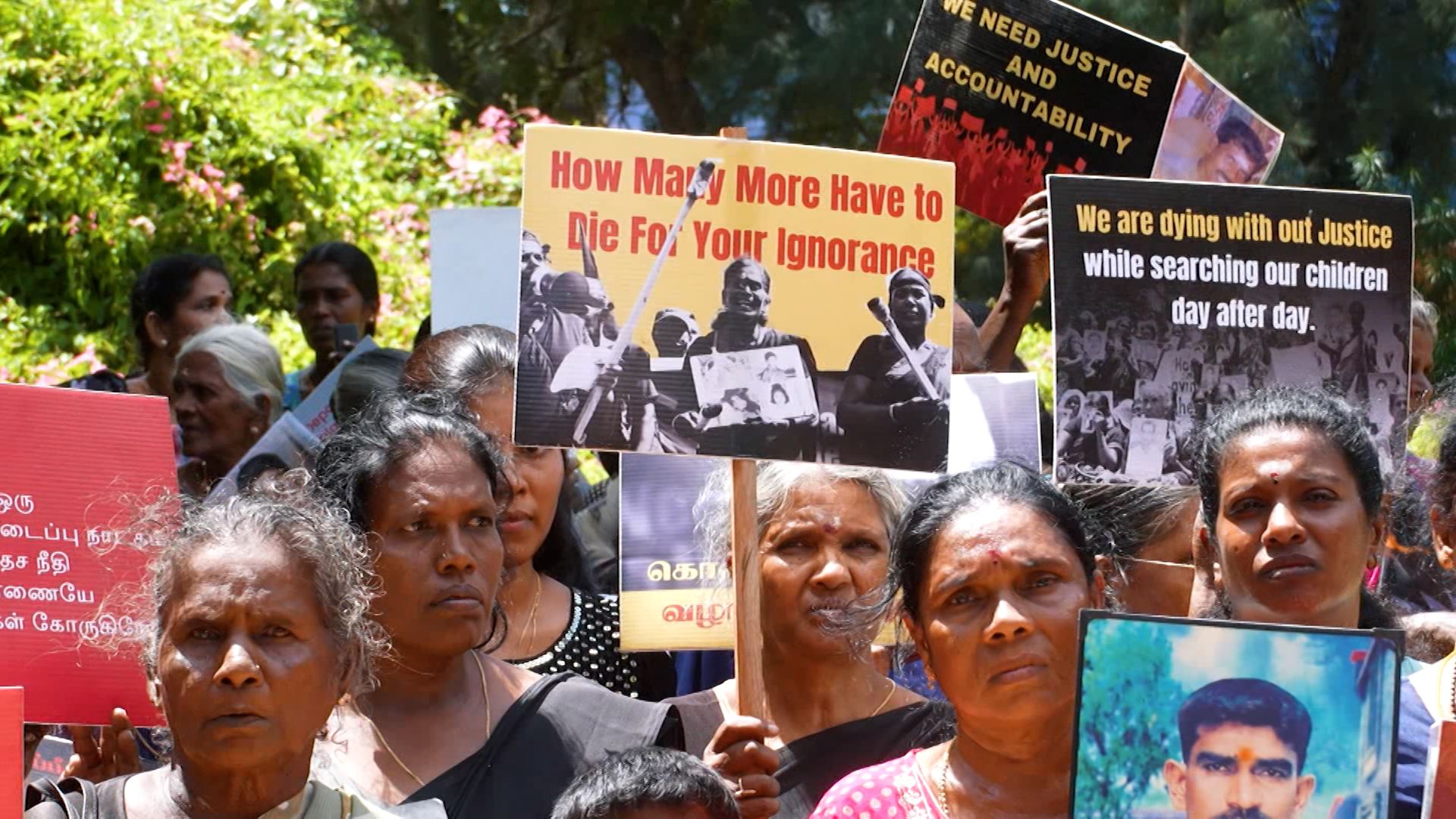
Families of people who disappeared during Sri Lanka’s decades-long civil conflict staged a peaceful protest during a visit by a delegation from the European Union to the Chemmani mass grave site in the country’s northern region. The demonstrators called for an independent international investigation into the mass grave, insisting that only a credible external inquiry can uncover the truth and deliver justice to victims and their families.
The protest highlighted the continuing struggle of thousands of families who have spent years searching for missing relatives believed to have disappeared during the country’s armed conflict. Carrying photographs of their loved ones and placards demanding accountability, the families appealed to the visiting delegation to support an impartial international process rather than relying solely on domestic investigations.
Families Seek Truth and Accountability
Protesters argued that they have repeatedly lost confidence in previous local investigations, claiming that many inquiries have failed to establish accountability or provide clear answers regarding the fate of those who disappeared. They urged the international community to ensure that forensic examinations, evidence collection, and legal proceedings are conducted transparently and independently.
Relatives of the missing emphasized that justice remains incomplete without identifying victims, determining the circumstances of their deaths, and holding those responsible accountable under international legal standards. They also appealed for greater global attention to the issue of enforced disappearances and alleged wartime abuses.
Significance of the Chemmani Mass Grave
The Chemmani mass grave has long remained one of Sri Lanka’s most sensitive human rights cases. It has drawn attention from domestic and international observers due to allegations that the site contains the remains of civilians who disappeared during periods of conflict.
The location has been associated with longstanding demands for comprehensive forensic investigations and scientific identification of human remains. Human rights advocates have consistently argued that every discovery at the site should be handled according to internationally accepted forensic procedures to preserve evidence and ensure credibility.
Recent developments surrounding the site have renewed public interest and intensified calls for transparency, particularly among affected communities in northern Sri Lanka. 
EU Delegation’s Visit Draws Attention
The European Union delegation visited the area as part of its broader engagement with Sri Lanka on governance, human rights, and post-conflict reconciliation. During the visit, members of the delegation observed the situation at the excavation site while interacting with local stakeholders.
The presence of international representatives provided families of the disappeared with an opportunity to directly present their concerns. Demonstrators appealed for stronger international involvement in monitoring the investigation process and ensuring that justice is not delayed further.
Many participants stressed that international oversight would increase public confidence in the investigation and strengthen efforts to establish the truth.
Longstanding Demands from Victims’ Families
For years, organizations representing families of the disappeared have campaigned for answers about thousands of unresolved cases linked to Sri Lanka’s civil war. Despite multiple commissions, investigations, and institutional mechanisms established over the years, many families maintain that meaningful accountability has remained elusive.
Victims’ groups argue that delayed investigations, limited prosecutions, and the absence of conclusive findings have prolonged the suffering of affected families. They continue to seek full disclosure of records, identification of victims through modern forensic techniques, and judicial action wherever evidence supports criminal responsibility.
Calls for International Support Continue
Human rights organizations have repeatedly emphasized the importance of preserving evidence at suspected mass grave sites while ensuring that investigations remain free from political influence. Families at the protest urged international institutions to continue monitoring developments and to support an independent investigative framework capable of meeting international standards.
They said that uncovering the truth is essential not only for individual families but also for Sri Lanka’s broader efforts toward reconciliation, justice, and lasting peace.
As investigations at the Chemmani site continue, expectations remain high among victims’ families that the international community will play a meaningful role in supporting transparency, accountability, and the pursuit of justice for those who disappeared during one of the country’s darkest chapters.