
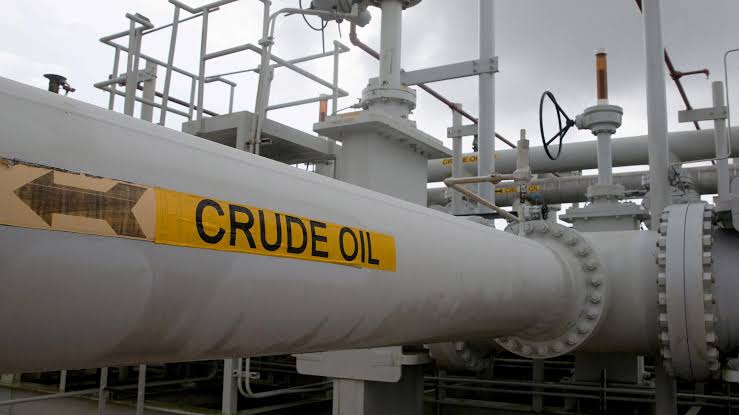
Global oil prices could climb sharply in the coming months if disruptions to crude shipments through the strategically vital Strait of Hormuz continue, with Brent crude potentially rising above $120 a barrel by the fourth quarter, according to a Goldman Sachs assessment.
The projection comes amid heightened geopolitical tensions in the Middle East and growing concerns over the movement of energy supplies from the Persian Gulf. While the financial institution does not consider a prolonged disruption to be its most likely scenario, analysts have warned that continued restrictions on shipping routes could significantly tighten global oil supplies and push prices higher.
Goldman Sachs currently expects Brent crude to average around $80 a barrel in the fourth quarter and approximately $75 a barrel next year, based on the assumption that tensions in the Middle East will gradually ease. However, the bank has said the risks surrounding its forecasts are tilted toward higher prices because of uncertainty over shipping through the Strait of Hormuz and possible disruptions in the Red Sea.
The Strait of Hormuz is one of the world’s most important energy corridors, carrying a substantial share of global oil supplies. Any prolonged interruption to tanker traffic through the waterway can have an immediate impact on international energy markets, raising concerns about supply shortages, transportation costs and inflation.
Middle East conflict fuels oil market uncertainty
Oil markets have experienced significant volatility as renewed fighting involving the United States and Iran has raised fears of a wider disruption to regional energy infrastructure and shipping routes.
Brent crude prices have recently moved above $91 a barrel, reflecting the market’s growing concern over the security of oil supplies. Analysts have pointed to a sharp decline in estimated Persian Gulf oil flows, which have reportedly fallen to below 45% of pre-war levels.
The reduced flow of crude has increased pressure on global energy markets at a time when geopolitical uncertainty is already affecting supply expectations. Market participants are closely watching developments in the Persian Gulf, particularly any signs that the conflict could spread or that major shipping lanes could become increasingly difficult to use.
The situation has also raised concerns about the Red Sea, where threats from Yemen-based Houthi forces to disrupt shipments linked to Saudi Arabia could create another obstacle for the movement of energy supplies.
The Red Sea has played an important role in helping redirect Persian Gulf crude cargoes to international buyers when traditional routes face disruption. Any significant deterioration in shipping conditions could therefore add another layer of pressure to the global oil market. 
Why the Strait of Hormuz is critical
The Strait of Hormuz is a narrow but strategically crucial waterway connecting the Persian Gulf with the Gulf of Oman and the Arabian Sea. It serves as a major transit route for oil and other energy products exported from some of the world’s largest producing nations.
Because of its importance to global energy trade, even temporary disruptions can trigger sharp movements in crude prices. A prolonged reduction in tanker traffic could force buyers to compete for a smaller pool of available supplies, potentially pushing benchmark prices significantly higher.
The prospect of Brent crude rising above $120 a barrel highlights the scale of the potential risk. Such a price increase could have consequences well beyond the energy sector, affecting transportation costs, industrial production, inflation and household expenses in countries that rely heavily on imported fuel.
For oil-importing economies, sustained high crude prices can also put pressure on trade balances and currencies. Governments may face difficult choices over fuel prices, subsidies and inflation management if energy costs remain elevated for an extended period.
Goldman Sachs sees escalation risk but expects eventual easing
Despite the warning about a possible surge above $120 a barrel, Goldman Sachs’ current outlook remains more moderate. Its baseline forecast assumes that geopolitical tensions will eventually de-escalate, allowing oil flows to recover and reducing the supply premium currently built into prices.
Under that scenario, Brent crude would be expected to settle around $80 a barrel during the fourth quarter and decline further toward $75 a barrel next year.
However, the bank’s analysts have stressed that the risks to these forecasts are primarily on the upside. The longer shipping disruptions continue, the greater the possibility that the oil market will face a sustained supply shock.
Lower global inventories have further increased the market’s vulnerability. With fewer stockpiles available to absorb an unexpected reduction in supply, even a relatively short disruption could have a larger impact on prices than it might under more comfortable inventory conditions.
Demand weakness could limit the rise
While supply concerns are driving much of the current oil price volatility, analysts have also identified factors that could prevent prices from rising indefinitely.
A slowdown in Chinese crude imports could reduce global demand for oil. China is one of the world’s largest oil consumers, and any weakening in its import demand can have a significant effect on international markets.
Greater sensitivity among consumers and businesses to high fuel prices could also limit demand. When crude prices rise sharply, motorists may reduce consumption, while industries can delay investments or seek more efficient alternatives.
These demand-side pressures could help offset some of the impact of supply disruptions and prevent the market from moving immediately toward the most extreme price scenarios.
The balance between these competing forces—restricted supply on one side and potentially weaker demand on the other—will remain critical in determining the direction of oil prices over the coming months.
Diesel markets face additional supply pressures
The potential oil shock is not the only concern facing energy markets. Goldman Sachs has also highlighted risks in the European diesel market, suggesting that investors seeking protection against prolonged geopolitical disruptions could consider positions linked to diesel price spreads.
Diesel markets were already facing tight conditions before the latest escalation in regional tensions. At the same time, attacks on Russian refining facilities have created additional uncertainty around the availability of refined petroleum products.
Other risks could further complicate the supply outlook. Analysts have pointed to the possibility of disruptions caused by hurricanes, extreme summer temperatures and delays in scheduled refinery maintenance.
Together, these factors could place additional pressure on refined fuel markets even if crude oil production remains relatively stable.
Brent prices remain highly volatile
The latest developments underscore how quickly oil markets can react to geopolitical events. Brent futures were recently trading around $88.65 a barrel, while prices had climbed above $126 a barrel in late April during the initial phase of the US-Iran conflict.
The wide gap between those price levels illustrates the sensitivity of crude markets to changing expectations about war, diplomacy and shipping security.
Any indication of a ceasefire, peace agreement or broader diplomatic breakthrough could ease concerns about supply disruptions and bring prices lower. Conversely, further military escalation or a prolonged interruption of energy shipments could push crude prices sharply higher.
For now, the outlook remains dependent on developments in the Middle East. The central question for energy markets is whether shipping through the Strait of Hormuz and other key routes can return to normal or whether disruptions will persist long enough to create a deeper global supply shock.
If the disruption continues, the possibility of Brent crude moving above $120 a barrel could become a major concern for governments, businesses and consumers worldwide. If tensions ease and oil flows recover, however, prices could move closer to the more moderate levels projected in Goldman Sachs’ baseline forecast.
The coming weeks are therefore likely to remain crucial for global energy markets, with geopolitical developments, shipping activity, oil inventories and demand trends all playing a role in determining the next major move in crude prices.