
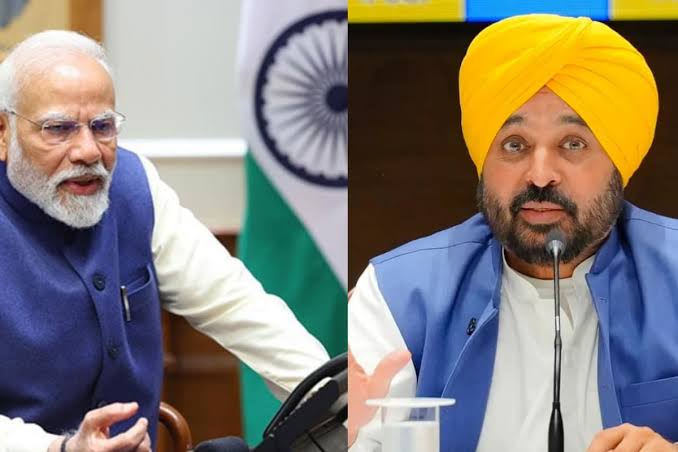
Political tensions between the Punjab government and the Centre came into sharp focus after Punjab Chief Minister Bhagwant Mann did not attend Prime Minister Narendra Modi’s official event in Jalandhar. The absence of the Chief Minister has intensified the ongoing political debate over Centre-state relations, governance priorities, and the evolving dynamics between the Aam Aadmi Party (AAP)-led Punjab government and the Bharatiya Janata Party (BJP)-led Union government.
The Prime Minister visited Jalandhar to inaugurate and dedicate several development projects aimed at improving infrastructure, public services, and regional connectivity. The event was designed to showcase the Centre’s commitment to accelerating development in Punjab through investments in transport, urban infrastructure, and public welfare initiatives.
However, what attracted significant political attention was Bhagwant Mann’s decision to skip the function. His absence immediately became the subject of political discussions, with leaders from different parties interpreting the move through contrasting political lenses.
Backdrop of the Political Dispute
The Chief Minister’s decision comes amid growing disagreements between the Punjab government and the Centre on multiple administrative and political issues. Over recent months, both governments have publicly disagreed on matters involving financial allocations, agricultural policies, law and order, and federal governance.
Political observers believe that Mann’s absence reflects broader tensions rather than being an isolated protocol-related issue. The relationship between the two governments has experienced several moments of confrontation, with each side accusing the other of ignoring Punjab’s interests.
Officials close to the Punjab government have maintained that the Chief Minister’s decision was linked to the prevailing political circumstances and ongoing concerns over issues affecting the state. Meanwhile, BJP leaders have criticised the move, arguing that official development programmes should remain above political differences.
Development Projects Remain the Focus
Despite the political controversy surrounding attendance, the Prime Minister’s visit centered on the launch of multiple public infrastructure projects intended to strengthen Punjab’s economic growth and improve public services.
The projects are expected to contribute to better transportation facilities, enhanced civic infrastructure, and increased employment opportunities during construction and implementation phases. Government representatives highlighted that such investments are intended to improve connectivity while supporting industrial and commercial activity across the region.
Officials also stressed that infrastructure development remains essential for attracting investment and promoting long-term economic stability in Punjab. 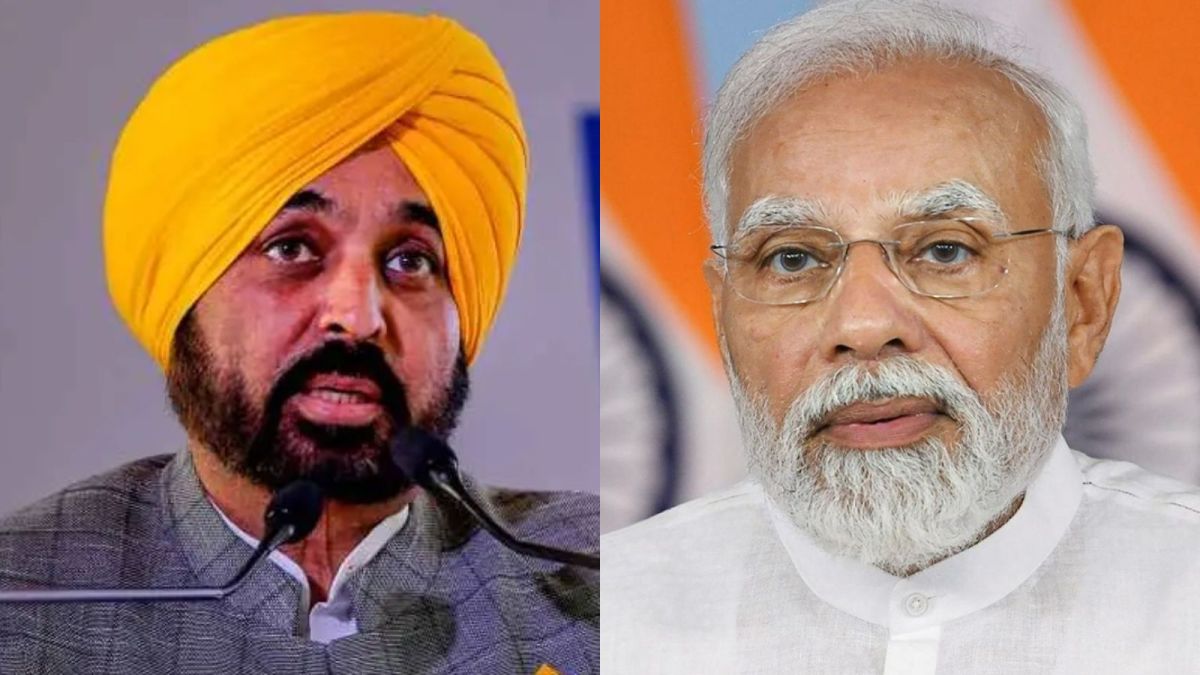
Political Reactions Intensify
The Chief Minister’s absence prompted strong political reactions from both the ruling BJP and opposition parties.
BJP leaders described the decision as inappropriate for an official government programme involving developmental initiatives. They argued that constitutional offices should work together on issues concerning public welfare regardless of political rivalry.
On the other hand, leaders supporting the Punjab government defended Mann’s decision, stating that unresolved disputes between the Centre and the state cannot be overlooked merely for ceremonial appearances. They argued that Punjab has consistently raised concerns regarding financial support, federal cooperation, and policy implementation.
The political exchange has once again highlighted the increasingly confrontational relationship between the Centre and several opposition-ruled states.
Centre-State Relations Under Spotlight
The incident has renewed debate over the functioning of India’s federal structure, particularly the relationship between state governments and the Union government.
Experts note that official events involving senior constitutional authorities have increasingly become politically sensitive in recent years. While protocol generally encourages cooperation during public programmes, political disagreements often influence participation.
The Punjab government’s supporters argue that symbolic gestures can convey dissatisfaction over unresolved governance issues. Conversely, critics believe development-focused events should remain insulated from political disputes to ensure a united approach toward public welfare.
Significance for Punjab Politics
Punjab continues to witness intense political competition involving the Aam Aadmi Party, the Bharatiya Janata Party, the Congress, and the Shiromani Akali Dal. Every major political event is closely watched for indications of changing alliances, governance priorities, and electoral positioning.
Bhagwant Mann’s absence is likely to remain part of the broader political narrative surrounding Centre-state cooperation ahead of future policy discussions and electoral campaigns. Political analysts believe that such symbolic decisions often resonate with party supporters while simultaneously inviting criticism from opponents.
Although the development projects announced during the Prime Minister’s visit are expected to benefit the region over time, the political controversy has overshadowed much of the administrative agenda associated with the event.
Looking Ahead
The latest episode reflects the continuing challenges in maintaining cooperative federalism amid increasing political competition. While infrastructure development remains a shared objective for both the Centre and the states, political disagreements continue to influence public perception and administrative interactions.
As Punjab navigates important governance, economic, and agricultural challenges, constructive engagement between both governments is likely to remain essential for ensuring timely implementation of development initiatives and addressing issues affecting the state’s citizens.