
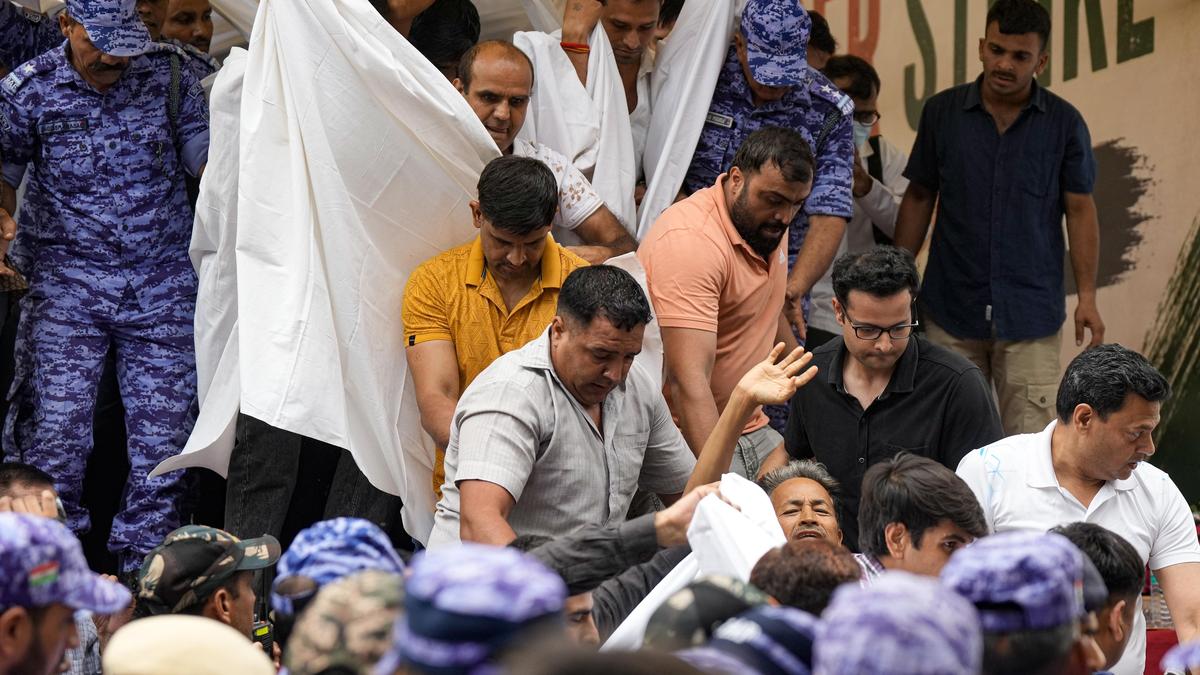
A fresh political and civil rights controversy has emerged after Citizens for Justice and Peace (CJP) leader Abhijeet Dipke announced an indefinite hunger strike following the hospitalisation of environmental activist Sonam Wangchuk. The development has intensified the ongoing protest movement, with supporters accusing the authorities of mishandling the situation and demanding accountability from the government.
Dipke’s decision to launch the hunger strike came shortly after Wangchuk was shifted to a hospital due to concerns about his health. The activist had been participating in a prolonged protest aimed at drawing attention to issues related to governance, democratic rights, and constitutional safeguards. His deteriorating health has sparked widespread concern among supporters, activists, and several public figures.
Hunger Strike Announced in Solidarity
Addressing supporters, Abhijeet Dipke declared that he would continue his indefinite fast until meaningful action is taken regarding the concerns raised during the protest. He described the move as an act of solidarity with Wangchuk and stated that the protest was intended to protect democratic values and ensure that citizens’ voices are heard.
Dipke argued that peaceful demonstrations should be respected in a democratic society and urged authorities to engage constructively with those raising public concerns rather than allowing the situation to escalate.
Health Concerns Surround Sonam Wangchuk
The hospitalisation of Sonam Wangchuk has become a focal point of the ongoing protest. According to those associated with the movement, Wangchuk’s health deteriorated after an extended period of fasting and sustained participation in demonstrations.
Medical attention was considered necessary after his condition reportedly worsened, prompting concerns among supporters about the physical toll of the protest. The incident has also reignited discussions on the welfare and safety of individuals undertaking prolonged hunger strikes as a form of peaceful resistance. 
Political Demands Intensify
Alongside the hunger strike announcement, Dipke made strong political demands, calling for accountability from the country’s leadership. He urged those responsible for handling the situation to take moral responsibility and respond to the concerns raised by the protesters.
The protest leadership maintained that the movement is not limited to a single individual but represents broader public concerns regarding governance, democratic participation, and the protection of constitutional principles.
Supporters have argued that constructive dialogue remains the most effective way to address the issues instead of allowing tensions to grow.
Growing Public Attention
The developments have attracted significant attention across political circles and civil society organisations. Several activists have expressed solidarity with Wangchuk and Dipke, while discussions surrounding the protest have gained momentum on social media platforms.
Observers believe the hospitalisation of Wangchuk has added urgency to the movement, placing greater public focus on the demands being raised by the protesters. The situation is likely to remain under close watch as authorities respond to the growing pressure from activists and supporters.
Calls for Peaceful Resolution
Civil society members have appealed for a peaceful resolution through dialogue between the protesters and the government. They emphasised that democratic societies function best when differing viewpoints are addressed through communication and constitutional processes.
With Dipke now undertaking an indefinite hunger strike and Wangchuk receiving medical care, the protest movement has entered a critical phase. The coming days are expected to determine whether discussions between stakeholders can help resolve the impasse and address the concerns that have driven the demonstrations.
Government authorities have not announced any major policy changes in response to the latest developments. However, the evolving situation continues to attract nationwide attention as questions surrounding democratic engagement, public protest, and government accountability remain at the centre of the debate.