
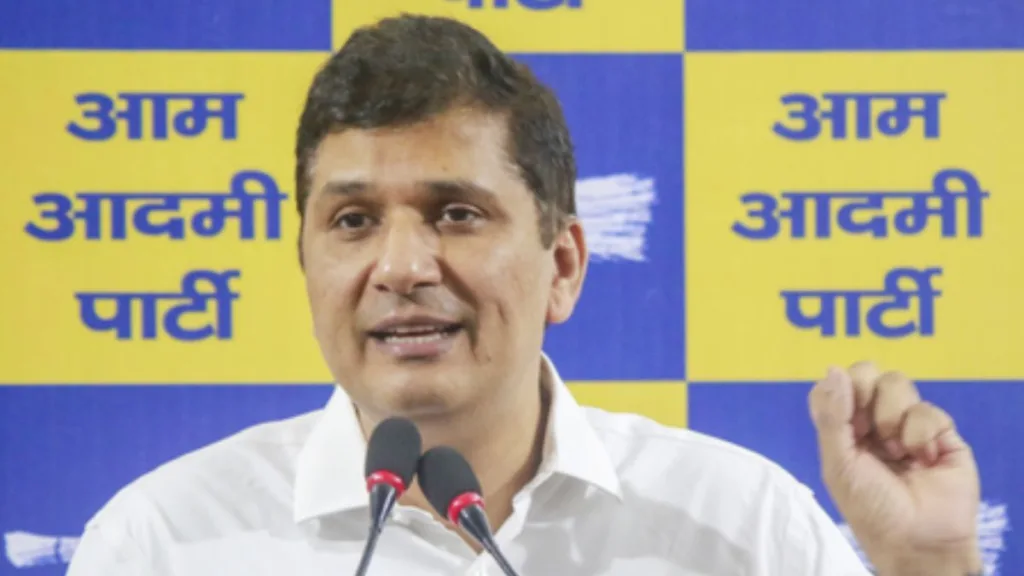
A fresh political controversy has emerged in the national capital after the appointment of senior Indian Police Service (IPS) officer Anurag Kumar as the new Commissioner of Delhi Police. The Aam Aadmi Party (AAP) has claimed that the leadership change within the Delhi Police is closely connected to the administration’s handling of recent public protests, alleging that officials are being rewarded or replaced based on political considerations.
The allegations come in the wake of demonstrations led by climate activist and education reformer Sonam Wangchuk and members of the Citizens’ Justice Platform (CJP), who have been protesting over issues related to Ladakh and constitutional safeguards. The protests witnessed heightened police action, resulting in detentions and criticism from opposition leaders and civil society groups.
AAP Questions Timing of Appointment
Reacting to the appointment of Anurag Kumar as Delhi Police Commissioner, AAP leaders questioned the timing of the decision and suggested that it was not merely an administrative reshuffle. According to the party, the change in leadership reflects a broader pattern of accountability within the police force following the handling of recent protests.
AAP alleged that “heads are rolling” within the Delhi Police hierarchy and claimed that the appointment of the new Commissioner should be viewed alongside recent developments involving law enforcement’s response to public demonstrations.
The party argued that the government appears to be making leadership changes in response to the political fallout surrounding the protest management rather than carrying out routine administrative appointments.
Protests Trigger Political Debate
The controversy follows demonstrations organised by supporters of Sonam Wangchuk and the Citizens’ Justice Platform, who have been demanding stronger constitutional protections and greater attention to issues affecting Ladakh.
The protests attracted significant public attention and led to police intervention in parts of Delhi. Several activists and demonstrators were reportedly detained during attempts to march or gather in restricted areas. The police maintained that their actions were aimed at preserving law and order and ensuring compliance with security regulations.
However, opposition parties and activists accused the authorities of using excessive force and restricting the democratic right to peaceful protest. The incidents have since become a subject of political debate, with the opposition demanding greater accountability from both the police and the central government. 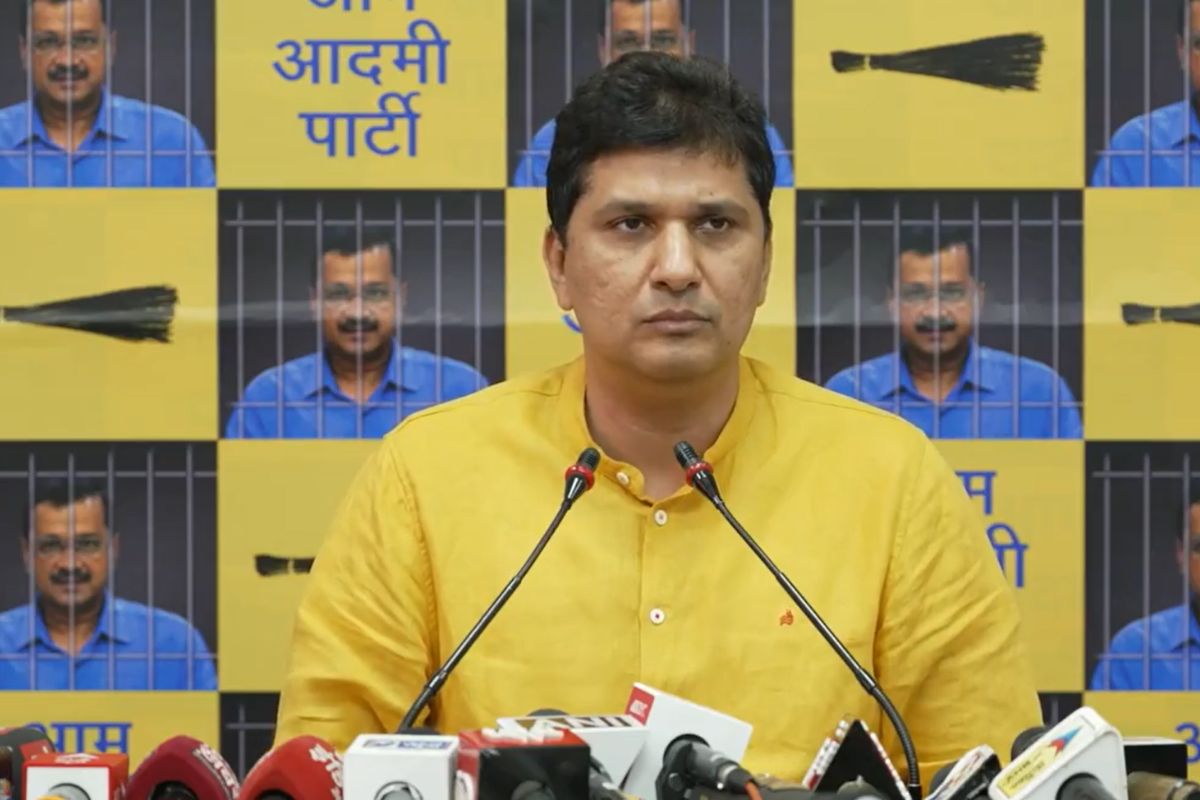
Appointment of New Police Commissioner
Anurag Kumar, a senior IPS officer with extensive policing experience, has been appointed as the new Commissioner of Delhi Police. Leadership changes within the police force are periodically undertaken as part of administrative restructuring, retirements, or government decisions regarding senior appointments.
While the government has presented the appointment as a standard administrative decision, AAP insists that the timing raises important questions given the recent controversy surrounding protest management.
The party has sought greater transparency regarding the circumstances leading to the leadership change and has accused the ruling establishment of attempting to shift responsibility for public criticism arising from the police response.
Government Yet to Respond to Allegations
As the political debate intensified, there was no immediate official response from the central government directly addressing AAP’s allegations linking the appointment to the recent protests.
Officials have continued to maintain that appointments to senior police positions are made following established administrative procedures and based on service requirements.
Political observers note that appointments to key law enforcement positions often attract heightened scrutiny, particularly when they coincide with major public events or politically sensitive developments.
Growing Political Confrontation
The issue has further escalated tensions between the Aam Aadmi Party and the Bharatiya Janata Party (BJP), with both sides offering sharply contrasting narratives.
AAP has portrayed the leadership change as evidence of political interference in policing, while the ruling establishment has consistently maintained that law enforcement agencies operate according to legal and administrative frameworks.
The controversy is expected to remain a significant political issue in Delhi as opposition parties continue demanding accountability over the handling of protests and the circumstances surrounding recent administrative decisions within the police force.
As public attention remains focused on both the protest movement and developments within the Delhi Police, the debate is likely to continue over questions of governance, law enforcement independence, and the balance between maintaining public order and protecting democratic rights.