
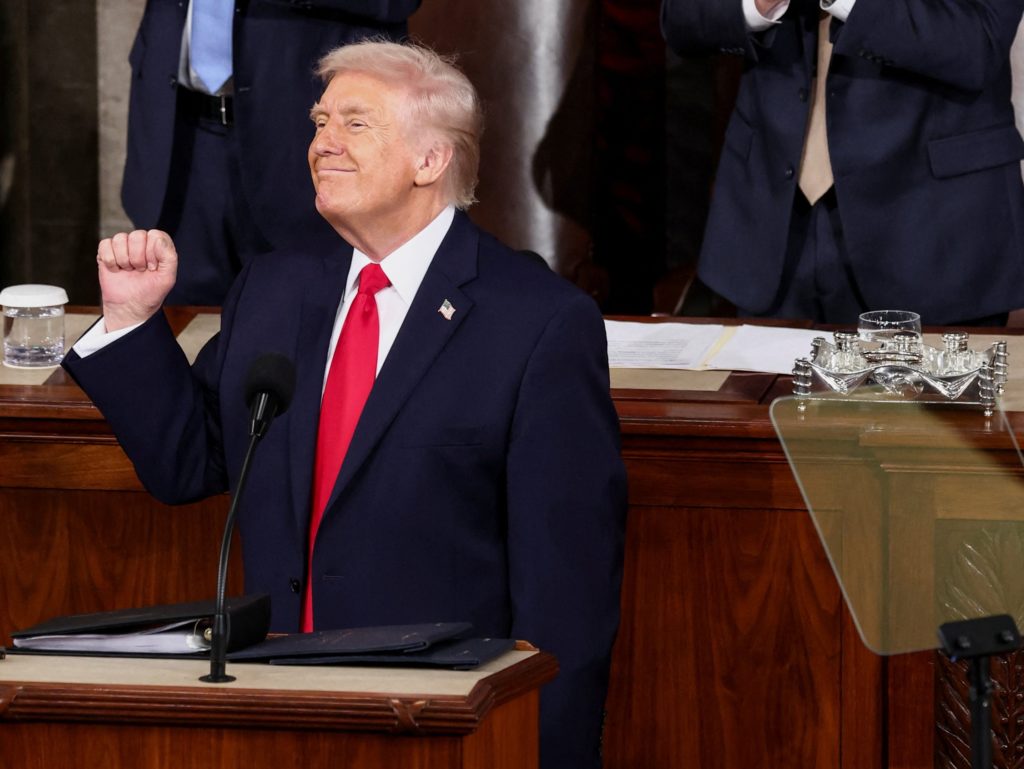
As the United States moves deeper into the election campaign, former President Donald Trump has continued to highlight his administration’s achievements while defending his current policies and criticizing his political opponents. During a recent speech, Trump made several major claims about immigration, inflation, employment, trade, and the overall state of the American economy.
Many of these statements have become central themes of his campaign. However, several of the claims require closer examination against publicly available government data, economic reports, and official statistics. While some of Trump’s statements are supported by available evidence, others are only partially accurate or lack sufficient context.
Below is a detailed examination of some of the most notable claims made during the speech.
Claim: The United States Has Recorded ‘Zero Illegal Aliens’ Entering the Country
One of Trump’s strongest assertions was that the country had effectively reduced illegal immigration to zero.
Immigration data, however, presents a more complex picture. Border enforcement agencies have reported a significant decline in illegal crossings compared with the record-high numbers seen during previous years. The reduction follows expanded enforcement measures, increased deportations, tighter asylum policies, and stronger coordination with neighboring countries.
Despite this sharp decline, government statistics continue to record encounters involving migrants attempting to enter the United States illegally. Therefore, while border crossings have fallen substantially, available data does not support the claim that illegal immigration has completely stopped.
Experts note that illegal crossings fluctuate depending on seasonal migration patterns, enforcement operations, and geopolitical developments across Latin America.
Claim: Inflation Is Experiencing Its Largest Monthly Decline
Trump also argued that inflation has recorded the largest monthly decline in recent history, portraying it as evidence of improving economic conditions.
Recent inflation data does indicate that consumer price growth has slowed considerably compared with the peak levels recorded in earlier years. Prices for several consumer goods, energy products, and transportation services have stabilized, while overall inflation has eased.
However, economists point out that describing the change as the “largest monthly decline” depends on which inflation indicator is being measured. Different government inflation indexes—including headline inflation and core inflation—often produce different results.
Although inflation has moderated significantly, many essential goods, including housing, insurance, healthcare, and groceries, remain considerably more expensive than they were several years ago. Consumers continue to experience higher living costs despite the slowdown in price increases. 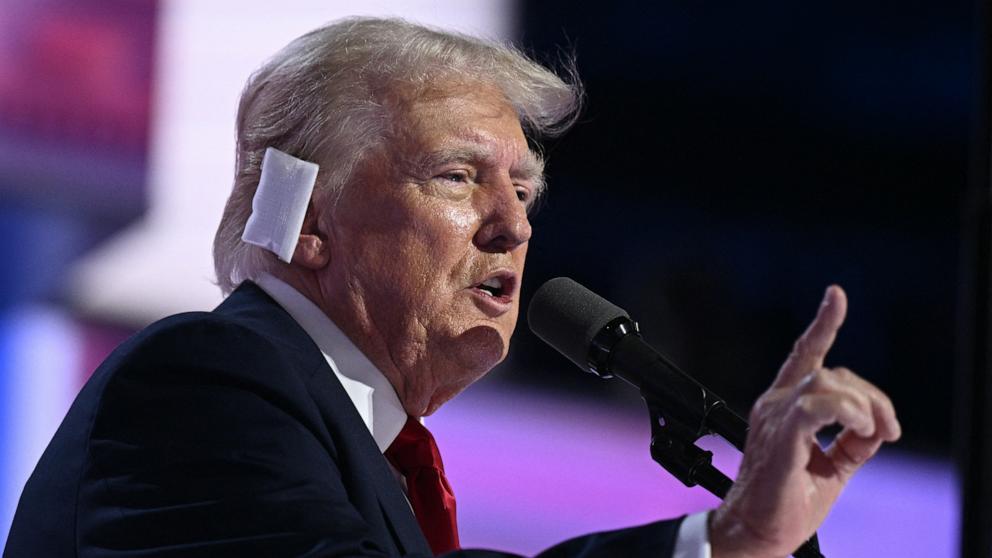
Claim: The Economy Is Performing Better Than Ever
Trump described the American economy as being in excellent condition and credited his policies with creating stronger economic growth.
Economic indicators present a mixed picture.
The United States continues to maintain one of the world’s strongest labor markets, with unemployment remaining relatively low and businesses continuing to add jobs. Consumer spending has also remained resilient despite higher interest rates.
At the same time, economic growth has faced pressure from elevated borrowing costs, persistent housing affordability issues, and uncertainty surrounding international trade. Manufacturing performance has shown varying trends across different sectors, while businesses continue to monitor global economic risks.
Economists generally agree that the economy remains resilient, although opinions differ on whether current performance can be attributed to any single administration or policy.
Claim: Tariffs Are Strengthening American Manufacturing
Trump defended tariffs on imported products, arguing that they are encouraging domestic manufacturing and protecting American workers.
Supporters of tariffs argue that they help reduce dependence on foreign imports, encourage companies to invest within the United States, and strengthen strategic industries.
Critics, however, contend that tariffs often increase costs for businesses that rely on imported materials. Higher import costs may eventually be passed on to consumers through increased prices. Several economic studies have found that while tariffs can benefit certain industries, they may also create higher costs elsewhere in the economy.
The long-term economic impact of tariffs remains the subject of continuing debate among economists.
Claim: Job Growth Remains Strong
Trump highlighted continued job creation and argued that employment levels demonstrate the strength of the economy.
Official labor market data confirms that the United States continues to maintain relatively healthy employment figures. Job creation has remained positive across multiple sectors, although hiring has slowed from the rapid pace observed during the post-pandemic recovery.
Healthcare, professional services, hospitality, and government employment have continued to add jobs, while certain manufacturing and technology sectors have experienced periods of slower hiring or workforce reductions.
Analysts note that employment growth remains positive but is gradually returning to more sustainable levels following several years of unusually strong labor demand.
Immigration Continues to Dominate the Campaign
Immigration remains one of the defining issues in the current presidential campaign.
Trump has consistently argued for stricter border enforcement, expanded deportation efforts, and tougher immigration laws. His campaign continues to portray border security as a national priority, arguing that stronger enforcement is necessary to reduce crime, improve public safety, and protect American jobs.
Opponents, meanwhile, argue that immigration policy should balance border security with humanitarian protections for asylum seekers and lawful migration pathways.
The issue is expected to remain a major point of debate throughout the election campaign.
Economic Messaging Remains Central to Trump’s Campaign
The economy continues to be another cornerstone of Trump’s campaign messaging. His speeches frequently emphasize inflation, taxation, trade policy, energy production, and employment as areas where he believes his policies deliver stronger results.
Supporters argue that these policies prioritize domestic industries, strengthen energy independence, and encourage business investment.
Critics counter that many economic trends are influenced by broader global factors, Federal Reserve decisions, and long-term structural changes rather than presidential actions alone.
Conclusion
Trump’s latest campaign speech combined policy proposals with broad claims about immigration, inflation, employment, and economic performance. While some statements align with official economic and labor data, others simplify more complex issues or overstate available evidence.
Independent reviews indicate that illegal border crossings have declined significantly but have not fallen to zero. Inflation has eased compared with previous highs, though consumers continue to face elevated prices across many sectors. Employment remains relatively strong, while the broader economic outlook continues to reflect both areas of resilience and ongoing challenges.
As the election campaign intensifies, fact-checking political claims remains essential for providing voters with accurate context and helping them distinguish between campaign rhetoric and independently verified information.