
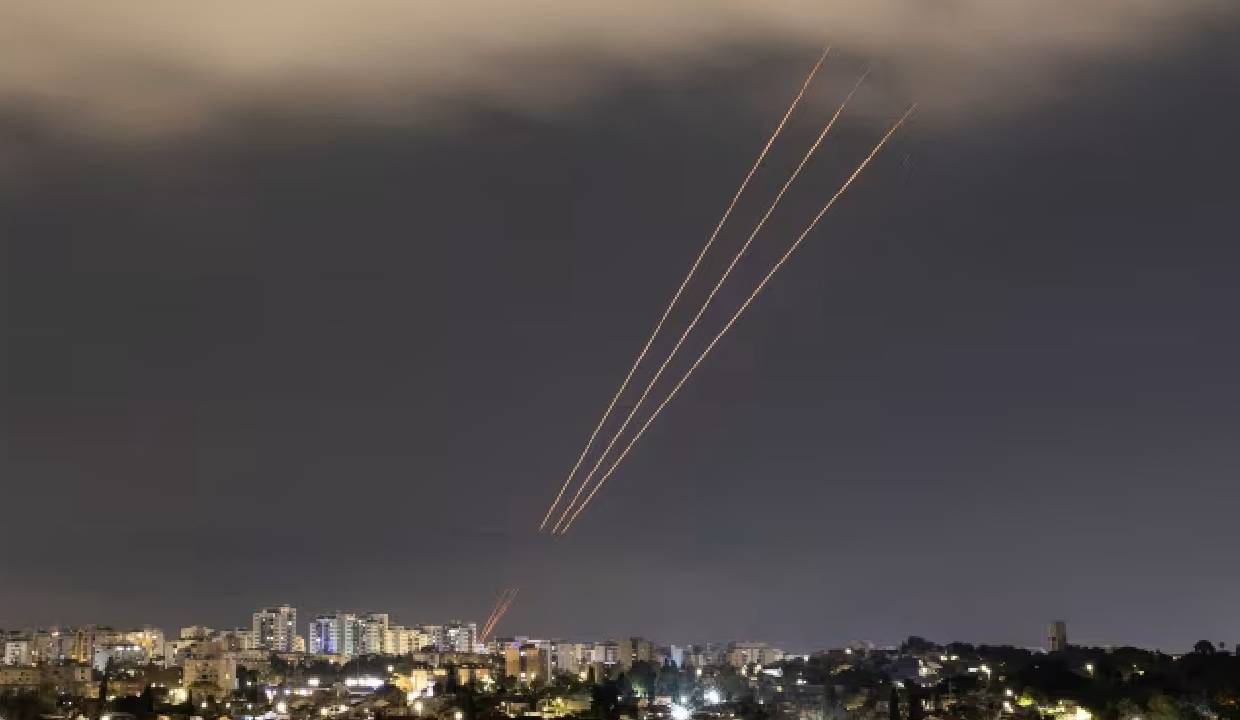
Tensions across West Asia intensified dramatically after Iran announced the launch of its military campaign, codenamed “Eye for an Eye,” targeting United States military installations in the region. The operation marks one of the most serious confrontations between Tehran and Washington in recent years, significantly increasing concerns over the possibility of a wider regional conflict.
The operation was announced by Iran’s Islamic Revolutionary Guard Corps (IRGC), which stated that the strikes were carried out in response to recent US military actions. Iranian authorities described the attacks as a direct retaliatory measure, claiming they were intended to demonstrate that any assault on Iranian interests would receive an immediate and proportional response.
Iranian Military Announces Retaliatory Action
According to Iranian military officials, multiple missiles were launched toward US military bases located in different parts of West Asia. Iranian state authorities claimed that the operation had been carefully planned and executed as a strategic response aimed at military targets rather than civilian infrastructure.
The IRGC emphasized that the campaign was designed to send a clear warning against what it described as repeated acts of aggression. Iranian officials asserted that their response was based on the principle of reciprocal retaliation, referring to the operation as “Eye for an Eye.”
Military statements from Tehran suggested that additional defensive and offensive measures remain available if further actions are taken against Iran.
Regional Security Situation Becomes Increasingly Fragile
The missile strikes have significantly heightened security concerns throughout the Middle East, where several countries host American military facilities. Governments across the region have increased security measures while closely monitoring developments.
The latest escalation has raised fears that the conflict could spread beyond the immediate participants. Military analysts believe that any prolonged exchange between Iran and the United States could affect shipping routes, energy infrastructure, and overall regional stability.
Several countries have reportedly activated emergency security protocols to safeguard critical installations and monitor possible retaliatory developments. 
United States Monitoring Developments
Following the reported attacks, US defence officials began assessing the situation and evaluating the extent of any damage to military facilities. American authorities have been closely tracking missile launches and coordinating with regional allies to ensure the safety of military personnel stationed across West Asia.
While officials continue to gather operational information, military readiness levels have reportedly been strengthened across several strategic locations.
The United States has not ruled out further measures depending on the evolving security situation, although officials have indicated that protecting American personnel remains the immediate priority.
International Community Calls for Restraint
The rapid escalation has drawn concern from governments and international observers, many of whom have urged both sides to avoid actions that could further destabilize the region.
Diplomatic efforts are expected to intensify as global powers seek to prevent the confrontation from expanding into a broader regional conflict. Analysts warn that continued military exchanges could have significant humanitarian, political, and economic consequences extending well beyond the Middle East.
The possibility of additional retaliatory actions has also raised concerns about global energy markets, international trade routes, and regional security cooperation.
Potential Impact on Global Markets
Heightened tensions in West Asia often influence international oil prices due to the region’s importance in global energy production and transportation. Financial markets are expected to remain sensitive to further military developments, particularly if critical infrastructure or major shipping corridors become affected.
Investors and governments worldwide are closely monitoring the evolving situation, recognizing that prolonged instability could disrupt supply chains and increase geopolitical uncertainty.
Situation Continues to Develop
The military confrontation remains fluid, with authorities from both Iran and the United States continuing to assess the situation. Security experts caution that the coming days will be crucial in determining whether diplomatic channels can reduce tensions or whether the conflict risks expanding further.
As regional governments remain on high alert, the international community continues to call for restraint, dialogue, and measures aimed at preventing a wider military confrontation that could threaten stability across West Asia and beyond.