
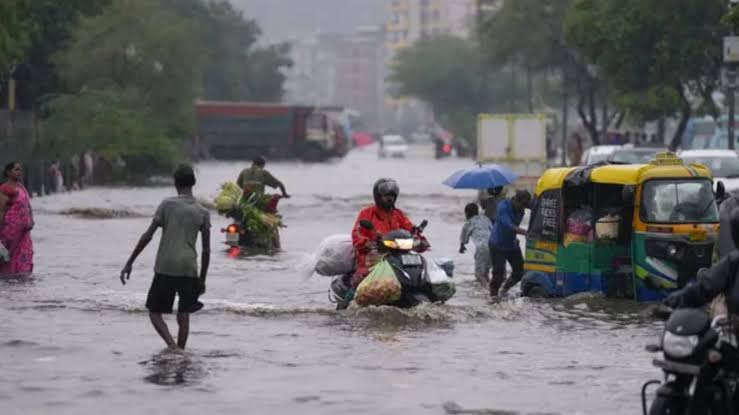
Heavy monsoon showers continued to lash large parts of India, causing widespread flooding, traffic paralysis, infrastructure damage and multiple fatalities across several states. From the National Capital Region to Kerala, Maharashtra, Uttar Pradesh and other regions, relentless rainfall severely disrupted daily life, forcing authorities to launch rescue operations while weather officials warned of more intense rain in the coming days.
The ongoing spell of heavy rainfall has inundated roads, submerged residential areas, uprooted trees and damaged public infrastructure, exposing the vulnerability of urban drainage systems and flood management mechanisms in several cities.
Delhi-NCR Faces Severe Waterlogging and Traffic Chaos
Delhi and the National Capital Region witnessed one of the most intense spells of monsoon rain this season, bringing large sections of the capital to a standstill. Continuous overnight rainfall flooded major roads, causing massive traffic jams during peak office hours and leaving thousands of commuters stranded.
Several low-lying areas remained submerged, while vehicles moved slowly through waterlogged stretches. Numerous trees were uprooted due to strong winds accompanying the rain, creating additional obstacles on roads and disrupting traffic movement across the city. Authorities issued advisories urging residents to avoid unnecessary travel and remain cautious.
Weather authorities also issued a red alert for Delhi, warning of continued heavy rainfall accompanied by thunderstorms and lightning.
Fatal Incidents Reported Amid Torrential Rain
The relentless rainfall has resulted in several rain-related deaths across different states.
In Delhi, a tragic building collapse during the heavy rain claimed multiple lives, while rescue teams continued search operations to locate those trapped beneath the debris.
Kerala also reported multiple fatalities linked to heavy rainfall and landslides, with emergency services responding to several incidents across vulnerable districts. The continuing rain has heightened concerns about fresh landslides and flash floods in hilly regions.

Kerala Battles Flooding and Landslide Threat
Kerala remained among the worst-affected states as incessant rainfall triggered flooding in several districts. Rivers continued to swell while water entered residential areas, forcing authorities to closely monitor vulnerable locations.
Orange alerts were issued for multiple districts as the possibility of extremely heavy rainfall persisted. Disaster response teams remained on standby while local administrations intensified precautionary measures, including monitoring landslide-prone regions and relocating residents from high-risk areas where necessary.
Maharashtra Experiences Rain-Related Disruptions
Heavy rainfall also affected several parts of Maharashtra, disrupting transportation and normal public life. Urban flooding in some areas slowed traffic movement, while civic agencies worked to clear blocked drains and remove accumulated water.
Emergency personnel remained deployed to address local flooding, monitor vulnerable structures and assist affected residents as rainfall continued across various districts.
Uttar Pradesh and Other States Continue to Receive Heavy Rain
Several districts in Uttar Pradesh witnessed persistent rainfall that caused waterlogging in urban centres and affected road connectivity in low-lying areas. Local administrations remained alert as rivers and drainage channels recorded rising water levels.
Elsewhere across the country, including parts of Karnataka, Gujarat, Himachal Pradesh and Uttarakhand, heavy rainfall triggered flooding, landslides and transport disruptions. Rescue teams were deployed in affected areas where roads became inaccessible due to overflowing rivers and debris.
Transport Services Hit Across Multiple Cities
The monsoon’s impact extended beyond road traffic. Waterlogged streets, flooded underpasses and reduced visibility slowed vehicular movement in several metropolitan areas.
Commuters faced long delays as public transport services struggled to maintain schedules amid flooded roads. Authorities advised motorists to avoid waterlogged routes and exercise caution while travelling through affected regions.
Emergency Response Intensified
State disaster response teams, police personnel and local administrations continued rescue and relief operations throughout the affected regions. Officials monitored river levels, inspected vulnerable infrastructure and assisted stranded residents.
Emergency agencies also urged people living near rivers, hillsides and flood-prone areas to remain vigilant and follow official advisories as weather conditions remained unstable.
More Rain Forecast
Meteorological authorities have warned that active monsoon conditions are likely to persist over several parts of the country. Additional spells of heavy to very heavy rainfall are expected in northern, western and southern India, raising concerns about further flooding, landslides and traffic disruptions.
Residents in vulnerable regions have been advised to stay updated with official weather bulletins, avoid unnecessary travel during periods of intense rainfall and cooperate with local authorities if evacuation becomes necessary.
Situation Remains Under Close Watch
With monsoon activity expected to continue, authorities across India remain on high alert to minimise loss of life and property. Rescue operations, infrastructure restoration and precautionary measures are ongoing as emergency agencies prepare for additional rainfall over the coming days.
The latest spell of monsoon weather has once again highlighted the significant challenges posed by extreme rainfall, particularly in densely populated urban centres where drainage systems continue to struggle under intense downpours.