
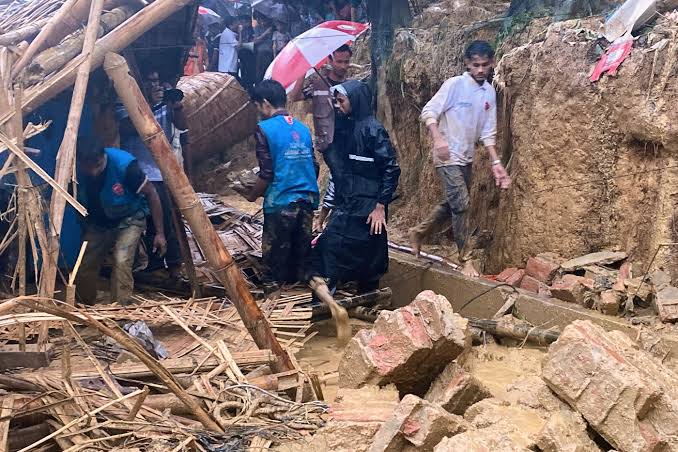
Bangladesh has begun relocating thousands of Rohingya refugees to safer shelters after a devastating landslide triggered by heavy monsoon rains claimed the lives of at least five children in the country’s sprawling refugee settlements. The tragedy has once again exposed the extreme vulnerability of displaced communities living in overcrowded camps that are highly susceptible to natural disasters during the annual rainy season.
Authorities, humanitarian agencies, and emergency response teams launched immediate rescue and relief operations following the incident, while efforts intensified to move families living in high-risk areas to more secure locations. Officials fear that continued heavy rainfall could trigger additional landslides and flash floods, putting thousands more refugees at risk.
Deadly Monsoon Conditions Trigger Disaster
The landslide occurred after persistent rainfall saturated hillsides surrounding the refugee camps, weakening the soil and causing large sections of land to collapse. Several makeshift shelters were buried beneath mud and debris, trapping residents inside.
Emergency workers rushed to the affected area to conduct search-and-rescue operations. Despite their efforts, five children lost their lives, while several others sustained injuries. Rescue teams worked under difficult weather conditions to clear debris and locate survivors.
The tragedy has deeply affected the refugee community, many of whom have already endured years of hardship after fleeing violence in neighboring Myanmar.
Mass Relocation to Safer Areas
Following the incident, Bangladeshi authorities initiated the relocation of thousands of refugees from zones identified as highly vulnerable to landslides and flooding. Temporary shelters and safer accommodation sites were prepared to house displaced families as weather conditions remain unstable.
Officials stated that the relocations are intended to reduce the risk of further casualties as meteorological forecasts continue to predict heavy rainfall across southeastern Bangladesh.
Relief agencies are coordinating closely with government authorities to ensure relocated families receive essential assistance, including food, clean drinking water, healthcare services, sanitation facilities, and emergency shelter materials. 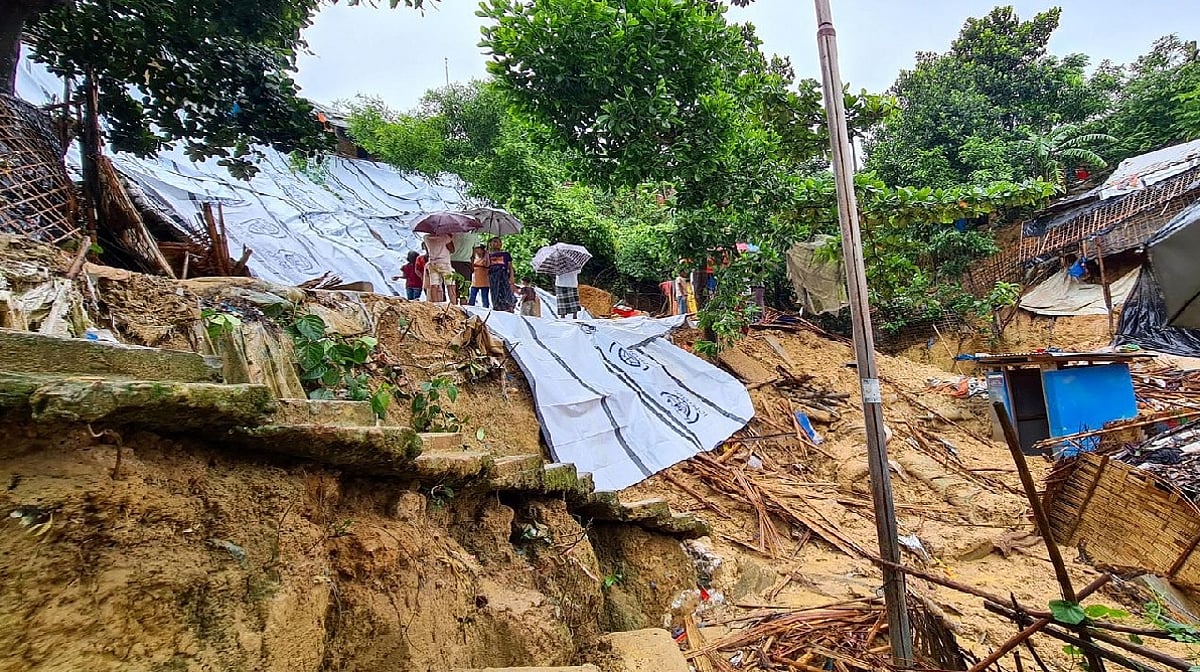
Refugee Camps Face Seasonal Challenges
The refugee settlements, home to nearly one million Rohingya refugees, are among the largest refugee camps in the world. Many shelters are constructed using bamboo frames, tarpaulin sheets, and lightweight materials that provide limited protection against severe weather.
The camps are built on steep, deforested hillsides where loose soil becomes highly unstable during prolonged rainfall. Every monsoon season brings increased risks of landslides, flooding, erosion, and infrastructure damage.
Humanitarian organizations have spent years reinforcing slopes, improving drainage systems, planting vegetation to stabilize soil, and constructing retaining walls. However, the scale of the camps and the intensity of seasonal rainfall continue to present significant challenges.
Children Among the Most Vulnerable
Children remain particularly vulnerable during weather-related disasters in refugee camps. Apart from the immediate dangers posed by landslides and collapsing shelters, floods often disrupt access to education, healthcare, and nutrition services.
Aid organizations have expressed concern that repeated natural disasters can have long-term psychological and physical impacts on young refugees, many of whom have already experienced displacement and trauma.
Emergency protection measures are being expanded to support affected families, with special attention given to children, pregnant women, elderly individuals, and people with disabilities.
Authorities Strengthen Emergency Preparedness
Government agencies and humanitarian partners have intensified monitoring across the refugee settlements as rainfall continues. Volunteers have been deployed to identify vulnerable households, issue early warnings, and assist residents in moving to designated safe locations when necessary.
Emergency shelters remain on standby, while medical teams and disaster response personnel continue to assess damaged areas and provide assistance to affected families.
Officials have urged refugees to cooperate with evacuation efforts and avoid returning to unstable slopes until weather conditions improve and safety inspections are completed.
Climate Risks Continue to Threaten Displaced Communities
The latest disaster highlights the growing impact of extreme weather events on vulnerable populations. Climate experts have repeatedly warned that increasingly intense rainfall associated with changing weather patterns is likely to increase the frequency and severity of landslides in low-income and densely populated regions.
For displaced communities with limited housing options, recurring monsoon disasters remain a major humanitarian concern. The need for durable shelter, improved infrastructure, disaster preparedness, and long-term resilience measures continues to be a priority for both national authorities and international aid organizations.
As rescue operations continue and relocated families begin rebuilding their lives, authorities remain on high alert for additional rainfall that could further threaten refugee settlements in the coming days. The incident serves as a reminder of the complex humanitarian challenges faced by millions of displaced people living in environmentally fragile conditions.