
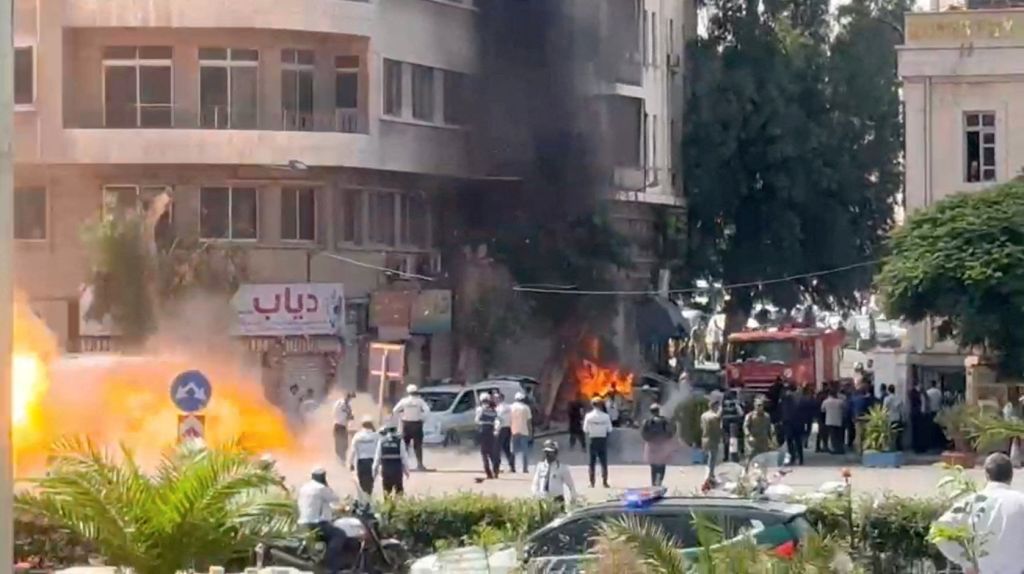
A major security scare unfolded in the Syrian capital of Damascus after explosive devices detonated near the hotel where French President Emmanuel Macron was staying during an official visit. The incident prompted an immediate security response, raising concerns over the safety of high-profile international delegations and highlighting the fragile security environment in the region.
Although the explosions occurred close to the hotel, officials confirmed that President Macron was not harmed. Security personnel swiftly secured the surrounding area, while emergency responders and investigative teams were deployed to determine the nature and origin of the blasts. Authorities have not reported any injuries to the French delegation, and Macron’s security detail remained on high alert following the incident.
Explosions Trigger Immediate Security Response
According to initial information, multiple explosive devices detonated in the vicinity of the hotel, causing panic among residents, visitors, and security personnel. The blasts were heard across parts of central Damascus, prompting authorities to establish a security perimeter around the affected area.
Police, intelligence officials, and bomb disposal teams quickly arrived at the scene to inspect the site and search for additional threats. Roads surrounding the hotel were temporarily sealed off while security agencies conducted extensive checks to ensure there was no continuing danger.
The exact distance between the hotel and the explosion sites has not been officially disclosed. However, officials emphasized that the blasts occurred close enough to trigger enhanced security measures for the visiting French delegation.
Macron Safe Following the Incident
French officials confirmed that President Emmanuel Macron remained safe throughout the incident. His planned engagements were reviewed by security authorities, and additional protective measures were implemented as a precaution.
The French delegation maintained close coordination with Syrian security agencies throughout the investigation. Officials stressed that the president’s security team had continuously monitored the situation and responded according to established emergency protocols.
Despite the alarming nature of the explosions, there was no indication that the president himself was directly targeted. Investigators are examining all possible scenarios, including whether the devices were intended to disrupt the visit or were connected to broader security challenges in the city. 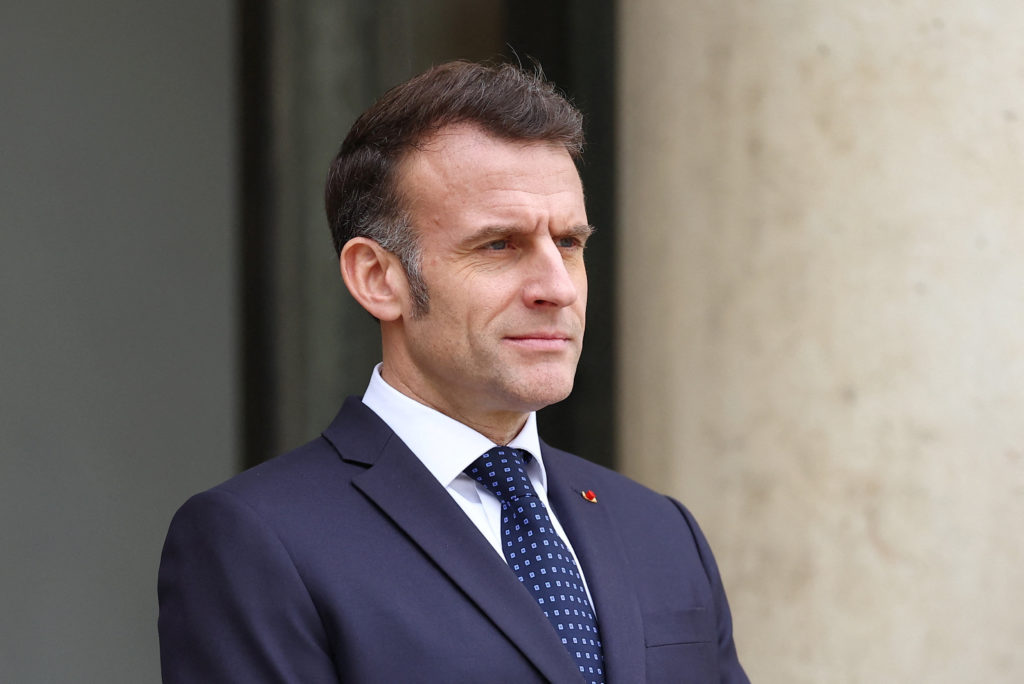
Investigation Underway
Authorities have launched a comprehensive investigation into the explosions. Forensic experts are collecting evidence from the blast sites, while intelligence agencies are reviewing surveillance footage and interviewing witnesses to determine who may have been responsible.
At this stage, no organization has claimed responsibility for the explosions. Officials have also not confirmed whether the devices were remotely detonated, timed explosives, or improvised explosive devices.
Security agencies are expected to analyze the recovered materials to identify the type of explosives used and establish whether the incident was part of a coordinated attack.
Heightened Security Across Damascus
The explosions prompted Syrian authorities to increase security across key government buildings, diplomatic facilities, hotels hosting foreign officials, and strategic locations throughout Damascus.
Additional checkpoints were established, vehicle inspections intensified, and security patrols expanded across the city. The measures aimed to prevent any further incidents while ensuring the safety of visiting international delegations.
Security experts note that visits by world leaders require extensive planning and coordination due to the possibility of threats from militant groups or individuals seeking to attract international attention through high-profile attacks.
Diplomatic Significance of Macron’s Visit
President Macron’s visit to Damascus carries significant diplomatic importance amid ongoing regional developments and international discussions concerning Syria’s future, reconstruction efforts, and broader Middle East stability.
Such visits involve extensive cooperation between host nations and visiting countries to ensure the safety of government officials. Any security breach near a visiting head of state inevitably draws international attention and may influence diplomatic discussions.
While the explosions raised immediate concerns, officials indicated that diplomatic communications between the two governments continued following the incident.
No Immediate Claim of Responsibility
As investigators continue their work, authorities have urged the public to avoid speculation regarding those responsible for the explosions. No group has officially claimed responsibility, and investigators have not announced any arrests.
Security analysts caution that determining responsibility for such incidents often requires extensive forensic examination and intelligence gathering before definitive conclusions can be reached.
Officials have assured both residents and foreign delegations that every effort is being made to identify those behind the blasts and strengthen security measures to prevent similar incidents in the future.
Ongoing Monitoring
The investigation remains active as authorities continue examining evidence and reviewing intelligence. Security around diplomatic missions and visiting foreign officials is expected to remain heightened until investigators complete their assessment.
The incident underscores the continuing security challenges in conflict-affected regions and the importance of comprehensive protective measures during high-level diplomatic visits. While President Macron remained unharmed, the explosions have once again highlighted the complex security landscape facing international leaders traveling to sensitive geopolitical locations.