

Punjab Chief Minister Bhagwant Mann has strongly challenged the claims made by the Gurugram Police regarding a viral video allegedly involving Punjab Police personnel. The controversy has intensified after Haryana authorities suggested that the footage showed misconduct by Punjab officers. Mann has demanded concrete evidence to support the allegations, accusing the authorities of making unverified claims that could damage the reputation of Punjab Police.
The incident has sparked a fresh political and administrative confrontation between the governments of Punjab and Haryana, with both sides presenting differing versions of events. The matter has also raised broader questions about the verification of viral content, inter-state coordination among police forces, and the responsibility of authorities when making public allegations.
Mann Seeks Proof Behind Allegations
Reacting to the controversy, Chief Minister Bhagwant Mann stated that no conclusions should be drawn based solely on a viral video circulating on social media. He asserted that if any Punjab Police personnel had violated the law or acted improperly, there should be clear and credible evidence to establish the facts.
Mann questioned why allegations were being made publicly without presenting documented proof or completing a proper investigation. According to him, making accusations without verified evidence risks creating unnecessary confusion and unfairly tarnishing the image of the Punjab Police.
He maintained that accountability is important, but it must be based on facts rather than speculation or social media narratives.
Viral Video Triggers Political Debate
The controversy began after a video surfaced online, leading to claims that Punjab Police personnel were involved in an incident within Haryana’s jurisdiction. The footage quickly gained attention across social media platforms, prompting public debate and official responses.
Following the circulation of the video, Gurugram Police reportedly initiated action and suggested that Punjab officers were linked to the incident. However, the Punjab government has questioned the authenticity and interpretation of the video, arguing that viral clips alone cannot serve as conclusive evidence.
Officials from Punjab have emphasized that any investigation should rely on verified facts, witness statements, official records, and forensic examination wherever necessary. 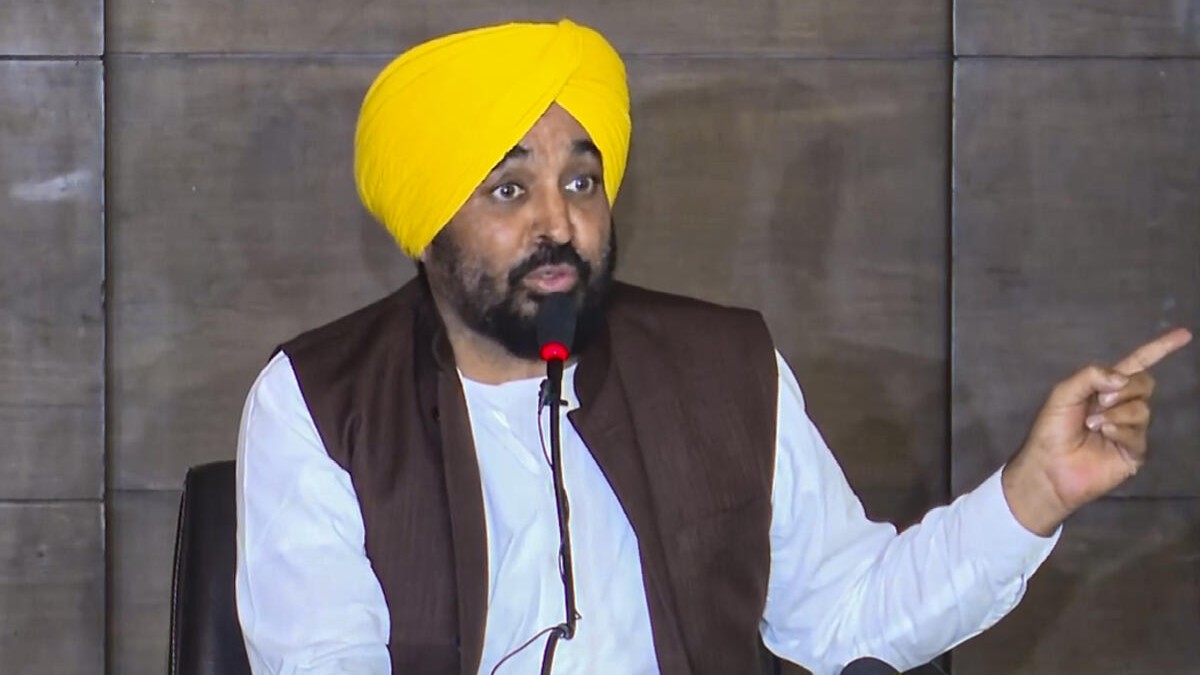
Punjab Government Defends Its Police Force
The Punjab government has defended its police personnel, stating that no officer should be declared guilty without a fair and impartial inquiry. Senior officials have maintained that Punjab Police remains committed to maintaining professional standards and will cooperate with any legitimate investigation conducted through proper legal channels.
Government representatives stressed that if any officer is found guilty after a transparent investigation, appropriate disciplinary or legal action would be taken. At the same time, they insisted that allegations unsupported by evidence should not be allowed to influence public opinion.
The administration has reiterated that protecting the credibility of law enforcement institutions is equally important while ensuring accountability.
Questions Raised Over Investigation Process
The episode has also highlighted concerns about how investigations involving officials from different states should be handled. Legal experts note that inter-state disputes involving police personnel require close coordination between the respective authorities to avoid misunderstandings and conflicting public statements.
Observers believe that premature conclusions based on incomplete information can complicate investigations and create unnecessary political tension. They argue that digital evidence, including viral videos, must be scientifically verified before being relied upon in official proceedings.
Authorities are expected to examine all available evidence, including the original source of the video, its authenticity, and the circumstances under which it was recorded.
Importance of Verified Digital Evidence
The controversy underlines the growing influence of social media in shaping public perception. While videos shared online often attract immediate attention, experts caution that edited or incomplete clips may not present the full context of an incident.
Investigators generally rely on multiple forms of evidence—including digital forensics, CCTV footage, eyewitness testimony, and official documentation—before reaching conclusions. This approach helps ensure that investigations remain objective and legally sound.
The case has therefore renewed discussions about responsible communication by public authorities and the need to avoid drawing conclusions until all facts have been verified.
Political Reactions Continue
The disagreement has added another chapter to the often-sensitive relationship between Punjab and Haryana on administrative and law-and-order matters. Political leaders from both states have defended their respective positions, while the issue continues to attract widespread public attention.
Bhagwant Mann has reiterated that his government is prepared to cooperate fully with any lawful investigation but expects allegations against Punjab Police personnel to be supported by credible evidence rather than assumptions based on a viral video.
As the matter remains under scrutiny, further developments are expected once investigators complete their examination of the available evidence and both governments continue discussions regarding the incident.
Conclusion
The dispute surrounding the viral video has evolved beyond a single incident, highlighting larger concerns about due process, digital evidence, and inter-state coordination in law enforcement. Punjab Chief Minister Bhagwant Mann’s demand for proof reflects the government’s position that allegations against police personnel must be supported by verified facts rather than speculation. The outcome of the investigation is expected to play a key role in determining accountability while reinforcing the importance of transparent and evidence-based policing.