
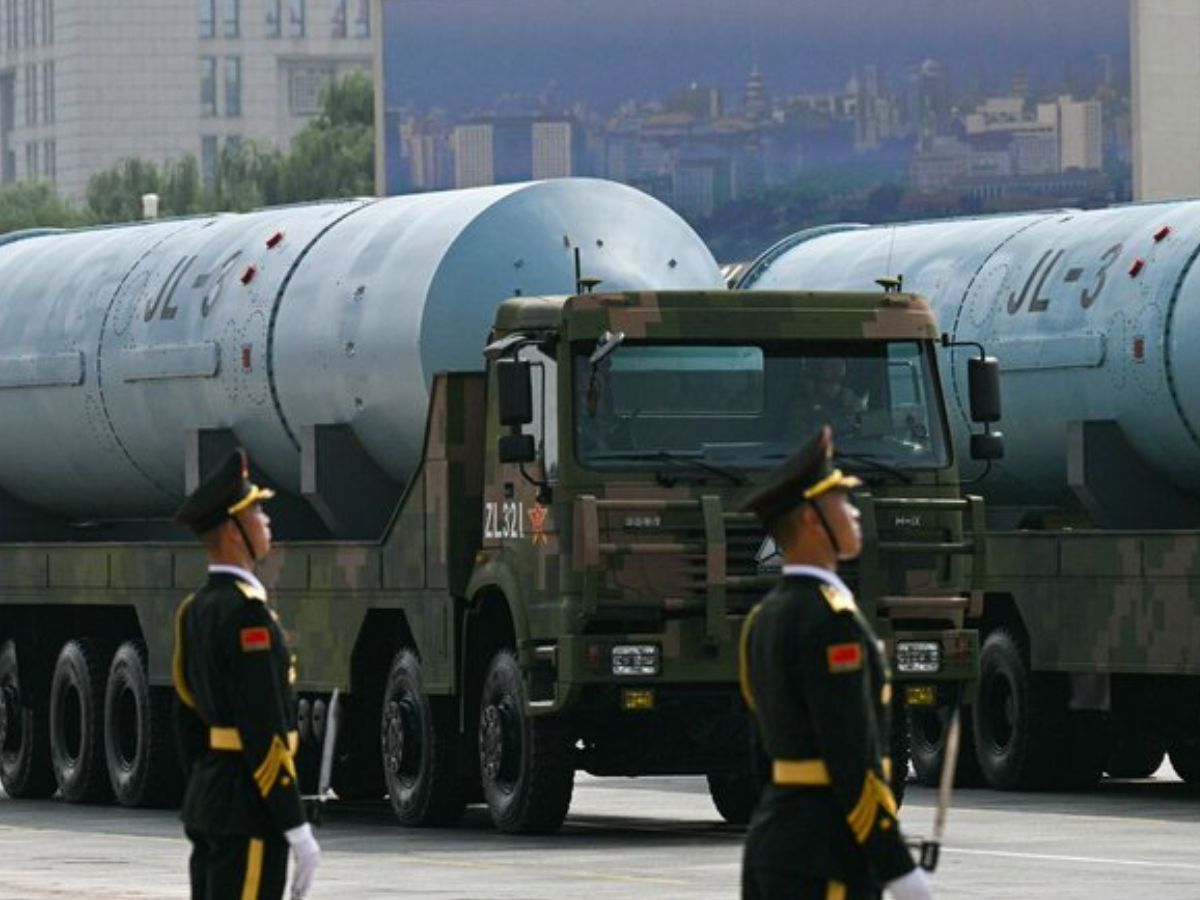
A significant escalation in military signaling unfolded in the Indo-Pacific region as China conducted a missile test into the Pacific Ocean coinciding with the start of joint naval exercises with Russia. The coordinated timing of the test and drills underscores deepening defense cooperation between the two nations amid rising global geopolitical tensions.
According to defense activity reports, the missile was launched from Chinese territory and directed toward designated impact zones in the Pacific Ocean. While official technical specifications of the missile system involved have not been fully disclosed, the launch was characterized as part of a scheduled training and evaluation exercise aimed at validating long-range strike capabilities and operational readiness.
The missile test came as Chinese and Russian naval forces began a series of joint maritime drills designed to enhance interoperability, communication, and tactical coordination between the two militaries. These exercises are part of an ongoing pattern of increased defense engagement between Beijing and Moscow, which have expanded military cooperation in recent years through joint patrols, air exercises, and naval maneuvers.
Military analysts note that the timing of the missile test alongside the commencement of the drills carries strategic messaging value. Conducting a long-range missile launch into the Pacific while simultaneously engaging in joint exercises is widely viewed as a demonstration of extended deterrence capabilities and a show of coordinated military strength.
The Pacific Ocean region has become a focal point of competing security interests, with multiple global powers increasing their naval presence and conducting regular exercises. Against this backdrop, joint China–Russia drills are often interpreted as a counterbalance to other military alliances operating in the Indo-Pacific.
The exercises reportedly include a range of operations such as fleet maneuvering, anti-submarine warfare drills, air defense coordination, and joint tactical planning at sea. These activities are intended to improve interoperability between the two navies in both defensive and offensive maritime scenarios.
While neither Beijing nor Moscow framed the activities as directed against any specific third party, defense observers continue to assess the broader implications for regional stability. The simultaneous missile test and naval drills reflect a pattern of increasingly synchronized military activity between the two countries, particularly in strategic maritime domains.
As global tensions persist across multiple theaters, the latest developments in the Pacific are likely to be closely monitored by regional stakeholders and defense planners, who view such coordinated demonstrations as indicators of evolving power dynamics in the Indo-Pacific security architecture.