
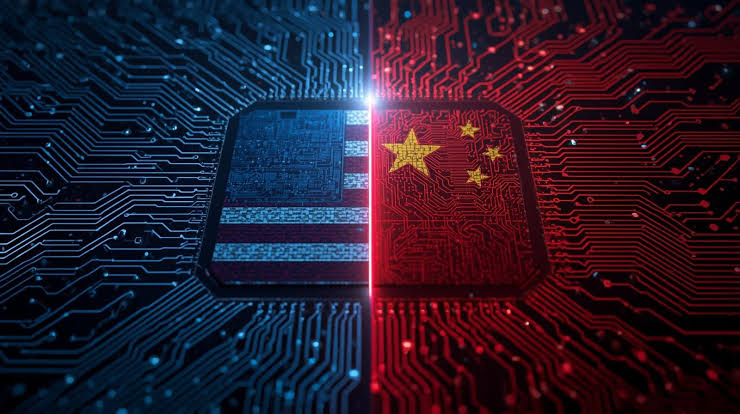
The global race for artificial intelligence has entered one of its most critical phases, with the United States and China increasingly competing for technological supremacy through policy decisions, semiconductor innovation, cybersecurity measures, and strategic investments. What began as a commercial contest between technology companies has evolved into a broader geopolitical struggle that is influencing global trade, national security, and the future of digital innovation.
Artificial intelligence has emerged as one of the defining technologies of the 21st century. Governments now consider AI capabilities essential not only for economic growth but also for defense, scientific research, healthcare, manufacturing, and critical infrastructure. As a result, the competition between the world’s two largest economies has expanded well beyond research laboratories and corporate boardrooms.
Semiconductors at the Heart of the AI Battle
Advanced semiconductor chips have become the foundation of modern artificial intelligence systems. High-performance graphics processing units (GPUs) are required to train sophisticated AI models capable of handling enormous datasets and performing complex calculations.
Recognizing the strategic importance of these chips, the United States has introduced a series of export controls designed to limit China’s access to cutting-edge semiconductor technology. These measures aim to slow the development of advanced AI capabilities that could potentially have military or strategic applications.
The restrictions have affected the global semiconductor supply chain, forcing technology companies to rethink manufacturing strategies, diversify production facilities, and develop alternative markets.
For China, gaining access to advanced computing hardware has become an increasingly difficult challenge. Domestic companies are investing heavily in homegrown semiconductor production while accelerating efforts to reduce dependence on foreign technology.
China Pushes for Technological Self-Reliance
Facing tighter export restrictions, Chinese technology firms have intensified research into locally developed AI chips, semiconductor manufacturing equipment, and software ecosystems.
Government-backed initiatives continue to provide significant financial support for domestic chipmakers, research institutions, and AI startups. The broader objective is to establish a self-sufficient technology ecosystem capable of competing with international leaders without relying heavily on imported components.
While China has made notable progress in AI applications, experts believe that matching the world’s most advanced semiconductor manufacturing capabilities remains a significant long-term challenge. 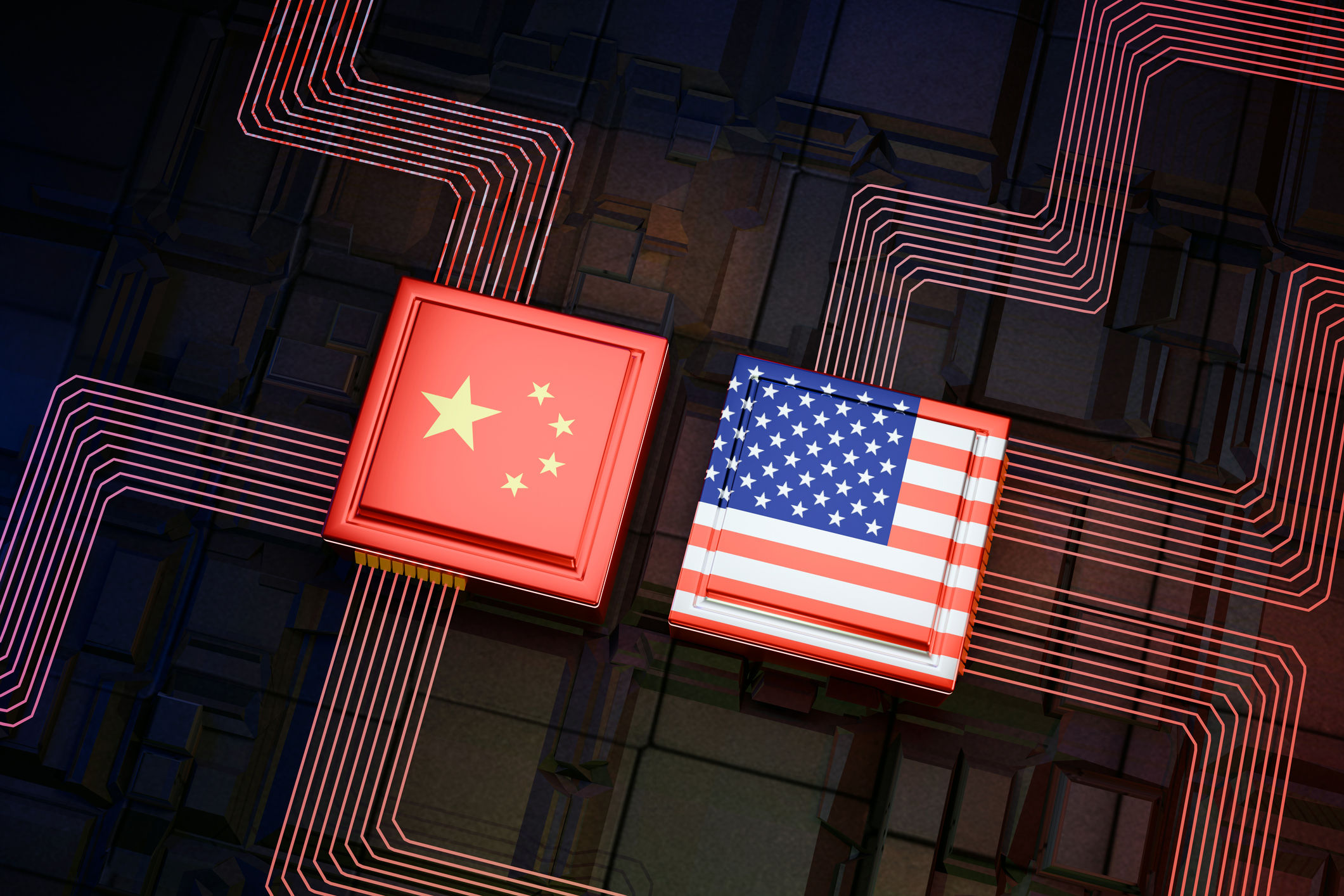
Cybersecurity and Technology Security Take Center Stage
The AI competition has also expanded into cybersecurity.
Authorities in both countries have expressed growing concerns about the security of advanced computing systems, data protection, and the possibility that AI technologies could be exploited for espionage or military purposes.
Technology regulators are increasingly examining hardware and software used in AI systems, with governments placing greater emphasis on supply chain security, trusted computing infrastructure, and protection of sensitive information.
As AI becomes integrated into critical industries—including finance, healthcare, transportation, telecommunications, and defense—the security of these systems is receiving unprecedented attention.
Global Technology Companies Face Difficult Choices
Major technology firms operating across international markets now find themselves navigating an increasingly complex regulatory environment.
Companies involved in semiconductor manufacturing, cloud computing, AI software development, and advanced hardware design must comply with evolving export regulations while continuing to serve customers worldwide.
Many multinational corporations are investing in geographically diversified manufacturing facilities and supply chains to reduce the risks associated with geopolitical tensions.
Industry leaders also continue expanding research into more efficient AI hardware that delivers higher performance while consuming less power, an increasingly important consideration as AI infrastructure grows.
Economic and Strategic Implications
The rivalry between Washington and Beijing extends beyond technology itself.
Artificial intelligence is expected to contribute trillions of dollars to the global economy over the coming decades. Leadership in AI could provide substantial advantages in productivity, scientific discovery, industrial automation, and military modernization.
Consequently, both governments view technological leadership as a matter of national competitiveness and long-term economic security.
The semiconductor industry has become one of the most strategically important sectors worldwide, with countries across Asia, Europe, and North America increasing investments in chip manufacturing to strengthen supply chain resilience.
Global Supply Chains Under Pressure
The ongoing competition has accelerated efforts among businesses to reduce dependence on single-country manufacturing networks.
Several nations are encouraging domestic semiconductor production through subsidies, tax incentives, and public-private partnerships aimed at securing reliable access to advanced chips.
Manufacturers are also reassessing sourcing strategies for critical materials and production equipment, recognizing that geopolitical tensions could disrupt international supply chains.
These developments are reshaping global technology markets and influencing investment decisions across multiple industries.
Innovation Continues Despite Rising Competition
Although geopolitical tensions continue to rise, innovation within the AI sector remains rapid.
Technology companies are investing billions of dollars in next-generation AI models, advanced computing infrastructure, robotics, autonomous systems, and scientific research.
Universities, startups, and research organizations continue to drive breakthroughs in machine learning, natural language processing, computer vision, and generative AI, demonstrating that innovation remains highly competitive across international markets.
However, future progress will increasingly depend on access to advanced semiconductor technology, skilled talent, computing resources, and international collaboration.
The Road Ahead
The evolving US-China AI rivalry is likely to shape the future of global technology policy for years to come. Export controls, semiconductor development, cybersecurity measures, and strategic investments are expected to remain central elements of this competition.
While both nations continue pursuing leadership in artificial intelligence, the broader impact extends far beyond bilateral relations. Businesses, governments, investors, and consumers worldwide are already experiencing the effects through changing supply chains, evolving regulations, and increased investment in domestic technological capabilities.
As AI becomes more deeply integrated into every aspect of society and the global economy, the balance between innovation, national security, and international cooperation will remain one of the defining challenges of the digital era.