
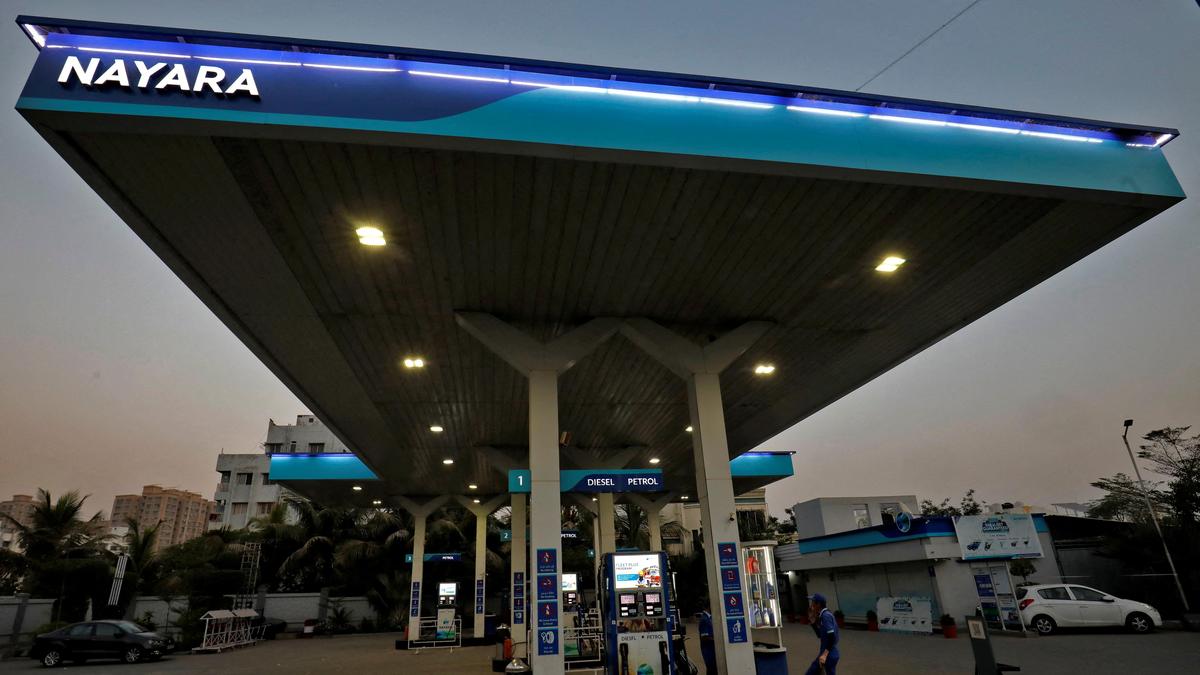
India’s private fuel retail sector witnessed a notable price revision as Nayara Energy, one of the country’s largest private fuel retailers, announced a reduction in retail petrol and diesel prices. The move comes amid shifting global crude oil dynamics and easing concerns over supply disruptions linked to geopolitical developments in West Asia.
According to the revised pricing structure, petrol prices have been reduced by ₹5 per litre, while diesel prices have been lowered by ₹3 per litre across several retail outlets. The decision is expected to offer immediate relief to consumers, particularly in urban centres where fuel costs significantly influence transportation and logistics expenses.
Global Oil Market Influence
The price adjustment is largely attributed to stabilising crude oil conditions in the international market. In recent weeks, concerns over supply disruptions in critical maritime routes, including the Strait of Hormuz, had contributed to volatility in global oil prices. However, with relative easing of tensions and improved supply sentiment, crude benchmarks have softened, creating room for downstream price corrections.
Industry observers note that private refiners and retailers such as Nayara Energy often respond more quickly to international price fluctuations compared to state-run oil marketing companies, enabling faster transmission of global market benefits to consumers.
Impact on Consumers and Economy
The reduction in fuel prices is expected to have a cascading impact on transportation costs, logistics, and commodity pricing. Since fuel remains a key input cost across multiple sectors, even marginal price cuts can contribute to easing inflationary pressures in the broader economy.
Transport operators, delivery services, and small businesses are likely to benefit from reduced operational costs, potentially improving margins and stabilising end-consumer prices in certain segments. 
Strategic Pricing Response
Market analysts suggest that Nayara Energy’s decision reflects a broader strategy of aligning domestic retail prices with international crude trends while maintaining competitiveness in India’s highly regulated fuel market. The company’s ability to adjust prices swiftly is also linked to its integrated refining and retail network, which allows for more responsive pricing decisions based on global market movements.
Broader Market Outlook
While the current price cut signals short-term relief, analysts caution that fuel prices remain sensitive to geopolitical developments in energy-producing regions. Any renewed escalation in West Asia or disruptions in key shipping corridors could quickly reverse recent gains in crude price stability.
For now, the latest revision is being viewed as a positive development for consumers, offering temporary relief in an environment where fuel costs have remained a persistent inflation driver.