
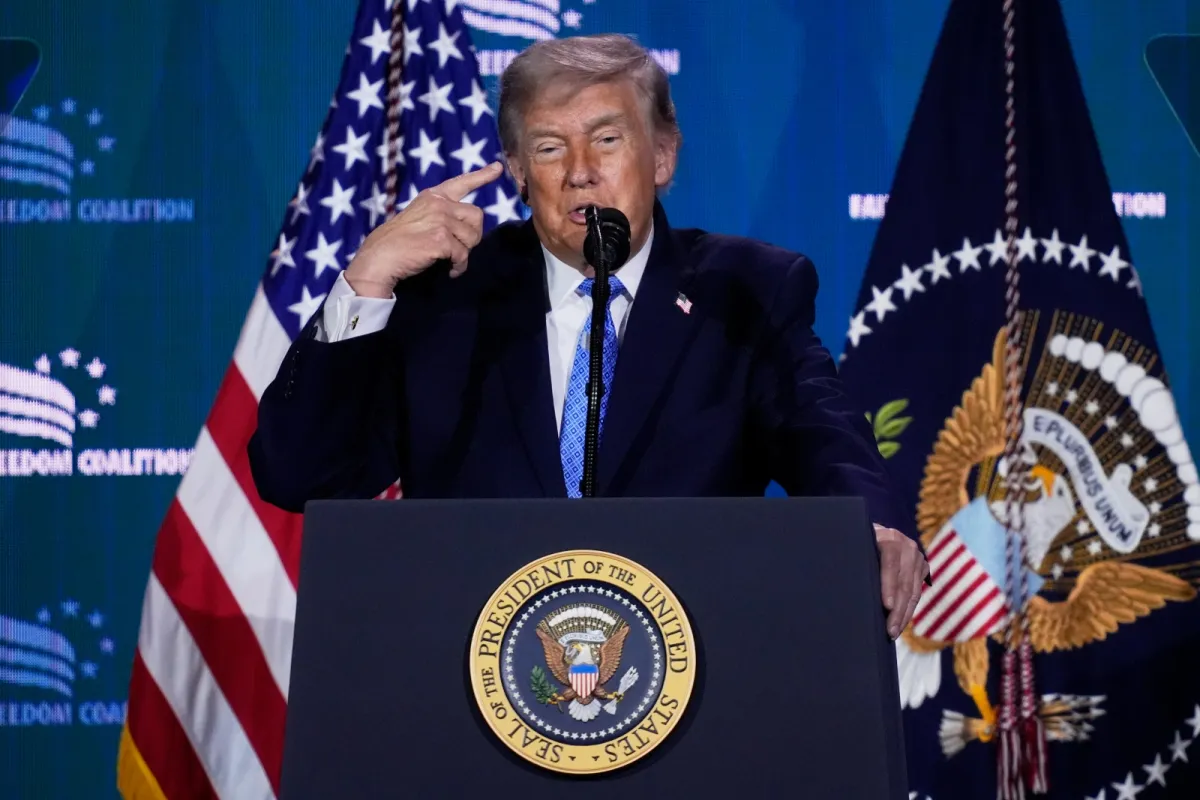
U.S. President Donald Trump has escalated his political rhetoric against the Democratic Party, describing communism as the most serious threat facing the United States since the major crises of the 20th and 21st centuries, including the two World Wars, the attack on Pearl Harbor, and the September 11 terrorist attacks.
The remarks came during an address to religious conservatives at a major gathering of evangelical and conservative Christian leaders, where Trump sought to frame the ideological battle between Republicans and Democrats as a defining struggle for the future of the nation. His comments reflect a broader Republican strategy ahead of the upcoming midterm elections, with party leaders increasingly portraying the rise of progressive political movements as a challenge to traditional American values.
Trump Targets Progressive Movement
During his speech, Trump pointed to recent political victories by progressive candidates in New York as evidence that the Democratic Party is moving further to the left. He argued that these developments signal a broader ideological transformation within the party and warned supporters that similar political trends could spread across the country.
According to Trump, the Democratic Party has become increasingly influenced by its progressive wing, which he claimed advocates policies that threaten the nation’s social, economic, and cultural foundations. He described the situation as extending beyond local politics and portrayed it as part of a larger national movement.
The president repeatedly suggested that the political changes occurring in major urban centers could have far-reaching consequences for the rest of the United States, urging conservative voters to remain vigilant and politically active.
Strong Warnings About America’s Future
Trump intensified his criticism by arguing that the country is facing an ideological confrontation unlike any seen in recent decades. He characterized communism as a dangerous force that could undermine democratic institutions, economic prosperity, and individual freedoms.
In a message posted after the event, Trump stated that communism represents the greatest threat to the United States since some of the most significant historical events in American history. The statement quickly drew national attention and became a focal point in political discussions across party lines.
The comments align with Trump’s long-standing efforts to associate progressive and socialist-leaning policies with communist ideology, a theme that has featured prominently in his political messaging over recent years. 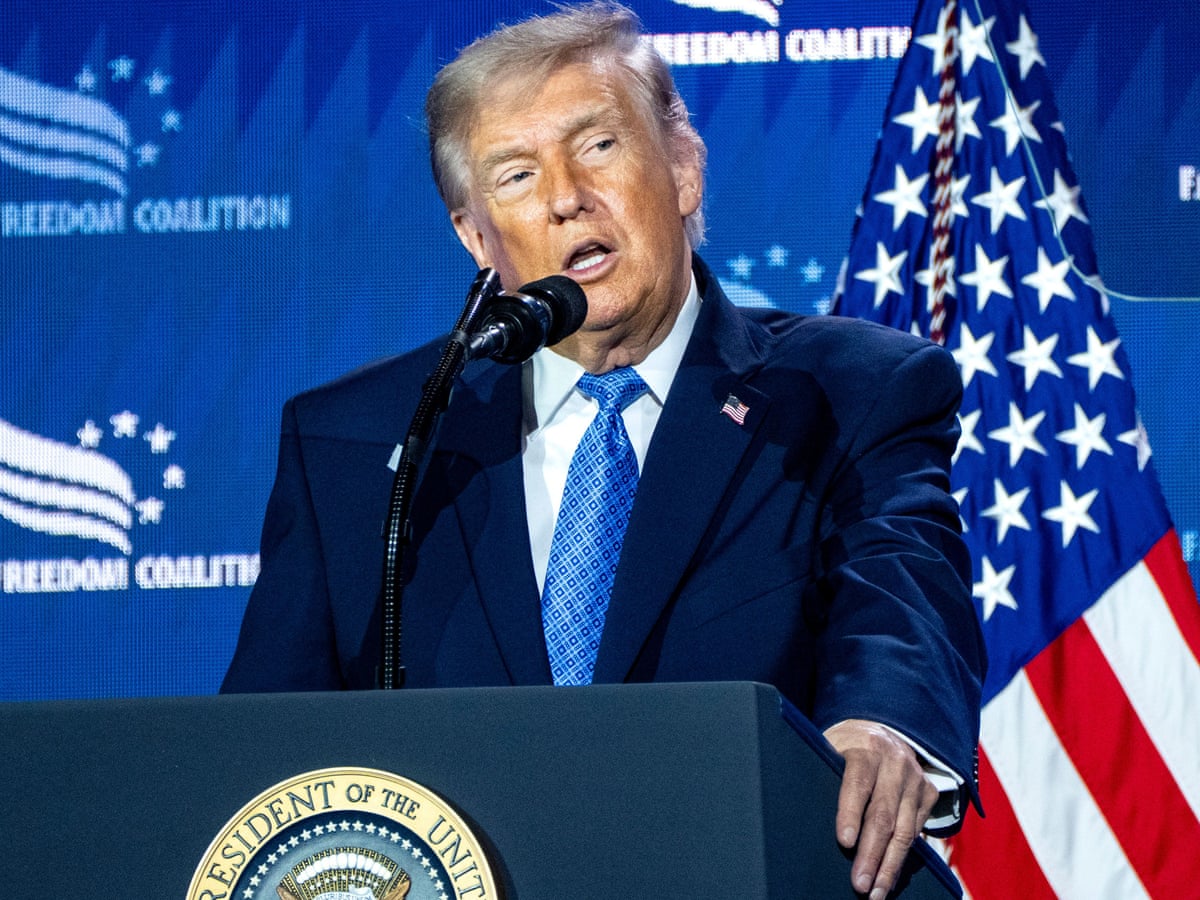
Religion and Politics at the Center of the Debate
Addressing an audience largely composed of religious conservatives, Trump also emphasized what he described as a fundamental conflict between communist ideology and religious faith.
He argued that left-wing political movements pose risks to religious liberty and warned that Christian institutions could face increasing pressure if progressive policies gain greater influence in government. Throughout the speech, Trump presented faith and traditional values as central pillars of American identity, positioning conservatives as defenders of those principles.
His remarks resonated with many attendees, who view cultural and religious issues as critical political concerns in the current national climate.
Claims About Economic Policies
Trump also criticized what he described as the economic promises often associated with socialist and communist systems. He argued that offering extensive government benefits, free services, and expanded social programs may appear attractive in the short term but ultimately lead to economic decline.
According to the president, such policies create unsustainable financial burdens and weaken incentives for economic growth. He claimed that countries embracing these systems have historically faced long-term economic difficulties and declining living standards.
These arguments have become a recurring element of Republican criticism of progressive economic proposals, particularly those involving expanded government spending and social welfare programs.
Republican Leaders Echo Concerns
The message delivered by Trump was reinforced by other Republican leaders attending the event. House Speaker Mike Johnson warned supporters that progressive candidates are gaining influence in various parts of the country and suggested that similar political figures could emerge in congressional races nationwide.
Johnson argued that the ideological trends visible in recent elections should be viewed as a warning sign for conservatives. Drawing parallels with Cold War-era political debates, he suggested that the threat posed by left-wing ideology is no longer confined to foreign governments but is increasingly becoming part of domestic political discourse.
The remarks indicate a coordinated effort by Republican leaders to make ideological differences a central theme of their campaign strategy ahead of the midterm elections.
Midterm Elections Expected to Focus on Ideological Divide
Political analysts believe the Republican Party is preparing to frame the upcoming elections as a contest between conservative values and progressive policies. By highlighting concerns about socialism and communism, Republican leaders hope to energize their voter base and draw sharp distinctions with Democratic candidates.
Democrats, meanwhile, have generally rejected such characterizations, arguing that progressive policies focus on issues such as healthcare affordability, workers’ rights, housing, and economic inequality rather than communist ideology.
Nevertheless, Trump’s latest remarks underscore how ideological debates are likely to dominate political conversations in the months leading up to the election season.
Growing Polarization in American Politics
Trump’s comments come at a time of increasing political polarization across the United States. Disagreements over economic policy, cultural issues, immigration, education, and religious freedom have deepened divisions between the country’s major political parties.
As both sides prepare for upcoming electoral battles, rhetoric surrounding ideological labels such as socialism and communism is expected to remain a prominent feature of national political discourse.
With the midterm elections approaching, Trump’s warning about what he views as a growing ideological threat signals that the Republican campaign strategy will continue emphasizing cultural identity, economic concerns, and the defense of traditional American institutions as key themes in the political debate.