
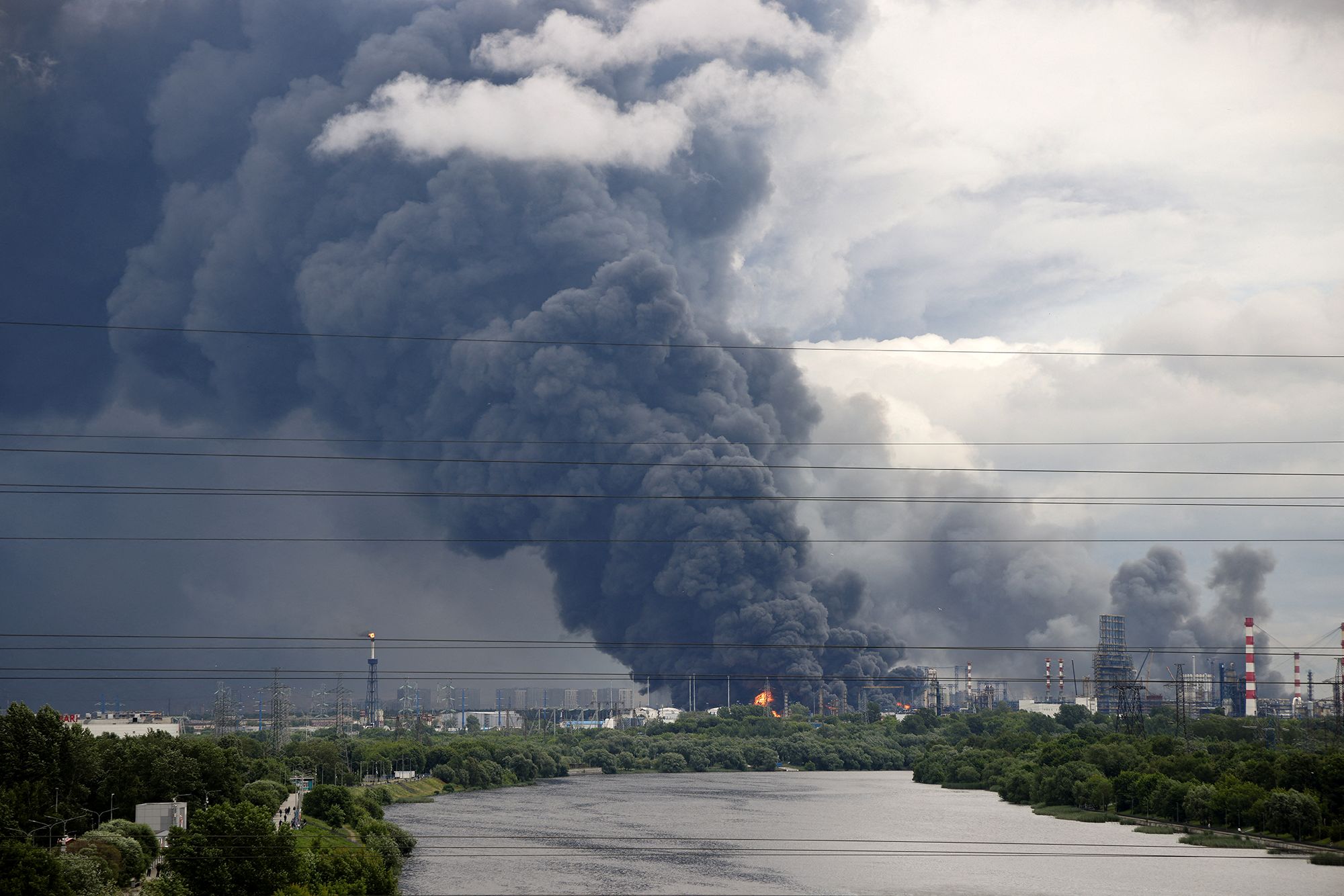
Ukraine carried out one of its most significant overnight drone operations in recent weeks, reportedly targeting a chemical plant deep inside Russian territory as well as several other strategic facilities linked to military and industrial activities. The attack marked another escalation in the ongoing conflict, highlighting Kyiv’s growing ability to conduct long-range strikes against infrastructure considered important to Russia’s war effort.
According to regional reports and official statements, multiple drones were launched during the overnight operation, triggering air defense responses across several Russian regions. Explosions and fires were reported at various locations, with one of the primary targets believed to be a chemical production facility that has previously been linked to supplies used by Russia’s defense sector.
Strategic Facility Reportedly Hit
The chemical plant targeted during the operation has attracted attention in recent months because of its alleged role in producing materials that can support military manufacturing. Reports indicated that the facility suffered damage after drones breached local defenses and struck parts of the industrial complex.
Authorities in the affected region acknowledged the attack and confirmed that emergency services were deployed to contain the aftermath. While the full extent of the damage was not immediately disclosed, local officials reported disruptions at the site and launched assessments to determine the impact on production and operations.
The strike is believed to be part of a broader Ukrainian strategy aimed at weakening Russia’s industrial and logistical capabilities rather than focusing solely on frontline military targets. By targeting facilities connected to defense manufacturing and supply chains, Ukraine seeks to impose economic and operational costs on Moscow’s military campaign.
Widespread Drone Activity Across Russian Territory
The overnight operation was not limited to a single location. Reports suggested that drones were detected across several Russian regions, prompting air defense systems to engage incoming aerial threats. Authorities claimed that many of the drones were intercepted before reaching their intended targets, though some reportedly succeeded in causing damage.
Residents in multiple areas reported hearing explosions, air raid alerts, and the sounds of anti-aircraft systems operating throughout the night. Videos and eyewitness accounts circulating on social media showed flashes in the sky and emergency response vehicles moving toward affected zones.
Russian officials described the attack as one of the larger drone incursions in recent weeks, underscoring the increasing frequency and sophistication of Ukrainian long-range operations. 
Growing Focus on Military and Industrial Infrastructure
Since the conflict entered a prolonged phase, Ukraine has increasingly targeted facilities that play a role in sustaining Russia’s military capabilities. These include fuel depots, logistics hubs, ammunition storage sites, energy infrastructure, and industrial plants associated with defense production.
Military analysts note that such operations serve multiple purposes. Beyond causing direct physical damage, they can disrupt supply chains, force Russia to divert air defense resources away from the front lines, and create additional pressure on industrial networks supporting military operations.
The repeated targeting of the same chemical facility suggests that Ukrainian planners may view it as a strategically significant asset. Earlier attacks reportedly affected operations at the site, and the latest strike appears to indicate a continued effort to reduce its effectiveness.
Russia Strengthens Air Defense Measures
In response to the growing number of drone attacks, Russia has expanded air defense coverage around key industrial and military facilities. Authorities have deployed additional systems to protect critical infrastructure and have intensified surveillance efforts aimed at detecting incoming unmanned aerial vehicles.
Despite these measures, Ukraine has continued to demonstrate an ability to reach targets located far from the active battlefield. The expanding range and effectiveness of drone operations have become a notable feature of the conflict, reshaping how both sides approach security and defense planning.
Russian officials maintained that their air defense forces successfully intercepted a large number of drones during the latest attack. However, reports of damage at several locations indicate that some drones managed to penetrate protective measures.
Escalation of Long-Range Warfare
The latest strike highlights the growing importance of drone warfare in the conflict. Unmanned aerial systems have evolved from reconnaissance tools into critical offensive weapons capable of targeting infrastructure hundreds of kilometers from the front lines.
For Ukraine, such attacks provide a means of projecting force beyond occupied territories and challenging Russia’s ability to protect strategic assets. For Russia, the increasing reach of these operations presents an ongoing security challenge requiring substantial defensive resources.
As both countries continue to invest heavily in drone technology, military experts expect long-range aerial attacks to remain a defining element of the war. The latest operation against the chemical plant underscores how industrial facilities have become key targets in a broader struggle over military production, logistics, and strategic endurance.
Continuing Conflict and Regional Implications
The attack comes amid continued fighting along multiple sectors of the front line, where both sides are seeking tactical advantages while preparing for potential future offensives. The expansion of cross-border strikes reflects a broader trend in the conflict, with infrastructure and industrial assets increasingly becoming part of the battlefield.
While immediate casualty figures and detailed damage assessments were still being compiled, the operation represents another significant chapter in the evolving use of drones as strategic weapons. The incident is likely to further heighten tensions between the two countries and reinforce concerns about the widening geographic scope of the conflict.
As investigations and damage evaluations continue, attention will remain focused on the impact of the strike and whether it affects Russia’s industrial and military capabilities in the weeks ahead.