
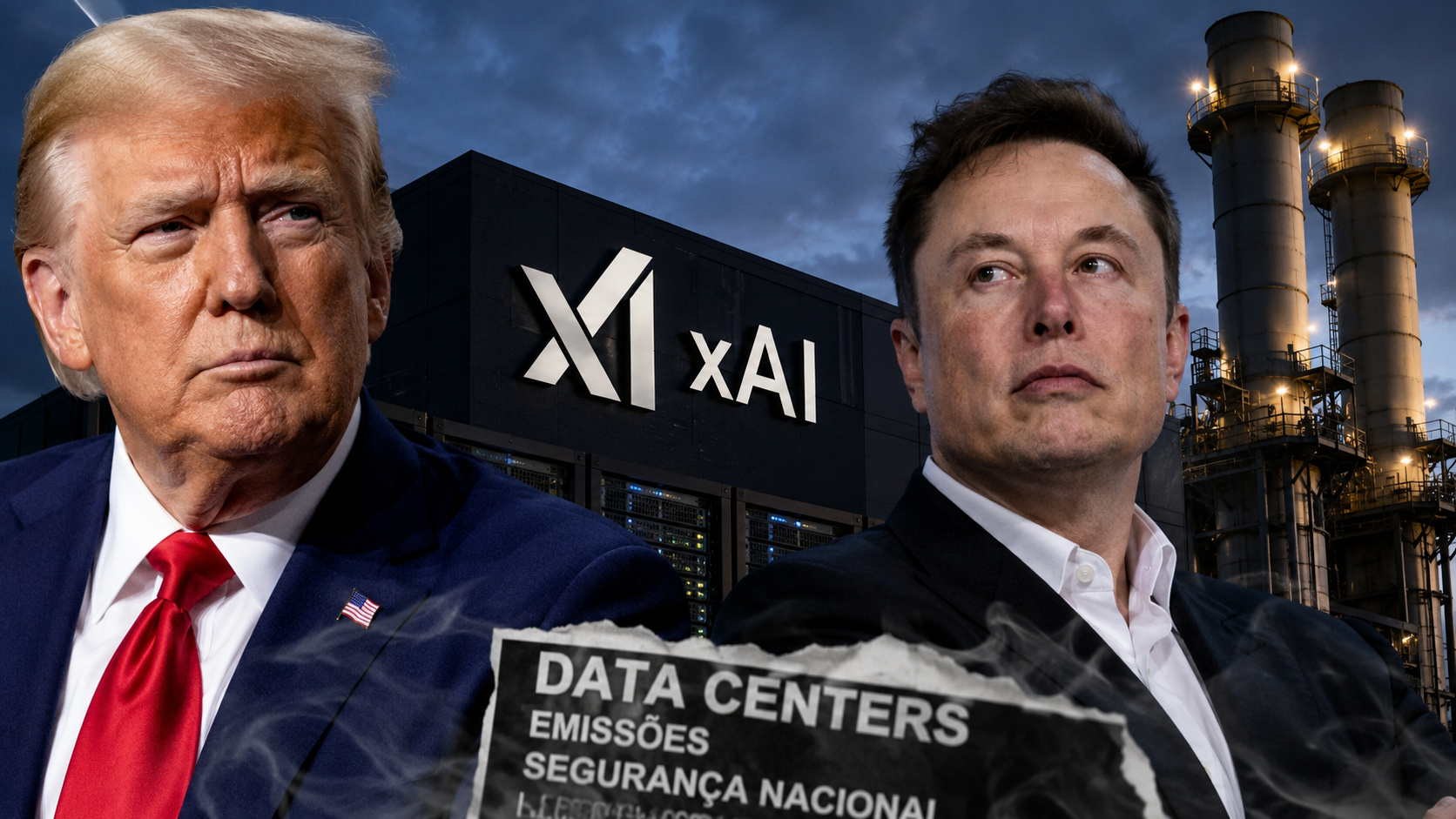
The administration of U.S. President Donald Trump has stepped into a significant legal dispute involving artificial intelligence company Elon Musk’s AI venture, xAI, defending the company’s use of gas-powered turbines at its rapidly expanding data center facilities.
The case centers on whether the operation of multiple natural gas turbines at an xAI data center violates provisions of the federal Clean Air Act, a cornerstone environmental law designed to regulate air pollution across the United States. The legal challenge has become a focal point in the broader debate over the environmental impact of the rapidly growing artificial intelligence industry and the immense energy demands required to support advanced AI systems.
Growing Energy Demands of AI Under Scrutiny
As artificial intelligence technologies continue to evolve, major technology firms have been investing billions of dollars in massive data centers capable of powering sophisticated AI models. These facilities consume enormous amounts of electricity, prompting companies to seek alternative and supplementary power sources when local energy grids are unable to meet demand.
xAI, founded by Elon Musk, has emerged as one of the leading players in the AI race. To support the computational requirements of its advanced AI systems, the company has reportedly relied on gas turbines to generate power for parts of its infrastructure. Environmental groups and local stakeholders have questioned whether these turbines should be subject to stricter permitting requirements under federal law.
The dispute has raised concerns about emissions produced by such facilities and whether temporary or supplemental power generation systems can operate without undergoing extensive regulatory review.
Federal Government Defends Company’s Position
In court filings, the Trump administration argued that the turbines in question do not trigger the specific permitting requirements alleged by opponents. Federal attorneys reportedly maintained that temporary turbine operations should not automatically be classified as permanent emission sources requiring full regulatory approval under the Clean Air Act.
The administration’s intervention reflects its broader approach toward reducing regulatory barriers for strategic industries, including artificial intelligence, advanced manufacturing, and technology infrastructure. Officials have emphasized the importance of maintaining U.S. competitiveness in the global AI race, particularly as other nations continue investing heavily in computing infrastructure.
Supporters of the administration’s position argue that imposing additional regulatory hurdles could slow technological innovation and delay critical AI development projects. 
Environmental Groups Raise Concerns
Opponents of the project contend that large-scale deployment of gas turbines can contribute significantly to air pollution and greenhouse gas emissions. Environmental advocates argue that companies operating extensive power-generating equipment should be required to obtain permits and undergo environmental reviews regardless of whether the installations are described as temporary.
Critics also warn that allowing exceptions could create a precedent enabling other technology companies to bypass environmental oversight while rapidly expanding AI infrastructure.
The case highlights the growing tension between environmental protection goals and the increasing energy needs of emerging technologies. Experts note that AI data centers are expected to consume substantially more electricity in the coming years as demand for advanced computing services continues to rise.
AI Expansion and Environmental Challenges
The legal battle comes at a time when policymakers, regulators, and industry leaders are grappling with how to balance technological growth with sustainability objectives. Artificial intelligence has become a strategic priority for governments and corporations worldwide, driving unprecedented investment in computing capacity.
However, the infrastructure required to train and operate cutting-edge AI models often relies on energy-intensive systems that can strain power grids and increase emissions if renewable energy sources are unavailable.
Many technology firms have pledged to reduce their environmental footprint through investments in renewable energy, battery storage, and next-generation power solutions. Nevertheless, the immediate need for reliable electricity has led some companies to utilize natural gas-powered equipment to ensure uninterrupted operations.
Potential Impact of the Court Decision
Legal experts believe the outcome of the case could have implications extending far beyond a single company. A court ruling may help define how environmental regulations are applied to rapidly expanding AI infrastructure projects and could influence future permitting requirements for data centers across the country.
The decision may also shape the relationship between federal environmental laws and emerging technologies, providing guidance on how regulators should address temporary power generation systems used to support large-scale computing operations.
As artificial intelligence continues to transform industries and economies, the dispute underscores the growing challenge of meeting soaring energy demands while maintaining compliance with environmental standards. The court’s eventual ruling is expected to be closely watched by technology companies, environmental organizations, policymakers, and investors alike.