
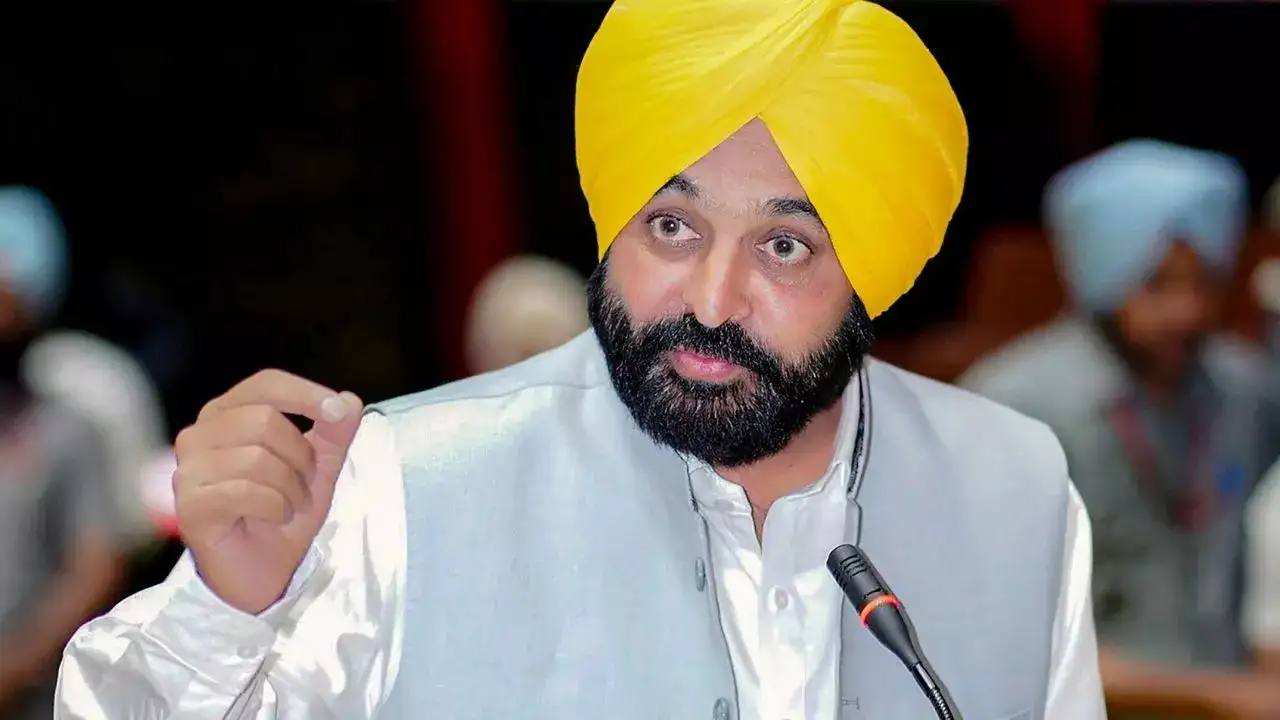
A political controversy erupted in Punjab after a manipulated video allegedly featuring Chief Minister Bhagwant Mann circulated widely on social media, triggering intense debate over the misuse of artificial intelligence, digital propaganda, and misinformation in political discourse.
The incident has drawn attention not only because it involved a prominent political leader but also because it underscored the rapidly growing challenge posed by deepfake technology. Experts and political observers warn that such content can influence public opinion, damage reputations, and undermine trust in democratic institutions if left unchecked.
What Triggered the Controversy?
The controversy began when a video purportedly showing Punjab Chief Minister Bhagwant Mann making controversial remarks started gaining traction across various social media platforms. The clip was shared extensively, with many users believing it to be authentic.
However, questions soon emerged regarding the video’s legitimacy. Digital analysis and subsequent clarifications indicated that the footage had been manipulated and did not accurately represent the Chief Minister’s actual statements. The video was identified as a deepfake or digitally altered piece of content designed to create a misleading narrative.
As the clip continued to spread online, political reactions intensified, prompting concerns about how easily fabricated content can reach large audiences before verification takes place.
Understanding Deepfake Technology
Deepfakes are digitally generated or manipulated videos, images, or audio recordings created using artificial intelligence and machine learning tools. These technologies can convincingly alter facial expressions, voice patterns, and speech, making it appear as though an individual said or did something they never actually did.
Over the past few years, deepfake technology has become increasingly sophisticated and accessible. While it has legitimate applications in entertainment, education, and media production, its misuse for political propaganda, disinformation campaigns, and character attacks has become a growing concern worldwide.
The Bhagwant Mann episode serves as another example of how AI-generated content can be weaponized in political environments, especially during periods of heightened public interest and partisan competition. 
Political Reactions and Public Response
The circulation of the alleged fake video quickly sparked political exchanges. Supporters of the Punjab government condemned the dissemination of manipulated content and accused opponents of attempting to mislead the public through deceptive digital tactics.
Meanwhile, the controversy fueled broader discussions about accountability on social media platforms. Many observers argued that the speed at which misinformation spreads often outpaces fact-checking efforts, allowing false narratives to gain traction before corrective information reaches the same audience.
The incident also prompted calls for stronger safeguards against digitally altered content, particularly when it targets elected representatives or influences public debate.
The Growing Threat of AI-Driven Misinformation
The controversy arrives at a time when governments, technology companies, and cybersecurity experts around the world are grappling with the implications of generative artificial intelligence.
AI-powered tools can now create realistic videos, voices, and images with minimal technical expertise. This has significantly lowered the barrier to producing convincing misinformation campaigns.
Political figures are especially vulnerable because fabricated content involving public leaders can quickly attract attention, shape public perceptions, and generate media coverage. Even after a deepfake is exposed, its impact may persist as some viewers continue to believe or share the misleading material.
Experts frequently describe this phenomenon as the “liar’s dividend,” where uncertainty created by synthetic media makes it harder for the public to distinguish between genuine and fabricated content.
Challenges for Regulation and Enforcement
The Bhagwant Mann deepfake controversy has renewed discussions about whether existing laws are adequate to address emerging digital threats.
Authorities face multiple challenges in tackling AI-generated misinformation, including:
- Identifying the creators of manipulated content.
- Tracing the original source of viral posts.
- Removing harmful content before it spreads widely.
- Balancing free speech protections with efforts to curb misinformation.
- Establishing clear legal frameworks for AI-generated media.
Technology experts have advocated for improved detection tools, digital watermarking systems, and stronger collaboration between governments and social media companies to combat malicious deepfakes.
Why the Incident Matters
Beyond the immediate political fallout, the controversy highlights a larger issue confronting democracies around the world: the erosion of trust in digital information.
As artificial intelligence becomes more advanced, distinguishing authentic content from fabricated material is becoming increasingly difficult. This creates significant risks for public discourse, election integrity, and the credibility of institutions.
The Bhagwant Mann episode serves as a reminder that media literacy, fact-checking, and responsible content sharing are becoming essential skills in the digital age. It also demonstrates how rapidly misinformation can influence political conversations when advanced technology is used to create convincing but false narratives.
Conclusion
The deepfake controversy involving Punjab Chief Minister Bhagwant Mann has become a significant case study in the evolving battle against digital misinformation. While the manipulated video was challenged and scrutinized, the incident exposed the growing capabilities of AI-generated content and the vulnerabilities of modern information ecosystems.
As governments and technology platforms seek solutions, the episode reinforces the need for stronger safeguards, greater public awareness, and more effective mechanisms to identify and counter deceptive digital media before it shapes public opinion and political discourse.