
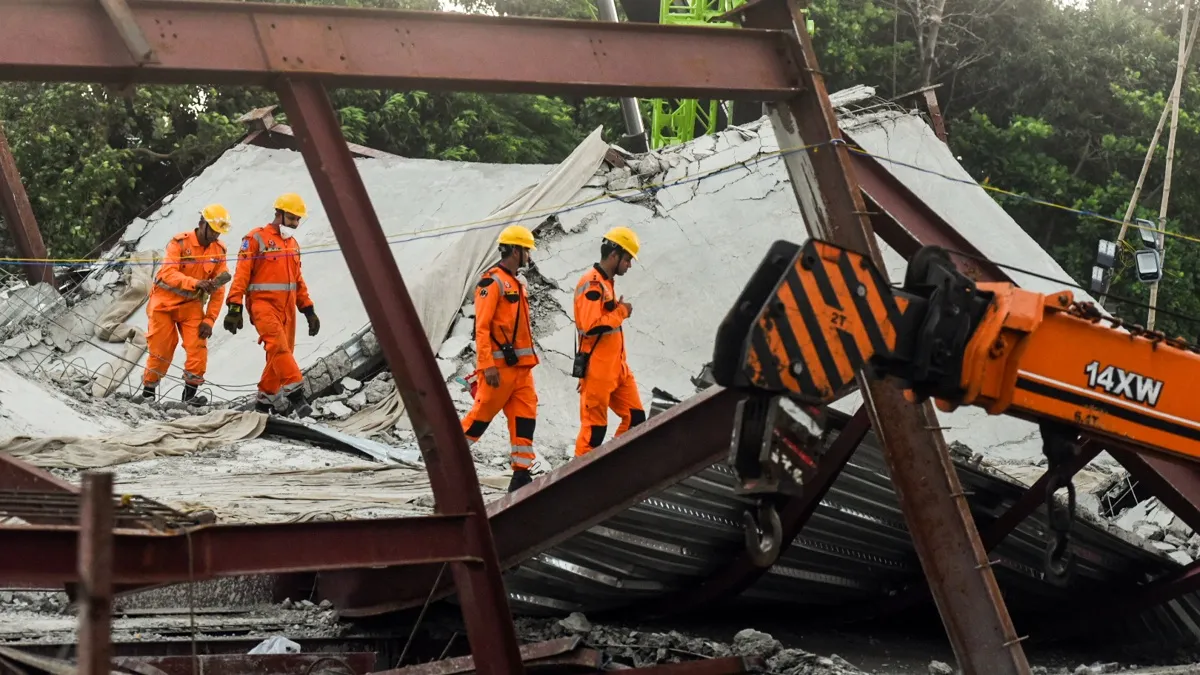
The death toll from the devastating warehouse collapse in Kolkata’s Taratala area has risen to 11, intensifying scrutiny over building safety standards, regulatory oversight, and alleged corruption in the approval process of the structure. As rescue teams concluded a prolonged operation to recover victims and search for survivors, the political and administrative fallout from the tragedy continued to deepen.
The multi-storey warehouse, which was still under construction, collapsed suddenly during working hours, trapping dozens of labourers and workers beneath massive piles of concrete and steel. Emergency response teams, including disaster management personnel, police, firefighters, and specialized rescue units, worked around the clock to clear debris and locate those trapped inside.
Massive Rescue Operation Ends With Rising Casualties
The collapse triggered one of the largest rescue efforts seen in the city in recent years. Authorities deployed advanced equipment, heavy machinery, sniffer dogs, and ground-penetrating radar systems to assist in locating victims buried beneath the wreckage.
More than two dozen individuals were rescued during the initial phase of the operation. However, as rescue workers continued clearing debris, additional bodies were recovered, pushing the death toll to 11. Several injured workers remain under medical supervision, with some reported to be in serious condition.
Officials described the rescue operation as highly challenging due to the instability of the collapsed structure and the enormous volume of debris scattered across the site.
Five Arrested as Investigation Gains Momentum
Police have launched a comprehensive investigation into the circumstances surrounding the disaster. So far, five individuals have been arrested in connection with the incident.
Among those taken into custody are the warehouse owner, project supervisors, construction-related personnel, and individuals allegedly involved in securing approvals for the project. Investigators are examining whether negligence, procedural violations, or deliberate irregularities contributed to the collapse.
Authorities have registered criminal cases under provisions relating to culpable homicide not amounting to murder, attempt to commit culpable homicide, and joint criminal liability. A Special Investigation Team (SIT) has also been formed to examine all aspects of the case. 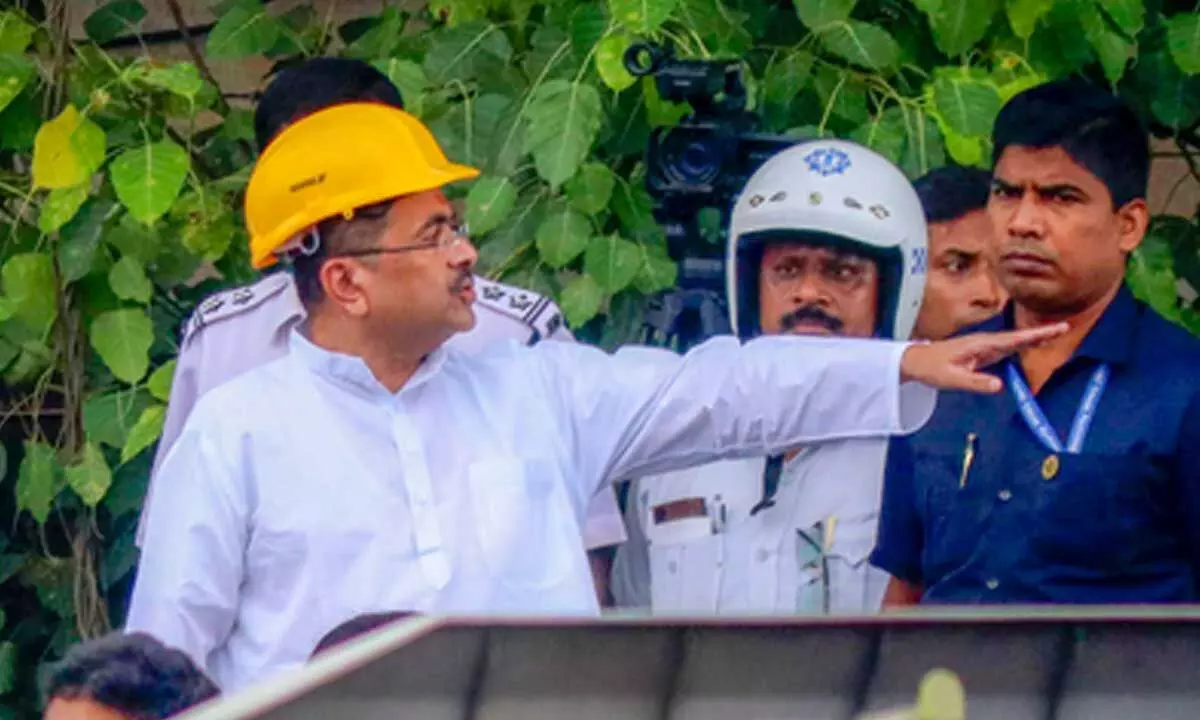
Chief Minister Blames Faulty Approval Process
Addressing the state assembly, Chief Minister Suvendu Adhikari alleged that the building’s design and approval process contained serious flaws. He claimed preliminary findings indicated that the warehouse plan was approved despite structural defects and raised questions about how the project received clearance.
According to the chief minister, records recovered during the investigation suggest that the construction plan was sanctioned earlier this year. He alleged that officials responsible for approving the project ignored critical concerns and permitted the construction to proceed.
The chief minister further claimed that the approval document carried the signature of a former city mayor and suggested that financial irregularities may have influenced the clearance process. He asserted that corruption within the approval mechanism had transformed a preventable safety failure into a deadly tragedy.
Former Mayor Rejects Responsibility
The allegations have sparked a political storm. Former mayor Firhad Hakim rejected suggestions that he was directly responsible for the collapse.
Responding to the accusations, Hakim stated that the municipal approval system involved multiple administrative procedures and technical reviews. He argued that a mayor does not personally supervise construction quality, inspect building materials, or monitor engineering execution at project sites.
Hakim maintained that the collapse may have resulted from inadequate supervision during construction rather than the approval process itself and emphasized that technical experts were responsible for evaluating structural safety.
Audit Ordered Across Construction Projects
In response to the disaster, the state government has announced a comprehensive review of building approvals and ongoing construction projects.
The chief minister ordered an audit of previously sanctioned building plans and directed authorities to inspect under-construction commercial projects across Kolkata. Construction activities at numerous sites have reportedly been suspended pending safety reviews.
The government has also announced the formation of a dedicated audit committee tasked with identifying structural risks, reviewing approval procedures, and recommending reforms aimed at preventing similar tragedies in the future. 
Compensation Announced for Victims
Financial assistance has been announced for families affected by the collapse. The state government has declared compensation for the next of kin of those who lost their lives, while injured survivors will receive separate financial support for treatment and recovery.
Additional relief measures are expected to be coordinated through district authorities as affected families continue to cope with the aftermath of the disaster.
Growing Questions Over Urban Construction Safety
The Kolkata warehouse collapse has once again highlighted concerns about construction safety, regulatory compliance, and oversight in rapidly developing urban areas. Experts argue that enforcement of building codes, independent structural audits, and stricter accountability mechanisms are essential to prevent similar incidents.
As investigators continue examining the causes of the collapse, attention is expected to remain focused on whether negligence, design deficiencies, or corruption played a role in one of the city’s deadliest construction-related disasters in recent years.
The findings of the ongoing investigation could have significant implications for urban planning policies, municipal approval systems, and construction safety regulations across the state.