
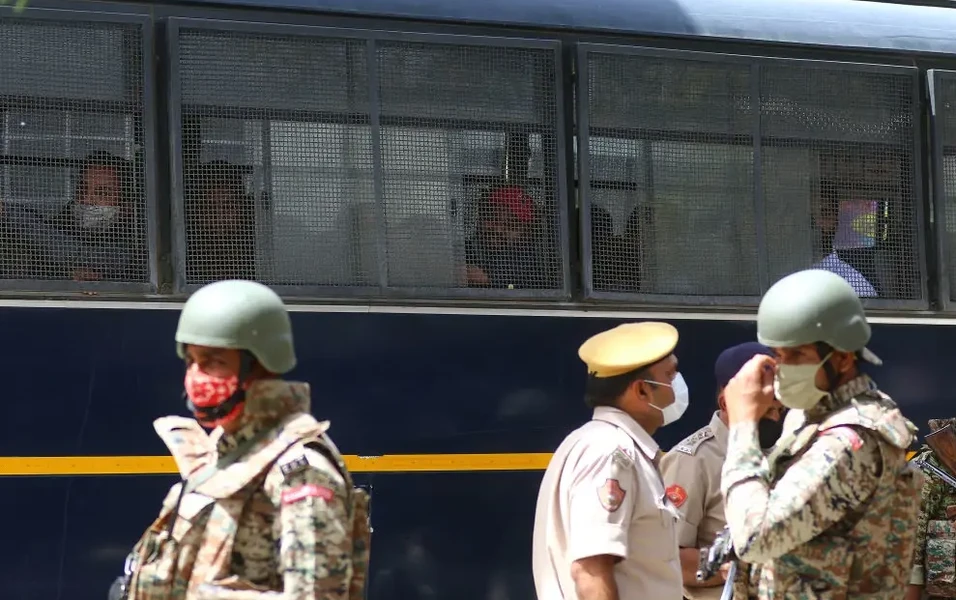
A woman from Jaipur has been arrested in connection with an alleged espionage and national security case after investigators uncovered what authorities describe as extensive communication with a Pakistan-based terror operative. The arrest has brought renewed attention to the use of online relationships, emotional manipulation, and so-called “honey trap” tactics in intelligence-gathering operations targeting Indian citizens.
According to investigators, the woman had been in regular contact with an individual believed to be associated with a Pakistan-based terrorist organization. Preliminary findings suggest that the relationship evolved beyond casual online interaction and involved sustained communication over a significant period. Security agencies are now examining whether sensitive information was shared and whether the accused knowingly assisted hostile elements operating across the border.
Investigators Examine Digital Communications
The case came to light during a broader intelligence investigation into suspected cross-border networks attempting to establish contacts within India. Officials reportedly traced digital communications that indicated frequent interactions between the Jaipur resident and a Pakistan-based operative.
Authorities have recovered electronic devices and communication records that are currently undergoing forensic examination. Investigators are analyzing messages, call records, social media interactions, and other digital evidence to determine the extent of the relationship and identify any potential security breaches.
Sources involved in the investigation indicated that the exchanges allegedly included personal conversations, discussions about future plans, and communications that raised concerns among intelligence officials. The nature and content of these interactions prompted agencies to intensify their scrutiny.
Alleged Honey Trap Strategy Under Investigation
Security officials suspect that the relationship may have been part of a larger honey trap operation, a tactic in which emotional or romantic relationships are used to influence, manipulate, or recruit targets for intelligence purposes.
Investigators believe the woman may have been drawn into a network through personal interactions that gradually developed into a deeper connection. Authorities are examining whether the accused was aware of the true identity and affiliations of the individual she was communicating with or whether she was manipulated over time.
Honey trap operations have become an increasing concern for intelligence agencies as digital communication platforms allow foreign operatives to establish contact with individuals across borders without direct physical interaction. Such methods can be used to extract information, build influence networks, or recruit assets.

Alleged Plans for Marriage Raise Further Questions
One of the most striking aspects of the investigation involves alleged discussions regarding marriage between the accused and the Pakistan-based operative. Investigators claim that conversations recovered during the probe indicate that the relationship had progressed to the point where future plans, including marriage, were being discussed.
Authorities are assessing whether these discussions were genuine expressions of a personal relationship or whether they formed part of a broader strategy to gain trust and deepen influence over the accused. Security agencies often view such developments as significant indicators when evaluating possible recruitment or manipulation efforts.
Officials have not publicly disclosed the full details of these communications due to the sensitive nature of the investigation.
Links to Terror Organization Under Scrutiny
The individual allegedly connected to the Jaipur woman is believed to have links to a Pakistan-based terrorist organization. Investigators are working to verify the extent of those connections and determine whether the operative was acting independently or as part of an organized network.
Counterterrorism officials are particularly focused on understanding whether the communications had any operational significance. The inquiry seeks to establish whether information, assistance, or other forms of support may have been provided to individuals associated with extremist activities.
Authorities have emphasized that the investigation remains ongoing and that multiple agencies are coordinating efforts to assess all available evidence.
Broader National Security Concerns
The case highlights growing concerns among security agencies regarding the evolving nature of espionage and intelligence-gathering activities. With the widespread use of social media, messaging applications, and digital communication platforms, foreign operatives can establish relationships with individuals from different backgrounds and regions with relative ease.
Experts note that online interactions can gradually develop into trusted relationships, making it difficult for targets to recognize potential manipulation. Intelligence agencies have repeatedly warned citizens, particularly those with access to sensitive information or strategic locations, to exercise caution when interacting with unknown individuals online.
The investigation also underscores the importance of digital vigilance and public awareness in countering foreign influence and espionage attempts.
Investigation Continues
Authorities have stated that further questioning, digital forensic analysis, and intelligence assessments are underway. Investigators are also examining whether additional individuals may have been involved or connected to the communications network.
The arrested woman remains under investigation as agencies continue to piece together the circumstances surrounding her alleged interactions with the Pakistan-based operative. Officials have indicated that conclusions regarding intent, knowledge, and possible violations of national security laws will depend on the evidence gathered during the ongoing probe.
As the investigation progresses, security agencies are expected to focus on identifying any broader networks, determining the full scope of the communications, and assessing whether the case represents an isolated incident or part of a larger pattern of cross-border intelligence activity targeting India.