
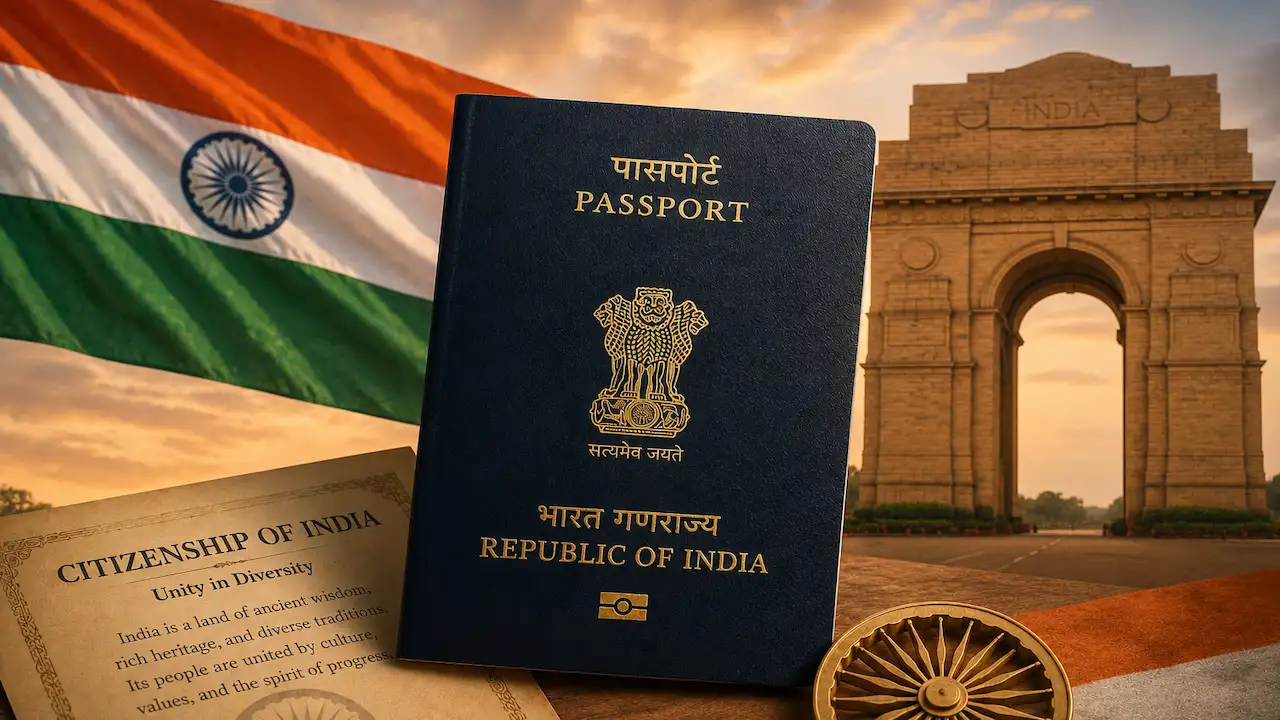
The Union government has clarified that there has been no change in passport-related regulations and reiterated that a passport should not be considered a definitive document establishing citizenship. The clarification comes amid growing public debate and political discussion over the role of passports in determining an individual’s citizenship status.
Officials emphasized that passports are primarily travel documents issued under existing legal frameworks and are not intended to serve as conclusive proof of citizenship in all circumstances. The government stated that the legal position on this matter has remained unchanged and that recent concerns suggesting a policy shift are misplaced.
Government Responds to Public Debate
The clarification was issued after questions emerged regarding the interpretation of citizenship verification procedures and the evidentiary value of passports. According to government authorities, the passport issuance process relies on documents and declarations provided by applicants, but the possession of a passport alone does not automatically settle all questions related to citizenship.
Officials stressed that the legal distinction between a travel document and proof of citizenship has existed for years. While passports are generally issued to citizens and serve as internationally recognized identification and travel documents, they are not regarded as the final authority in cases where citizenship status is under legal examination.
The government said that any suggestion that authorities have recently altered rules governing passports or citizenship documentation is incorrect. Existing legal provisions continue to apply without modification.
Passport and Citizenship: Understanding the Difference
The clarification highlights an important distinction within administrative and legal processes. A passport is issued to facilitate international travel and verify identity for travel-related purposes. However, citizenship determinations may involve additional legal scrutiny, documentation, and verification procedures.
Authorities noted that citizenship can be assessed through various statutory provisions and supporting records, depending on the circumstances of an individual case. In situations where citizenship status is challenged or under review, multiple forms of evidence may be considered by the relevant authorities.
Legal experts have often pointed out that while passports carry significant evidentiary value, they are not necessarily conclusive in every legal proceeding involving nationality or citizenship disputes. Courts and administrative bodies may examine a broader set of records when adjudicating such matters. 
No Changes to Existing Passport Regulations
The government firmly rejected reports and claims suggesting that new rules have been introduced regarding the status of passports. Officials stated that the legal framework governing passport issuance remains unchanged and continues to operate under established procedures.
According to the clarification, the issuance of a passport does not override other statutory mechanisms used to determine citizenship. The government maintained that this principle has been part of the legal understanding surrounding passports for many years and should not be interpreted as a new policy direction.
Authorities also stressed that citizens who possess valid passports should not view the clarification as affecting their travel rights or the validity of their passport documents. The statement was intended to address misconceptions and explain the legal position rather than announce any administrative change.
Political and Public Reactions
The issue has sparked discussion among political parties, legal observers, and members of the public. Some critics expressed concern over interpretations that could create confusion regarding identity and citizenship documentation. Others argued that the government’s clarification merely restates a long-standing legal principle.
The debate has also drawn attention to broader questions surrounding documentation, identity verification, and citizenship records in India. Experts note that different government documents serve distinct purposes, with passports, voter identity cards, birth certificates, and citizenship-related records each carrying varying legal significance depending on the context.
Legal Context
Citizenship in India is governed by constitutional provisions and statutory laws that outline how citizenship is acquired, determined, and verified. Passport issuance operates within a separate administrative framework focused primarily on facilitating international travel and establishing identity.
Government officials reiterated that the latest clarification should be viewed within this legal context. They emphasized that there has been no departure from existing practices and that the distinction between passport issuance and citizenship determination has long been recognized in law.
Conclusion
Seeking to dispel confusion, the government has reaffirmed that a passport is primarily a travel document and should not be treated as the sole or conclusive proof of citizenship. Officials have also stressed that no rules have been altered and that the legal position remains exactly as it has been under existing regulations. The clarification aims to address concerns generated by recent debate while underscoring the difference between passport documentation and formal citizenship determination processes.