
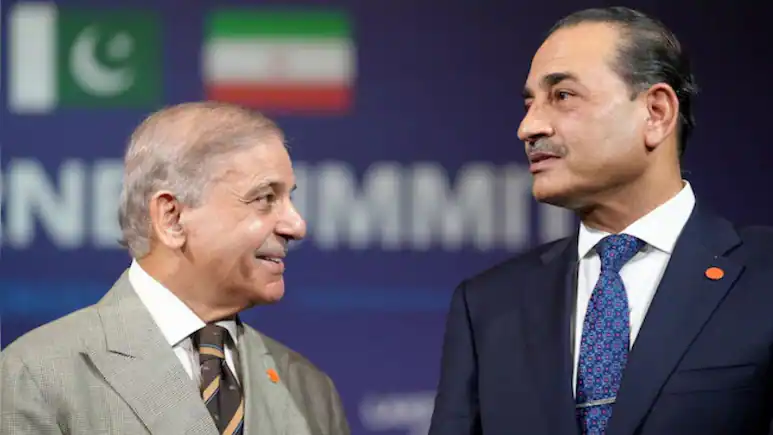
A wave of online speculation has emerged following an unverified and widely circulated claim suggesting that Israel’s intelligence agency Mossad allegedly considered targeting Pakistan’s Chief of Army Staff, General Asim Munir. The narrative, attributed to Brazilian journalist Pepe Escobar, has gained traction on social media platforms, fueling heated discussions, geopolitical theories, and misinformation concerns.
The claim, which has not been independently verified by any official government or intelligence source, suggests an extreme scenario involving a covert plan allegedly directed against one of Pakistan’s most senior military figures. It further escalates into broader assertions involving Israel’s strategic intentions toward Pakistan, including highly provocative language that has drawn significant attention online.
According to the circulating narrative, the alleged plot is framed within a wider context of global geopolitical tensions. However, no credible evidence, official confirmation, or corroborated intelligence reports have surfaced to substantiate these assertions. Analysts familiar with regional security dynamics emphasize that such claims often emerge in politically charged environments and spread rapidly through digital platforms without verification.
Pakistan’s military leadership, including General Asim Munir, remains a central pillar of the country’s national security structure. As the head of the armed forces, he plays a critical role in shaping defense policy, counterterrorism strategy, and civil-military coordination. Any suggestion of an assassination plot against such a high-ranking official naturally draws intense public reaction, even when the claims remain unverified. 
The mention of Mossad in the circulating narrative has further amplified attention due to the agency’s longstanding reputation as one of the world’s most secretive intelligence services. Over the years, Mossad has frequently been the subject of speculation in global media and online forums, often without concrete evidence. Experts caution that such associations can blur the line between factual reporting and speculative storytelling.
Similarly, the inclusion of Israel in the alleged scenario has added a geopolitical dimension that has intensified online debate. The already complex relationship between various Middle Eastern and South Asian geopolitical interests makes such claims particularly sensitive, often leading to rapid amplification across digital ecosystems.
Security analysts and disinformation researchers note that viral claims of this nature tend to follow a familiar pattern: an attributed source, a dramatic allegation, and a lack of verifiable documentation. Once introduced into online discourse, these narratives can spread quickly, especially when they involve high-profile military or intelligence figures.
At present, there is no official confirmation from Pakistan, Israel, or any international intelligence authority regarding the existence of such a plot. The claim remains within the realm of unverified social media discourse and speculative commentary.
Experts further highlight the importance of distinguishing between substantiated intelligence reporting and digitally amplified narratives. In an era where geopolitical misinformation can circulate rapidly, critical evaluation of sources and verification of facts remain essential.
As the story continues to circulate online, it underscores the broader challenge of managing unverified intelligence-related claims in the digital age—particularly those involving sensitive geopolitical relationships and prominent military leaders.