
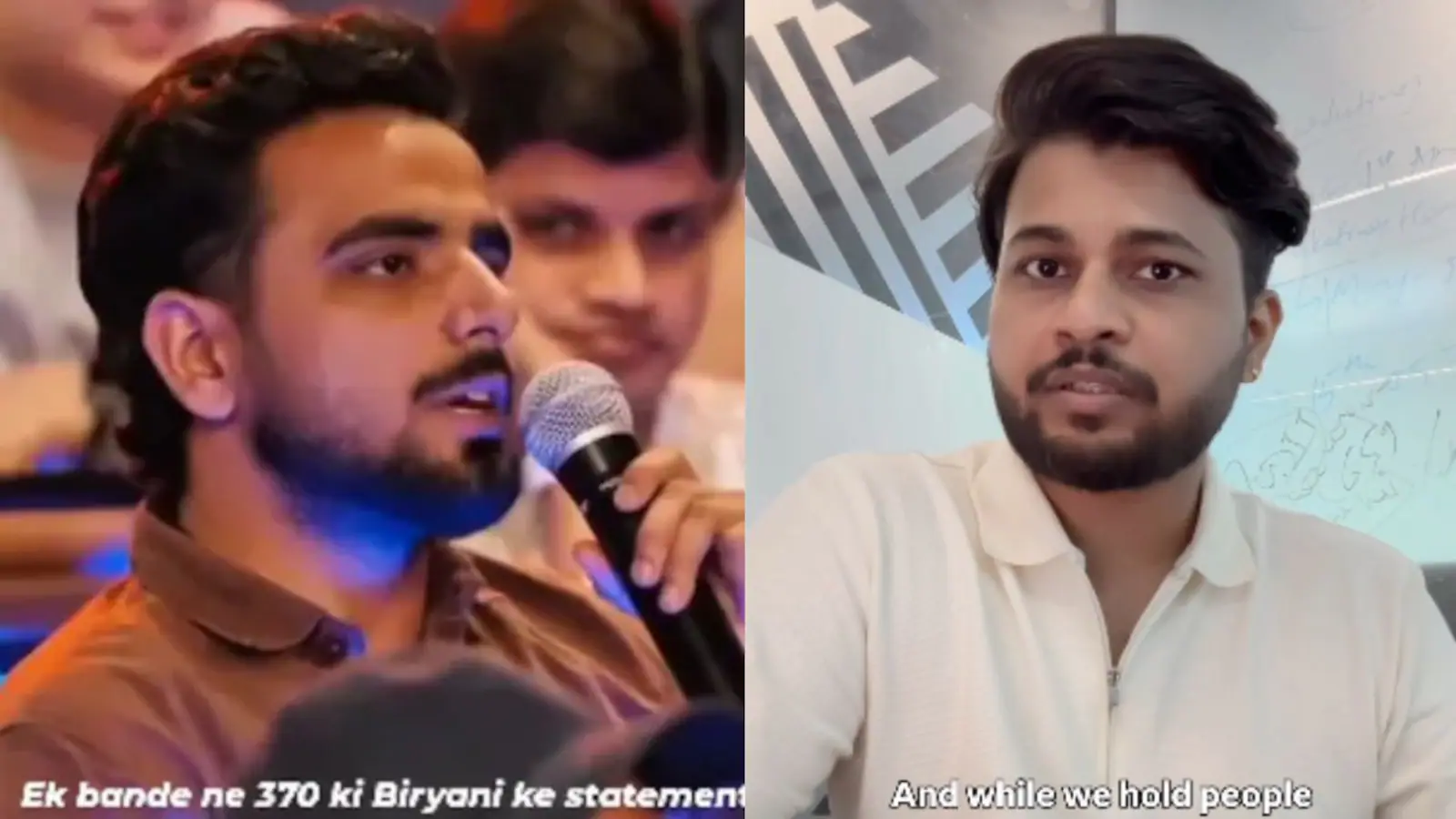
A seemingly casual joke shared during a stand-up comedy crowd-work session has snowballed into a nationwide controversy, ultimately leading to the dismissal of a Gurgaon-based professional from his job. The incident, which originated from a viral clip on comedian Pranit More’s show, has reignited discussions around workplace conduct, misogyny, accountability, and the consequences of online virality.
The controversy began when a participant identified as Himanshu Jangra recounted an experience from a date. During the interaction, he narrated that he had spent around ₹370 on chicken biryani while out with a woman. According to the viral clip, when the woman later requested that he drop her home, he jokingly remarked that since he had spent ₹370, he needed to “recover” his investment—a statement widely interpreted as implying that he expected something in return for paying for the meal. The audience laughed, and More reportedly described the exchange as a “Peak Gurgaon moment.”
Social Media Backlash Intensifies
Soon after the clip began circulating across social media platforms, users criticized both the participant’s remark and the laughter it received from the audience and host. Many viewers argued that the joke reinforced problematic attitudes toward women by suggesting that paying for a meal creates entitlement to affection, attention, or intimacy.
The backlash quickly spread beyond the comedy community, with social media users condemning what they viewed as the normalization of sexist attitudes under the guise of humor. Critics contended that such remarks contribute to a broader culture in which women are objectified and their autonomy undermined.
Employer Takes Action
As the controversy gained traction online, internet users reportedly identified the individual involved and connected him to his workplace. According to reports, the Gurgaon-based company subsequently terminated his employment after reviewing the circumstances and the public reaction generated by the viral clip.
The dismissal became a major talking point online, with opinions sharply divided. While some users argued that professional consequences were justified because the remarks reflected poor judgment and values inconsistent with workplace standards, others questioned whether an off-duty joke should result in job loss. 
Debate Over Accountability and Cancel Culture
The incident has sparked a larger conversation about the intersection of personal behavior, public accountability, and professional consequences in the digital age.
Supporters of the company’s action argued that employees often serve as representatives of their organizations, even outside office hours, particularly when their statements attract widespread public attention. Critics, however, warned that viral outrage can sometimes lead to disproportionate punishment and raise concerns about “cancel culture.”
The episode has also prompted discussions about whether comedians and content creators should exercise greater responsibility when engaging with audience submissions and crowd-work material.
Spotlight Shifts to Pranit More
While initial criticism focused on the participant’s remark, attention soon turned toward comedian Pranit More himself. Many users questioned whether comedy performers should challenge problematic statements made during live shows instead of amplifying them through laughter or social media clips.
The controversy reportedly led More to issue a public apology after facing criticism online. The comedian acknowledged the concerns raised by viewers and addressed the backlash surrounding the viral moment.
A Case Study in the Power of Viral Content
What began as a brief exchange during a comedy show has evolved into a national discussion on gender sensitivity, workplace reputation, social media accountability, and the far-reaching consequences of online exposure.
The incident demonstrates how a single viral clip can rapidly transform an ordinary individual into the center of a public controversy, affecting not only personal reputation but also professional opportunities. It also highlights the growing scrutiny faced by entertainers, influencers, and audience participants in an era where every public moment can be recorded, shared, and judged by millions.
As debates continue across social media, the ₹370 biryani controversy serves as another reminder that humor, intent, and public perception often collide in unpredictable ways in the digital age.