

Chief Justice of India (CJI) Surya Kant has emphasized the growing importance of mediation in India’s dispute resolution framework, arguing that it should emerge as a preferred mechanism for resolving conflicts rather than being treated as a secondary option. At the same time, he expressed concern over the increasing procedural complexities and operational challenges confronting arbitration, a system originally designed to provide a faster and more efficient alternative to traditional litigation.
Addressing legal professionals, policymakers, and stakeholders involved in dispute resolution, the CJI underscored the need for a balanced and effective framework that can reduce the burden on courts while ensuring timely and fair outcomes for parties involved in disputes.
Mediation Should Move to the Forefront
Justice Surya Kant stressed that mediation has the potential to transform the way disputes are resolved in India. Unlike adversarial court proceedings, mediation focuses on dialogue, consensus-building, and mutually acceptable solutions. According to him, this approach not only saves time and costs but also helps preserve relationships between parties, making it particularly effective in commercial, family, and civil disputes.
The CJI noted that mediation aligns with the broader objective of delivering accessible and efficient justice. He argued that in a legal system dealing with a significant volume of pending cases, mediation offers a practical and sustainable path toward reducing litigation while promoting cooperative problem-solving.
He highlighted that dispute resolution should not always revolve around declaring winners and losers. Instead, justice can often be better served through negotiated settlements that address the interests of all stakeholders and foster long-term harmony. 
Concerns Over Arbitration’s Evolving Challenges
While acknowledging the progress India has made in strengthening its arbitration ecosystem, Justice Kant pointed out that arbitration is increasingly facing challenges that threaten its original purpose.
He observed that arbitration was developed as a streamlined alternative to court-based litigation. However, over time, several procedural hurdles have emerged, making arbitration more complex, expensive, and time-consuming than intended.
According to the CJI, rising costs, prolonged hearings, extensive documentation requirements, and procedural delays are becoming significant concerns for parties seeking efficient dispute resolution. These issues, he warned, risk undermining confidence in arbitration as a practical alternative to traditional legal proceedings.
He remarked that arbitration must avoid replicating the shortcomings of conventional litigation. If left unchecked, excessive procedural formalities could diminish the advantages that originally made arbitration attractive for businesses and individuals.
Building Trust in Dispute Resolution Institutions
A key theme of the CJI’s remarks was the importance of institutional trust. He emphasized that the success of any dispute resolution mechanism depends on public confidence in its fairness, neutrality, and transparency.
For arbitration institutions to gain wider acceptance, stakeholders must have confidence in arbitrator appointments, procedural integrity, and the enforcement of arbitral awards. Such trust, he noted, cannot be established solely through legal provisions but must be built through consistent performance and accountability over time.
Justice Kant urged institutions to continuously improve their standards and ensure that users perceive them as credible, efficient, and impartial forums for dispute resolution. 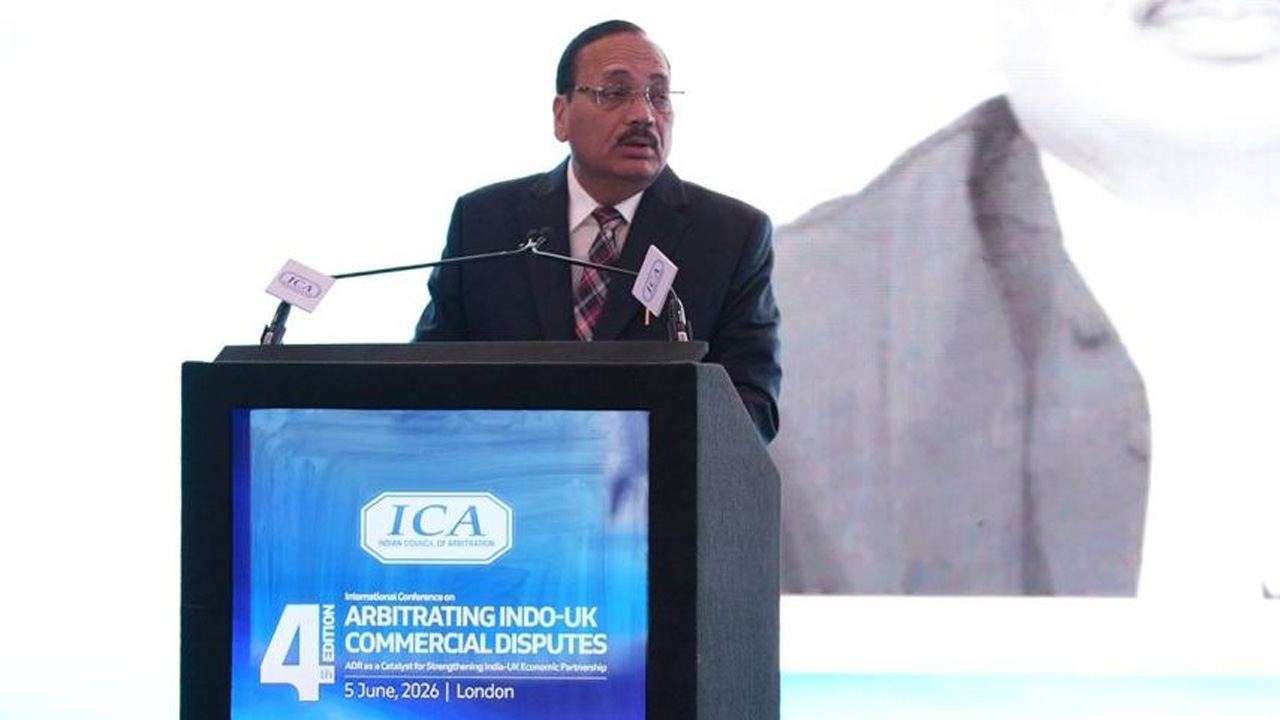
Strengthening Capacity and Expertise
The CJI also highlighted the need to expand India’s pool of trained professionals in the field of arbitration and mediation. As commercial activity and cross-border transactions continue to grow, the demand for skilled arbitrators, mediators, and dispute resolution experts is expected to increase significantly.
He stressed the importance of developing institutional capacity, enhancing professional training, and creating robust frameworks that can support the growing volume of complex commercial disputes.
According to him, India has made substantial progress in modernizing its legal infrastructure, but sustained efforts are required to ensure that dispute resolution mechanisms remain efficient, accessible, and globally competitive.
A Vision for Faster and More Effective Justice
Justice Surya Kant’s observations reflect a broader judicial push toward reducing dependence on lengthy court proceedings and promoting alternative dispute resolution mechanisms. His remarks signal a growing recognition within the judiciary that mediation, arbitration, and other consensual methods can play a crucial role in delivering timely justice.
By encouraging mediation as a first-choice mechanism and calling attention to the challenges facing arbitration, the CJI highlighted the need for continuous reforms aimed at improving efficiency, reducing costs, and strengthening public confidence in India’s dispute resolution ecosystem.
As India seeks to position itself as a major economic and commercial hub, experts believe that effective dispute resolution systems will be essential in attracting investment, ensuring contractual certainty, and supporting long-term economic growth. The CJI’s remarks reinforce the view that mediation and arbitration must evolve to meet these expectations while remaining true to their core objective—providing accessible, efficient, and fair justice.