
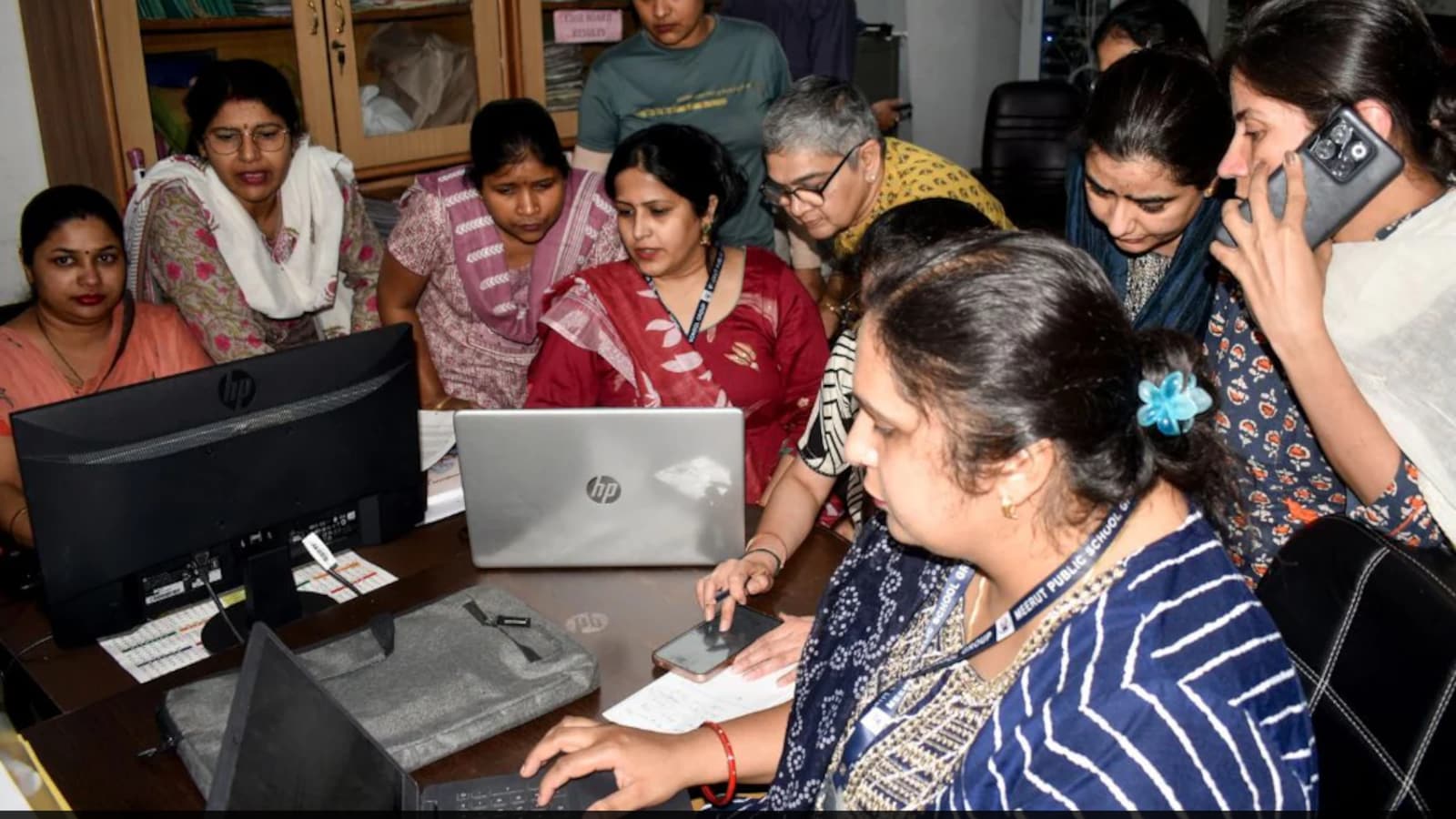
The Central Board of Secondary Education (CBSE) has completed a significant stage of its post-result review mechanism for the 2026 Class 12 board examinations, with thousands of students successfully accessing the re-evaluation and verification portal to seek a review of their answer books and awarded marks.
The development marks an important milestone in the board’s efforts to provide students with a transparent and structured avenue to address concerns related to their examination results. The online portal, which became operational after a revised launch schedule, enabled eligible candidates to apply for verification of discrepancies in scanned answer books and request re-evaluation of specific answers.
Large Number of Students Participate in Review Process
The re-evaluation window attracted considerable interest from students across the country. Thousands of candidates who had previously obtained scanned copies of their evaluated answer sheets utilized the portal to report issues and request further scrutiny of their examination papers.
The review mechanism is designed to help students identify potential discrepancies in their answer books and seek corrective action where necessary. This process serves as an important safeguard within the examination system, ensuring that students have an opportunity to challenge possible errors and seek clarification regarding their evaluated responses.
What Students Could Request
Under the verification process, students were allowed to report various issues observed in their scanned answer books. These included:
Missing pages in answer sheets
Missing supplementary sheets
Blurred or unclear scanned copies
Missing diagrams, maps, or graphs
Incorrect answer books being uploaded
Evaluation against a different question paper set
Students were also given the option to apply for re-evaluation of specific questions if they believed their answers had not been assessed accurately.
The system allowed candidates to submit requests for multiple subjects and multiple issues through a single application, making the process more convenient and streamlined. 
Online-Only Application System
CBSE maintained a fully digital approach for the re-evaluation exercise. All applications were required to be submitted through the designated online portal, with no provision for offline requests.
Candidates were instructed to carefully review all details before final submission, as the information became non-editable once the payment process was initiated. The board emphasized the importance of accuracy during submission to avoid complications later in the review cycle.
Online payment options included UPI, debit cards, credit cards, and net banking services, allowing students from different regions to complete the application process electronically.
Enhanced Transparency Measures
One of the notable features of the 2026 review process was the emphasis on transparency. Students were first provided access to scanned copies of their evaluated answer books before being allowed to request re-evaluation.
This approach enabled candidates to identify specific concerns rather than applying for a broad review without examining their answer sheets. Education experts have often highlighted such systems as beneficial because they allow students to make informed decisions regarding re-evaluation requests.
The process also helps reduce unnecessary applications while ensuring genuine grievances can be addressed effectively.

Technical Challenges and High Demand
The portal’s rollout drew significant attention due to the large number of students attempting to access the platform simultaneously. Reports indicated that the system experienced heavy traffic as candidates rushed to complete applications within the stipulated timeline.
The board responded by implementing measures aimed at maintaining platform stability and ensuring that students could continue submitting requests without major disruptions. Adjustments were also made to improve user experience and facilitate smoother access to the portal.
The high volume of applications reflected the growing reliance on digital systems for examination-related services and highlighted the importance of robust technological infrastructure during critical academic processes.
Importance of Re-Evaluation in the Examination System
The re-evaluation mechanism remains a crucial component of India’s board examination framework. For many students, even minor changes in marks can significantly impact college admissions, scholarship opportunities, and career prospects.
By allowing students to review their answer books and seek corrections where warranted, the process reinforces confidence in the examination system and promotes accountability in evaluation practices.
Education stakeholders have consistently advocated for transparent post-result procedures, viewing them as essential to maintaining trust between examining authorities and students.
What Happens Next
With the application phase now completed, CBSE is expected to examine the submitted requests and process them according to established guidelines. Cases involving discrepancies in scanned answer books will be reviewed, while re-evaluation requests will undergo scrutiny by designated evaluators.
Any approved corrections resulting from verification or re-evaluation will be reflected in updated records, and students will be informed of the outcomes through official channels.
The conclusion of this stage marks another step in CBSE’s broader effort to modernize post-result services and provide students with a more transparent and technology-driven examination review process.
As the board moves forward with reviewing submitted applications, students across the country will now await the outcomes that could potentially impact their final academic records and future educational opportunities.