
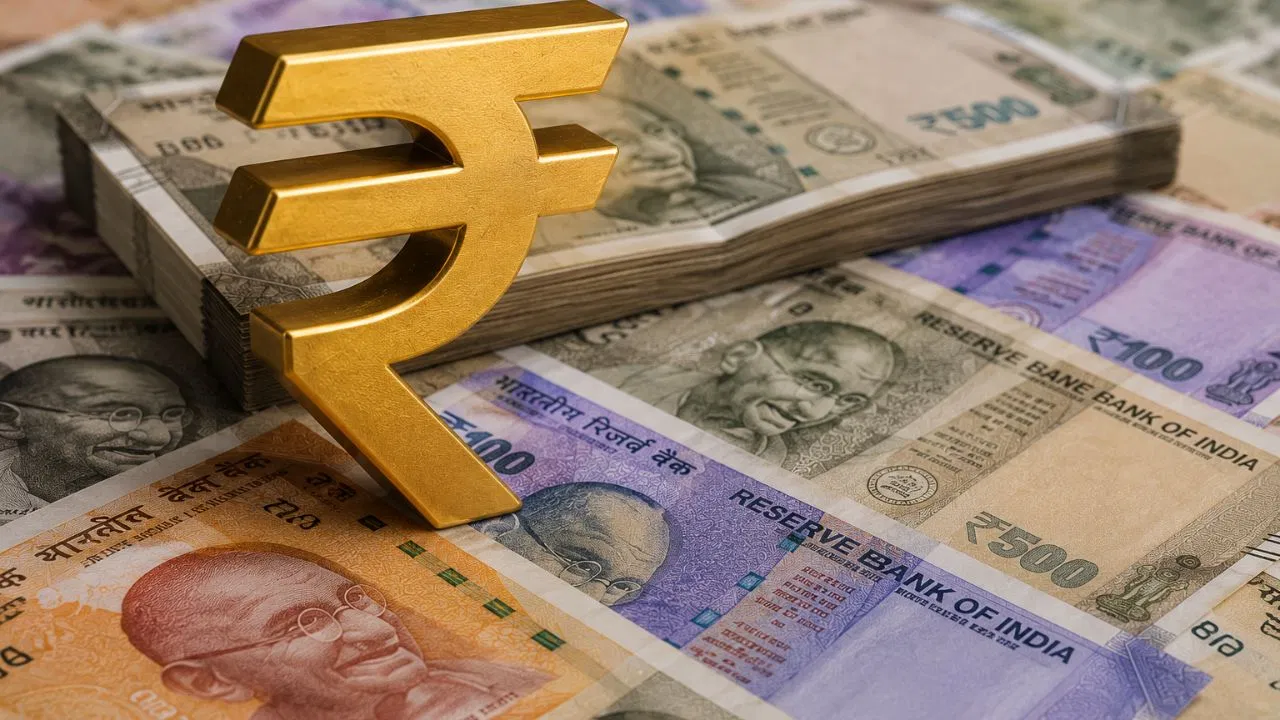
The Indian rupee staged a notable recovery on Wednesday, gaining 41 paise against the U.S. dollar after previously falling to its weakest-ever closing level. The domestic currency settled at 96.45 per dollar, providing temporary relief to financial markets and import-dependent sectors amid ongoing global economic uncertainty and strong demand for the American currency.
The rebound came after a turbulent trading session that reflected heightened volatility in global currency markets. Currency dealers and market analysts attributed the rupee’s recovery to a combination of central bank intervention, improved investor sentiment, and easing pressure from global crude oil prices.
The rupee had recently touched an all-time closing low due to sustained foreign fund outflows, a strengthening U.S. dollar index, and rising concerns over global economic conditions. However, renewed support from the Reserve Bank of India (RBI) and selective dollar selling by state-run banks helped the domestic currency regain lost ground.
RBI Intervention Supports Market Stability
Market participants believe the RBI played a crucial role in stabilizing the rupee after its steep decline triggered concerns across the financial sector. The central bank has been actively monitoring currency movements to prevent excessive volatility and maintain orderly market conditions.
Traders indicated that state-owned banks were seen selling dollars in the foreign exchange market, a move often interpreted as indirect intervention by the RBI. Such actions are typically aimed at controlling speculative pressure and ensuring confidence among investors and businesses.
The central bank’s intervention strategy appears focused on preventing abrupt depreciation rather than defending a fixed exchange rate level. Analysts noted that while the rupee remains under long-term pressure, the RBI continues to maintain adequate foreign exchange reserves to counter sudden market disruptions. -1779344490654_d.png)
Global Factors Continue to Influence Rupee Movement
Despite the recovery, economists warned that the rupee may continue to face challenges due to multiple external factors. The U.S. Federal Reserve’s monetary policy stance, geopolitical tensions, and fluctuations in global crude oil prices remain major drivers influencing emerging market currencies, including the Indian rupee.
The dollar has strengthened significantly in recent months as investors shifted toward safer assets amid concerns over slowing global growth and persistent inflationary risks. A stronger dollar typically exerts pressure on emerging market currencies because it increases import costs and widens trade imbalances.
India, being one of the world’s largest crude oil importers, remains particularly vulnerable to fluctuations in energy prices. Higher oil prices increase demand for dollars from oil companies, thereby putting additional pressure on the rupee.
However, recent moderation in crude prices offered some relief to the domestic currency market. Improved risk appetite among investors also contributed to the rupee’s recovery during the trading session.
Impact on Indian Economy and Businesses
The rupee’s depreciation has significant implications for various sectors of the Indian economy. Import-dependent industries such as oil, electronics, and aviation often face rising costs when the domestic currency weakens. Higher import bills can eventually translate into increased inflationary pressure for consumers.
On the other hand, exporters may benefit from a weaker rupee because their overseas earnings become more valuable when converted into Indian currency. Sectors including information technology, pharmaceuticals, and textiles generally gain from currency depreciation.
Financial experts stated that the recent recovery may provide short-term confidence to markets, but long-term stability will depend on broader economic fundamentals, capital flows, and global financial conditions.
Investors Closely Monitoring Future Trends
Currency market participants are expected to closely watch upcoming economic data, U.S. Federal Reserve policy signals, and RBI actions in the coming weeks. Any shift in global risk sentiment or foreign investment flows could influence the rupee’s direction.
Analysts believe that while the rupee’s rebound is encouraging, volatility is likely to remain elevated due to uncertainty in international markets. Investors are also monitoring India’s inflation trends, trade deficit figures, and foreign exchange reserve position for indications about the currency’s future trajectory.
The recovery from the historic low has nevertheless provided temporary breathing space for policymakers and businesses navigating an increasingly uncertain global economic environment.