
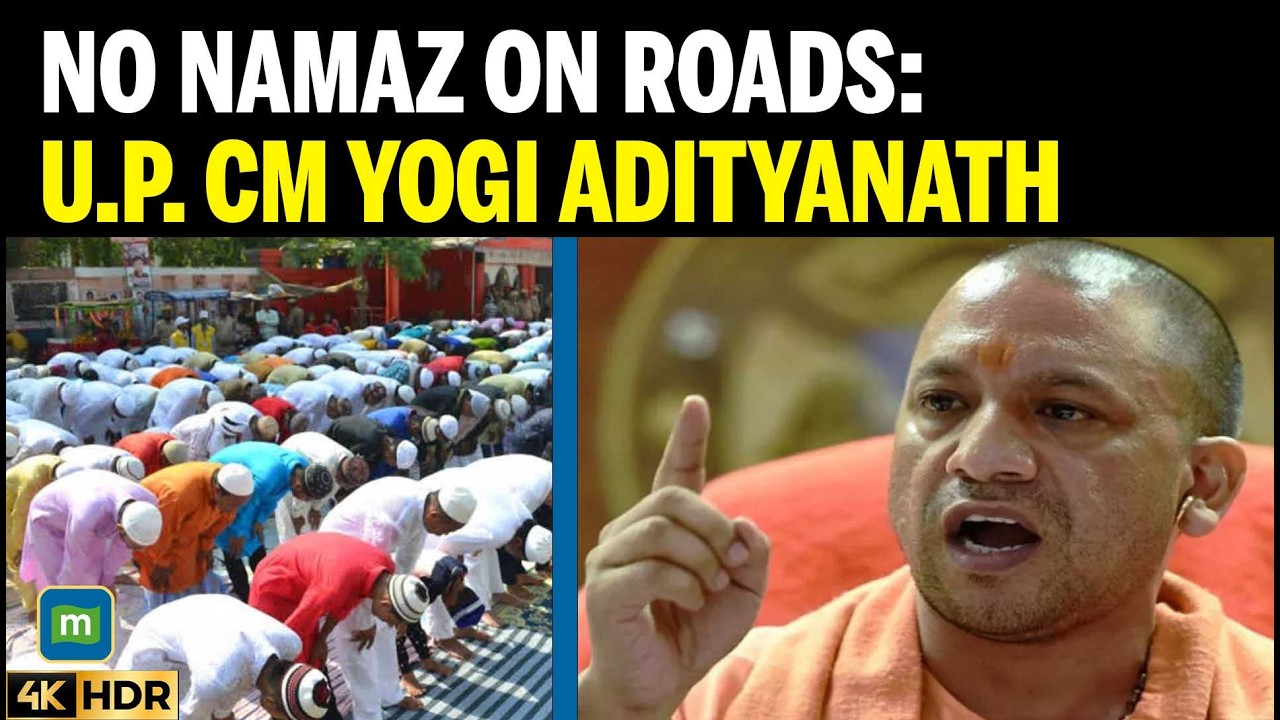
Uttar Pradesh Chief Minister Yogi Adityanath has once again sparked political and social debate after making remarks concerning public religious gatherings, road-blocking during prayers, and population growth among communities. Addressing a public gathering in Uttar Pradesh, the Chief Minister said religious prayers should not disrupt public movement and suggested that people offering namaz should do so in shifts rather than occupying roads and public spaces.
During his speech, Adityanath emphasized that roads are meant for public transportation and emergency movement, arguing that no religious activity should inconvenience the general public. He stated that if space constraints exist at mosques or designated prayer locations, worshippers should organize prayers in batches or shifts to ensure normal traffic flow and civic order are maintained.
The remarks came amid ongoing debates in several states regarding public religious events, traffic management, and administrative regulation of gatherings. Over the years, authorities in multiple regions have introduced guidelines restricting religious activities on roads, citing concerns over congestion, public safety, and emergency access.
Adityanath also addressed the issue of population growth, urging communities to become more aware of demographic balance and responsible family planning. Without naming any specific group directly in certain parts of the speech, he stressed the importance of controlling population growth for economic stability, access to resources, and long-term national development.
The Chief Minister argued that unchecked population expansion could place pressure on healthcare systems, employment opportunities, housing, education, and public infrastructure. He said every citizen should contribute toward creating a balanced and sustainable society through awareness and responsibility. 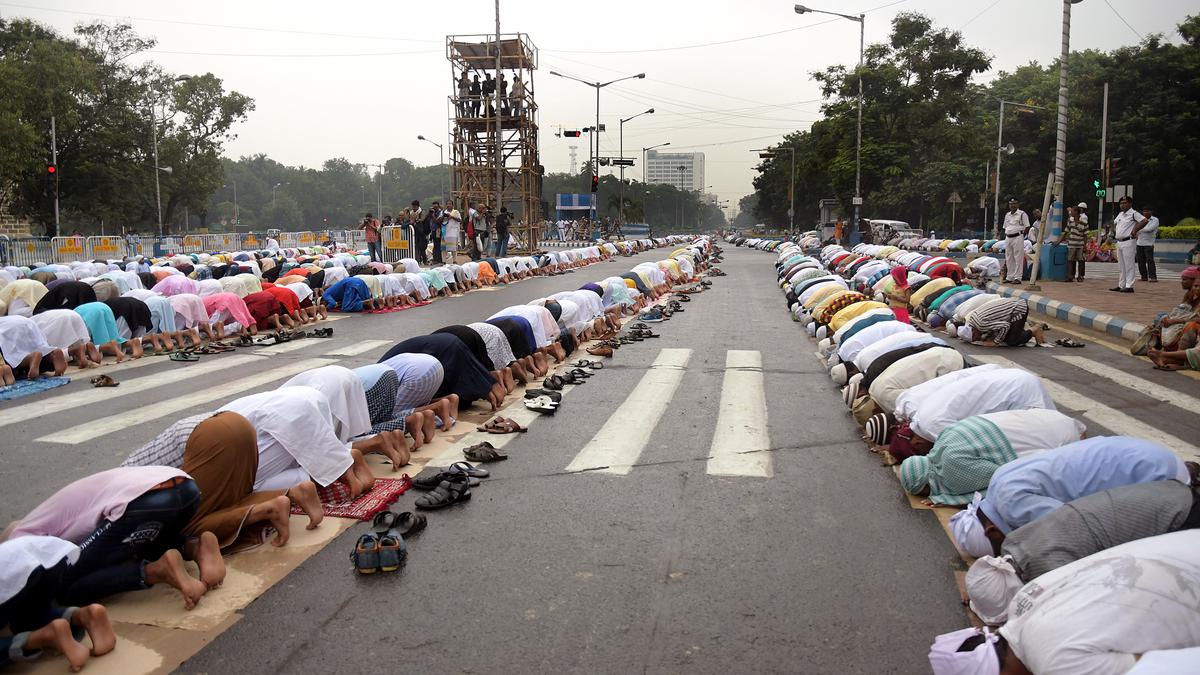
His comments quickly drew reactions from political parties, civil society groups, and religious organizations. Supporters of the Chief Minister defended the remarks as an appeal for law, discipline, and better civic management. They argued that public roads should remain free from obstructions regardless of the religious or social activity involved.
Critics, however, accused the Uttar Pradesh government of selectively targeting minority communities and using sensitive religious issues for political messaging. Opposition leaders questioned the tone and timing of the remarks, claiming they could contribute to social polarization ahead of future political developments.
Several analysts observed that debates surrounding religious practices in public spaces have become increasingly prominent in Indian politics in recent years. Authorities across different states have periodically taken administrative action concerning loudspeakers, religious processions, encroachments, and mass prayer gatherings in public areas.
Despite the controversy, the Uttar Pradesh administration has maintained that its focus remains on preserving law and order while ensuring equal application of rules across communities. Officials have repeatedly stated that public convenience and security considerations guide such decisions.
The issue of population control has also remained a recurring political subject in Uttar Pradesh. In previous years, discussions around a proposed population control policy generated nationwide debate regarding implementation, incentives, and concerns over personal freedoms and demographic targeting.
Political observers believe Adityanath’s latest comments are likely to reignite discussions around the balance between religious freedom, civic discipline, and governance in India’s rapidly growing urban centers. The statements are expected to continue drawing strong reactions from both supporters and critics in the coming days.
As the debate unfolds, attention is likely to remain focused on how governments and communities navigate the complex intersection of religion, public space management, and social policy in a diverse democratic society like India.