
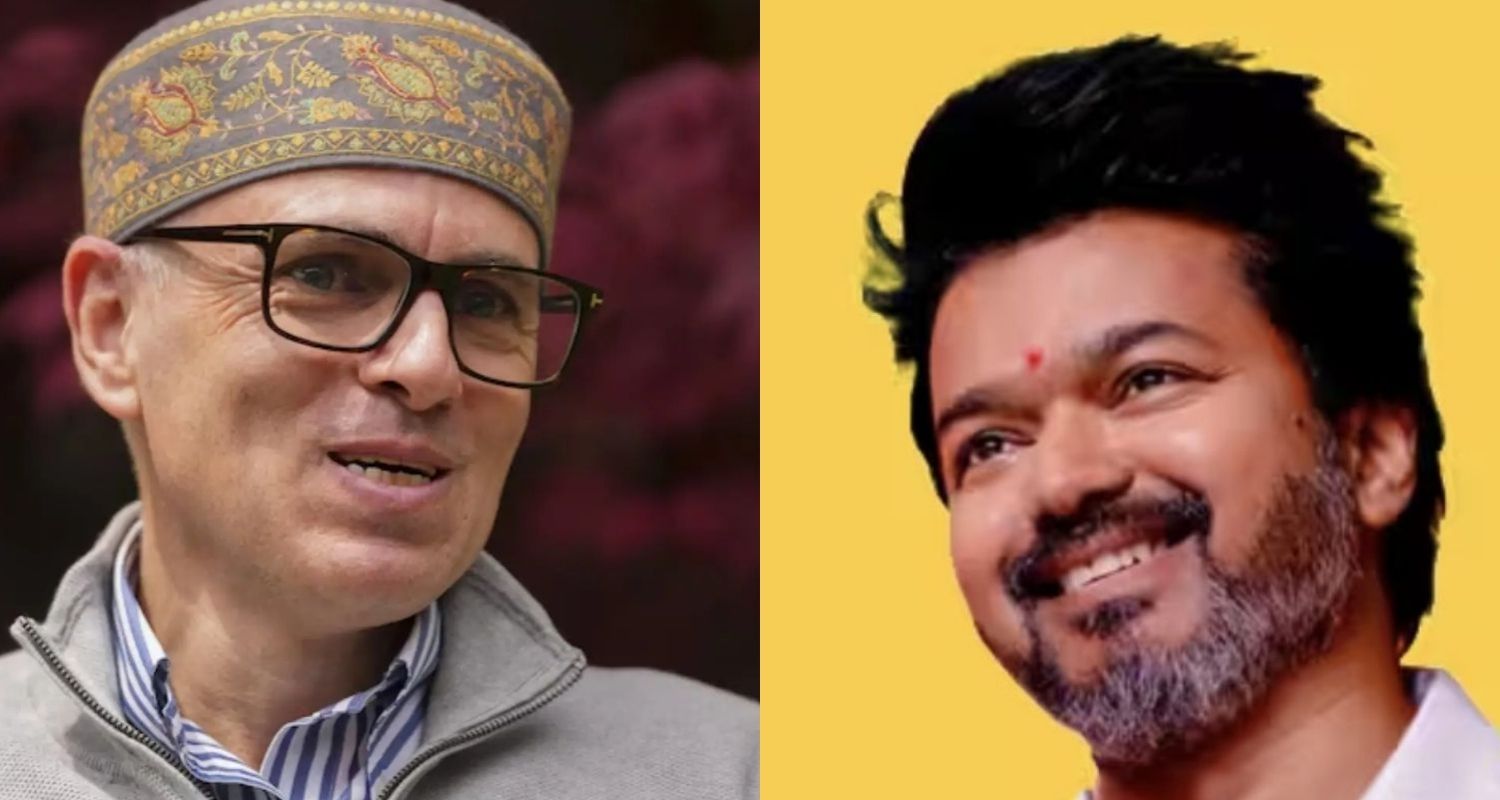
Political debate over alcohol regulation has intensified in Jammu and Kashmir after several leaders and social groups called upon the government led by Chief Minister Omar Abdullah to explore stricter liquor control measures inspired by the approach recently advocated in Tamil Nadu.
The demand has emerged amid growing discussions around the social and economic impact of alcohol consumption in the Union Territory. Political figures, religious organizations, and civil society representatives have argued that rising alcohol availability has contributed to social distress, domestic conflicts, and public health concerns across multiple districts.
Leaders supporting the proposal urged the administration to study policy measures being discussed in Tamil Nadu under the leadership of actor-turned-politician Vijay, whose stance on prohibition and social welfare issues has generated nationwide political attention. According to those backing the demand, Jammu and Kashmir should prioritize social well-being over revenue generation from liquor sales.
Several political representatives stated that a phased or partial prohibition model could be considered if a complete ban is not immediately feasible. Advocates of stricter regulation believe such a policy would help address addiction-related issues and reduce financial burdens on vulnerable families. 
Supporters of the proposal also emphasized the cultural and religious sensitivities associated with alcohol consumption in the region. They argued that the Union Territory possesses a distinct social fabric where many communities have historically opposed widespread liquor sales. According to them, stricter regulation would align with public sentiment in many areas.
At the same time, the issue has triggered a broader policy debate within political and administrative circles. Critics of a total ban warned that prohibition policies implemented in several Indian states have produced mixed outcomes. Some analysts cautioned that abrupt restrictions could encourage illegal trade, smuggling, and unregulated alcohol distribution networks if enforcement mechanisms remain weak.
Economic concerns have also become part of the discussion. Government revenue generated from excise duties remains an important source of public income in many regions, including Jammu and Kashmir. Opponents of prohibition argue that sudden restrictions could impact employment linked to hospitality, tourism, and retail sectors.
Despite differing opinions, the renewed discussion reflects increasing political focus on social welfare and public morality issues ahead of future electoral developments in the region. Observers believe the liquor policy debate could evolve into a significant political issue if public campaigns and pressure from social organizations continue to grow.
So far, the Omar Abdullah administration has not announced any formal proposal regarding a statewide liquor ban. However, the growing calls from political leaders and community groups are expected to keep the matter in public and legislative discussions in the coming weeks.
The debate also highlights how policy discussions in one Indian state can influence political narratives in other regions, particularly on sensitive issues linked to public health, culture, and governance.