
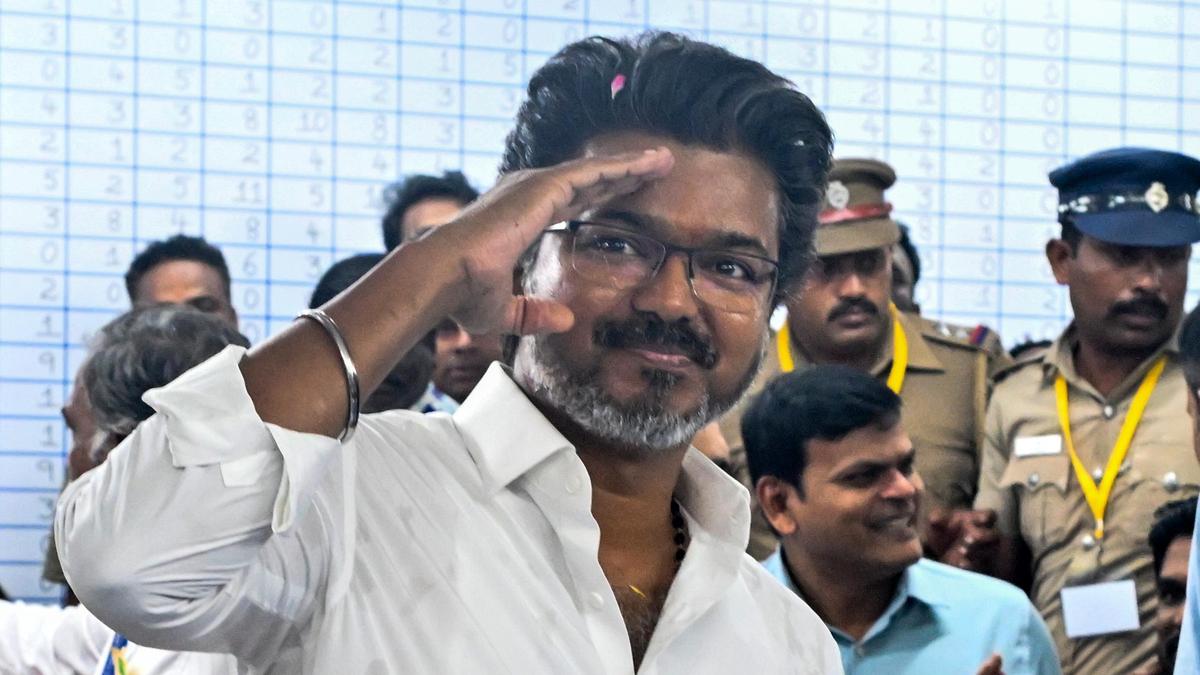
In a dramatic political shift, actor-turned-politician C. Joseph Vijay has led his party, Tamilaga Vettri Kazhagam (TVK), to emerge as the single largest force in the 2026 Tamil Nadu Assembly elections. However, despite its impressive debut, the party has fallen short of the crucial majority mark, setting the stage for intense political negotiations and strategic decision-making in the days ahead.
Tamil Nadu’s 234-member assembly requires 118 seats for a clear majority, but TVK secured around 108 seats, leaving it roughly 10 seats short of forming a government independently. This outcome has resulted in a hung assembly, a rare and complex situation in the state’s political history.
TVK’s performance has disrupted the decades-long dominance of the Dravida Munnetra Kazhagam (DMK) and the All India Anna Dravida Munnetra Kazhagam (AIADMK). Both established parties have been pushed significantly behind, marking a generational and structural shift in voter preferences.
The rise of TVK reflects a carefully built grassroots movement that transformed Vijay’s massive fan following into a disciplined political force. Analysts note that youth voters and first-time participants played a crucial role in propelling the party to prominence, signaling a desire for political change. 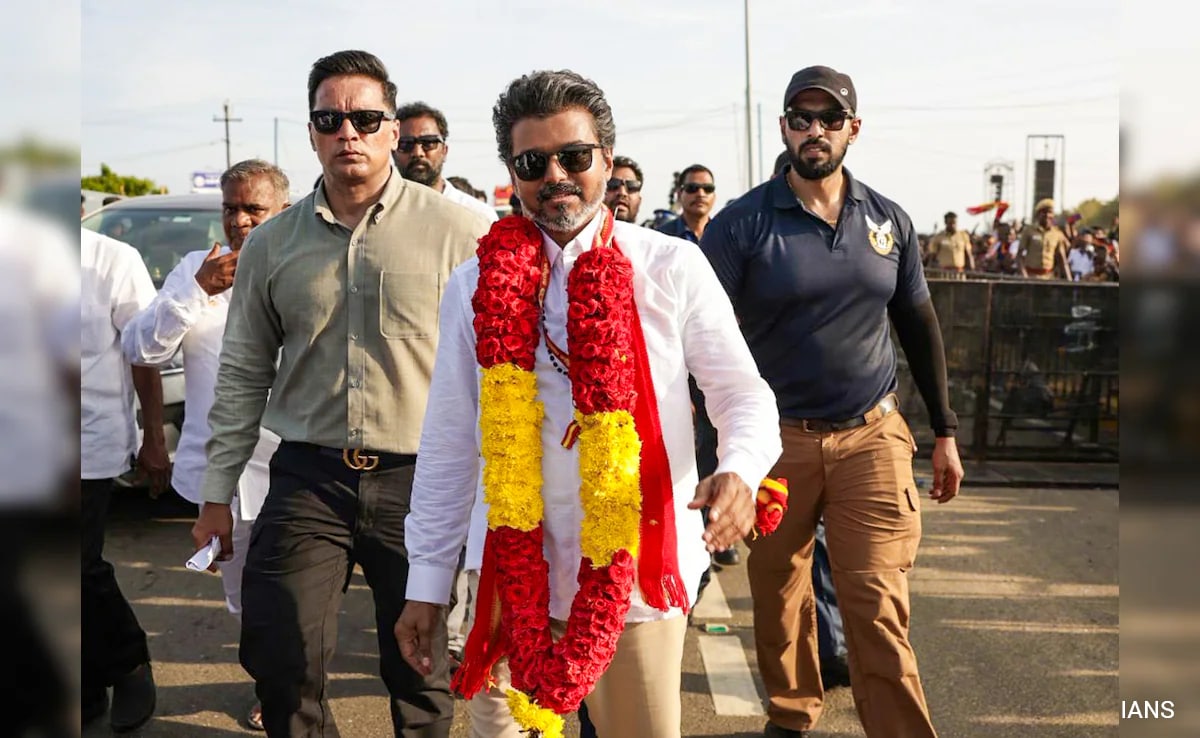
With no party holding a clear majority, Tamil Nadu now enters a phase of uncertainty. Several possible outcomes could determine the formation of the next government:
TVK could attempt to form a minority government, relying on issue-based support from smaller parties or independent legislators. While this would allow Vijay to take office, such a government could face instability and frequent confidence tests in the assembly.
The most likely path involves post-election alliances. Potential partners could include smaller regional parties or even national players such as the Congress or Left parties, depending on ideological alignment and negotiations.
However, forming alliances may require TVK to compromise on key positions, including cabinet portfolios and policy priorities.
Though politically challenging, external support from major rivals like AIADMK cannot be entirely ruled out. Early speculation around such arrangements has surfaced, but leaders have publicly downplayed the possibility of formal tie-ups.
Any such move would significantly alter Tamil Nadu’s political dynamics and could trigger backlash among party supporters.
If no clear alliance emerges, the Governor may invite the single largest party—TVK—to prove its majority on the floor of the house. Failure to do so could open the door for alternative coalitions or even, in extreme cases, fresh elections.
This election marks a historic transition. For decades, Tamil Nadu politics revolved around two dominant Dravidian parties. Vijay’s entry has effectively transformed the state into a three-cornered political contest, reshaping electoral equations and governance expectations.
Despite falling short of a majority, TVK’s performance has established it as a formidable political force. The coming days will determine whether this momentum translates into power or remains a symbolic breakthrough.
For Vijay, the challenge now goes beyond electoral success. It involves navigating complex coalition dynamics, maintaining party unity, and convincing potential allies of a stable governance framework.
Tamil Nadu stands at a crossroads, where the final outcome will not only decide the next Chief Minister but also redefine the state’s political future for years to come.