
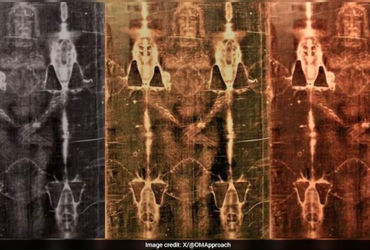
The Shroud of Turin, a 4.4-meter linen cloth long believed by many to be the burial cloth of Jesus Christ, has recently drawn renewed scientific attention through an advanced genetic study.
A research team from the University of Padova, led by Gianni Barcaccia, analysed biological traces that were first collected from the cloth in 1978. Their findings, highlighted in a recent report in New scientist, revealed an unexpectedly diverse genetic composition.
Notably, a significant portion around 40% of the human DNA identified appears to be linked to lineages from the Indian subcontinent. This supports earlier suggestions made by Barcaccia that the fabric itself may have origins connected to the ancient Indus Valley region.
The discovery has opened up multiple historical interpretations. One possibility is that during the Roman Empire, known for its vast trade networks, fine linen or raw fibers were imported from India and later used to create the cloth.
Another explanation points to the Shroud’s long and complex history. First recorded in France in the 14th century before eventually being housed in Turin, it has likely been handled by numerous individuals over centuries, each leaving behind traces of their genetic material.
In addition to human DNA, the Shroud appears to function as a kind of biological archive. Researchers detected genetic remnants from a wide range of sources, including domestic animals such as cats and dogs, livestock, and wild species like deer and rabbits. Interestingly, traces of marine life such as cod, mullet, and other fish were also found, along with plant and bird DNA.
These findings suggest that the cloth has interacted with a variety of environments over time, offering deeper insight into its preservation and the many conditions it has been exposed to throughout history.