
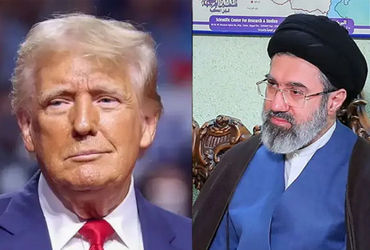
Iran may be open to negotiations with the United States, even as Tehran had denied any ongoing contact, pointing to conflicting accounts over a possible diplomatic breakthrough in the Middle East conflict, as per reports.
Local media reported that Iran’s new Supreme Leader, Mojtaba Khamenei, agreed to engage in talks with Washington and work towards a deal.
However, Iran’s Fars News Agency quoted a source as saying there had been no direct or indirect communication with the US, contradicting the claim.
Meanwhile, US President Donald Trump said discussions between the two sides had taken place recently and had yielded what he described as “major points of agreement”.
As per reports, Trump said talks held on Sunday were expected to continue, raising the possibility of a near-term resolution to the conflict.
He said his Middle East envoy, Steve Witkoff, and senior adviser Jared Kushner were involved in the discussions with Iranian representatives.
Trump indicated that negotiations had entered a more serious phase after a prolonged period of engagement and suggested a potential agreement could emerge five days.
It is reported that Trump appeared to soften his stance on military action, saying planned strikes on Iran’s power infrastructure would be postponed.
The move followed warnings from Tehran that it would target Israeli power facilities and installations supplying US bases in the Gulf if its own electricity network was attacked.
Earlier, Trump had threatened to strike Iranian power plants if Tehran did not reopen the Strait of Hormuz to maritime traffic within a 48-hour deadline.
The vital waterway, through which nearly a fifth of global oil and liquefied natural gas supplies pass, has been effectively closed due to the conflict.
Trump said the strait could reopen soon if talks succeed and suggested it might be jointly controlled, without elaborating.
The conflict, launched on February 28 by the United States and Israel, has left more than 2,000 people dead and disrupted global markets, pushing up fuel costs and raising concerns over inflation and regional stability, according to reports.