
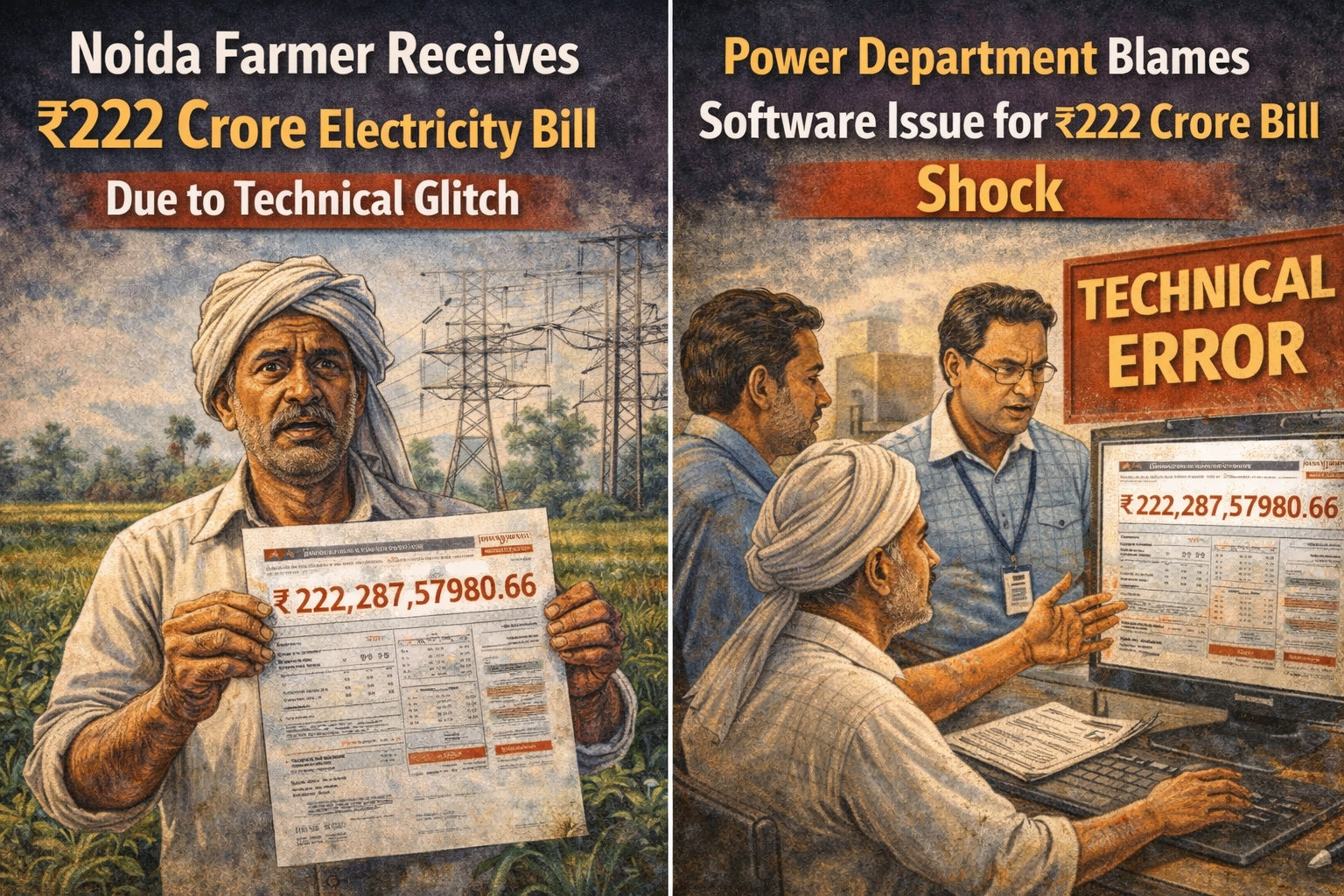
A shocking case of apparent billing failure has surfaced in the Noida region of Uttar Pradesh, where a farmer was left stunned after receiving an electricity bill amounting to an astronomical ₹222 crore for a modest 25-kilowatt power connection. The incident has triggered public outrage and raised serious questions about the reliability of automated billing systems used by power distribution companies.
The affected farmer, a resident of a village on the outskirts of Noida, uses the electricity connection primarily for agricultural and related purposes. According to local accounts, he has a history of paying his power bills regularly and has never defaulted on payments. His average monthly electricity charges typically run into only a few thousand rupees, consistent with the sanctioned load of the connection.
Discovery of the Inflated Bill
The issue came to light when the farmer visited a local electricity department camp to check his billing status. To his disbelief, the records showed an outstanding amount of ₹222 crore, reportedly calculated over a period of several months. The figure was so unusually high that it immediately drew attention from both officials and other consumers present at the camp.
Attempts to verify the bill through official billing records revealed inconsistencies. While the department’s internal system reflected the massive outstanding amount, routine monthly bills continued to show normal charges, adding to the confusion and distress faced by the consumer.
Farmer Seeks Clarification
Disturbed by the development, the farmer approached the local power department office seeking an explanation. He reportedly made multiple visits, requesting officials to correct what he described as a clear and alarming error. The incident soon spread across nearby villages, with farmer groups and local representatives expressing concern over the lack of immediate resolution.
Farmer unions have since termed the incident unacceptable, stating that such errors cause unnecessary mental stress and undermine public confidence in essential service providers. They have urged the authorities to introduce stronger safeguards to prevent similar incidents in the future.
Power Department Response
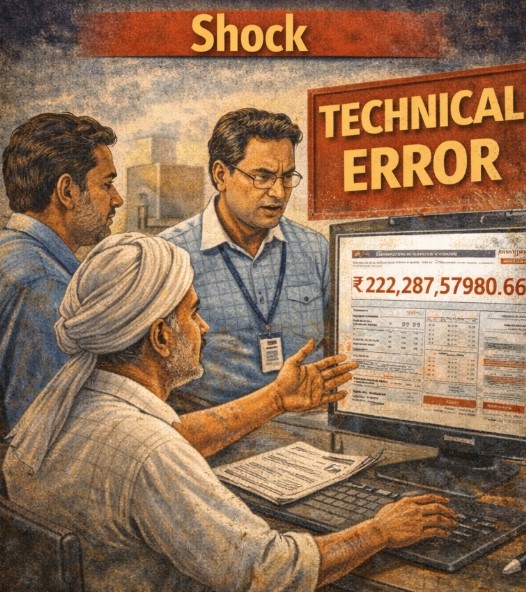
Senior officials from the power distribution department acknowledged the anomaly and attributed the ₹222 crore bill to a technical or software-related glitch in the billing system. According to officials, incorrect data processing or accumulation of erroneous readings may have led to the generation of the inflated figure.
The department assured that the bill would be rectified after a technical review and that the farmer would not be required to pay the erroneous amount. Officials also stated that such extreme billing discrepancies are rare and do not reflect actual electricity consumption.
Concerns Over System Reliability
The incident has once again highlighted the challenges associated with automated billing systems, especially in rural and semi-urban areas where consumers often rely entirely on official records for verification. Consumer rights advocates argue that utility providers must adopt stronger verification mechanisms before issuing bills, particularly when unusually high amounts are generated.
Experts note that while digital billing has improved efficiency, it must be backed by regular audits, manual checks, and quick grievance redressal mechanisms to protect consumers from distress caused by system failures.
Looking Ahead
As the farmer awaits a corrected bill, the case has become a talking point in the region, symbolising the vulnerabilities consumers face when technical systems malfunction. The power department has reiterated its commitment to resolving the issue promptly and preventing similar errors through improved monitoring and system checks.
The episode serves as a reminder of the need for transparency, accountability, and robust consumer protection in essential public services, particularly as utilities increasingly rely on automated technologies for billing and record management.
Leave a Reply