
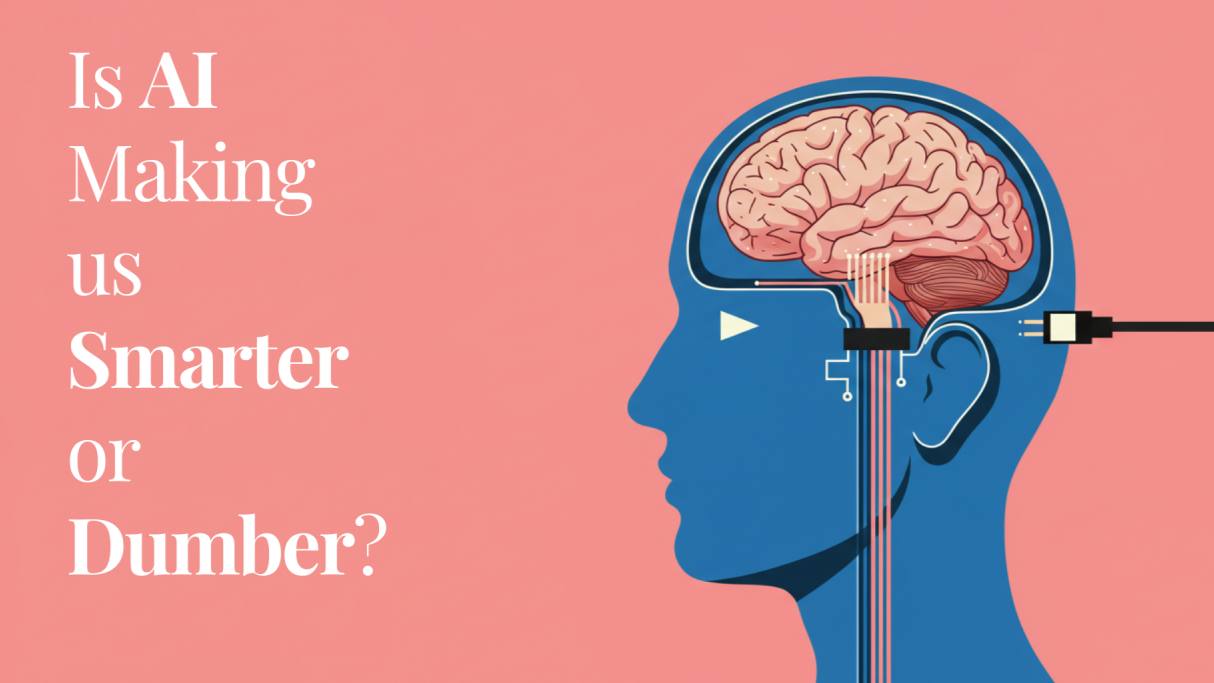
As artificial intelligence continues to integrate rapidly into everyday life, a growing debate has emerged over its long-term impact on human intelligence. From education and workplaces to personal decision-making, AI-powered tools are transforming how people think, learn, and solve problems. While supporters argue that AI can enhance human capabilities, critics caution that excessive reliance on such technology may weaken critical thinking and intellectual independence.
At the heart of this discussion lies a fundamental question: does artificial intelligence make humans smarter by expanding access to knowledge and efficiency, or does it encourage mental laziness by reducing the need for effort and reasoning?
AI as a Cognitive Enhancer
Advocates of artificial intelligence emphasize its potential to amplify human intelligence rather than replace it. AI systems can quickly analyze vast amounts of information, provide personalized recommendations, and help individuals explore complex topics with greater clarity. By automating repetitive or time-consuming tasks, AI allows people to focus on creative thinking, problem-solving, and strategic decision-making.
In education, AI-driven learning tools are reshaping how students engage with information. Adaptive platforms can identify individual strengths and weaknesses, offering tailored support that helps learners progress at their own pace. This personalized approach can foster deeper understanding and curiosity, encouraging students to explore subjects beyond standard curricula.
Similarly, in professional environments, AI assists researchers, analysts, and creatives by uncovering patterns, generating insights, and supporting innovation. When used thoughtfully, these tools can sharpen human judgment and broaden intellectual horizons, making complex tasks more manageable and efficient.
The Risk of Cognitive Dependence
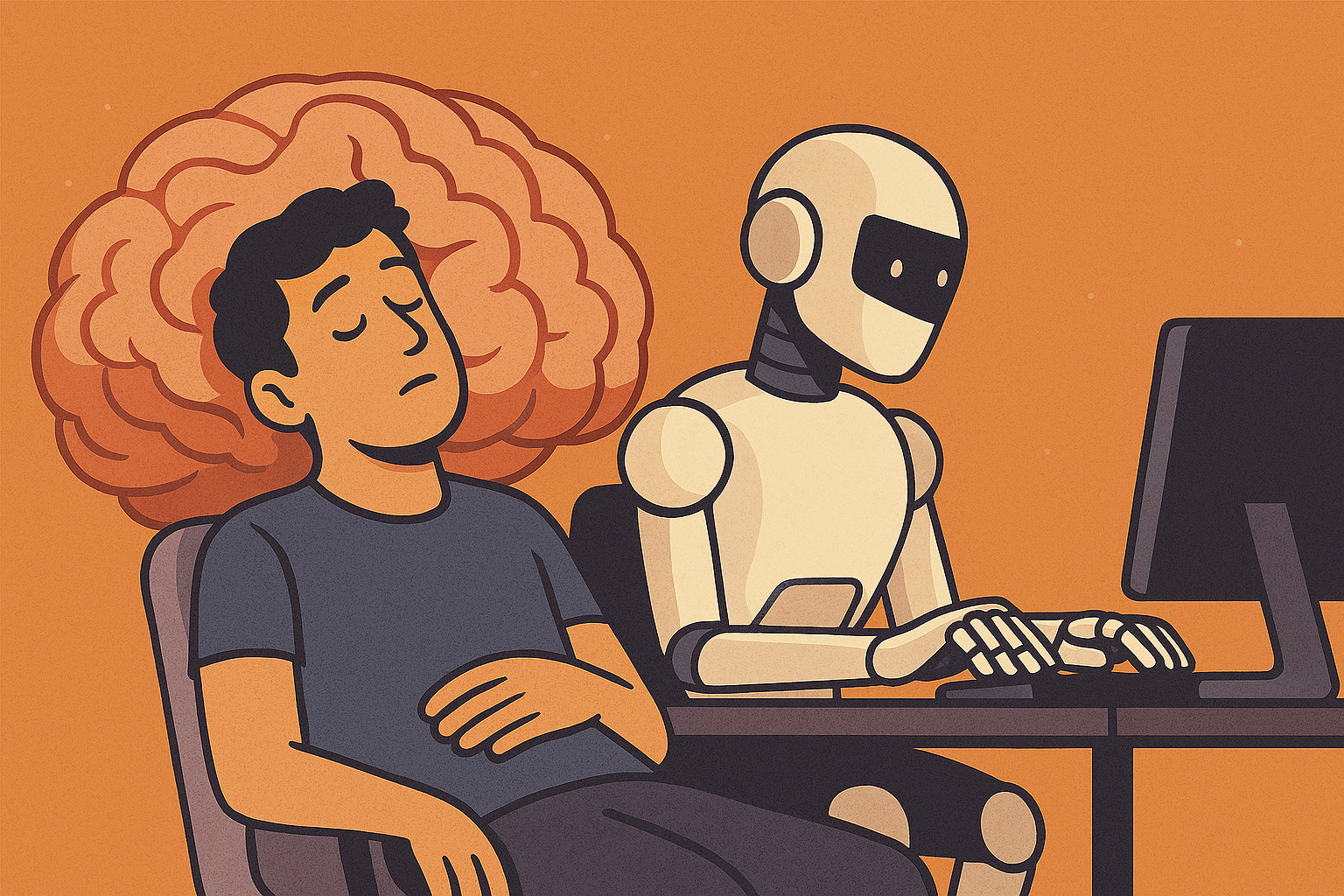
Despite these benefits, concerns persist about the unintended consequences of widespread AI use. One of the primary risks is over-reliance. As AI tools provide instant answers and ready-made solutions, users may feel less compelled to think independently or question the information presented to them. This habit can gradually weaken analytical skills and reduce the motivation to engage in deep learning.
Another concern is the rise of surface-level understanding. The convenience of AI-generated content can encourage people to skim information or reuse outputs without fully grasping underlying concepts. Over time, this may lead to diminished memory retention, reduced problem-solving ability, and a decline in original thinking.
Experts warn that when AI is treated as a substitute for human effort rather than a support tool, it can promote intellectual passivity. The danger lies not in the technology itself, but in the way it is used without conscious engagement or critical evaluation.
Striking the Right Balance
The impact of artificial intelligence on human intelligence ultimately depends on human choices. AI is neither inherently beneficial nor harmful; it reflects and amplifies existing behaviors. When individuals use AI to supplement their thinking—questioning outputs, verifying information, and applying personal judgment—it can serve as a powerful intellectual ally.
However, when AI becomes a shortcut that replaces reasoning and effort, it risks eroding essential cognitive skills. Educators, employers, and users alike play a role in shaping responsible AI usage by encouraging critical thinking, creativity, and active learning alongside technological assistance.
Looking Ahead
As artificial intelligence continues to evolve, its influence on human cognition will only grow stronger. The challenge lies in ensuring that AI remains a tool that empowers rather than diminishes human intelligence. By maintaining awareness, discipline, and curiosity, individuals can harness AI’s strengths while preserving the uniquely human abilities to reason, imagine, and think deeply.
In the end, whether AI makes humans smarter or lazier is not a predetermined outcome—it is a reflection of how thoughtfully society chooses to use it.
Leave a Reply