
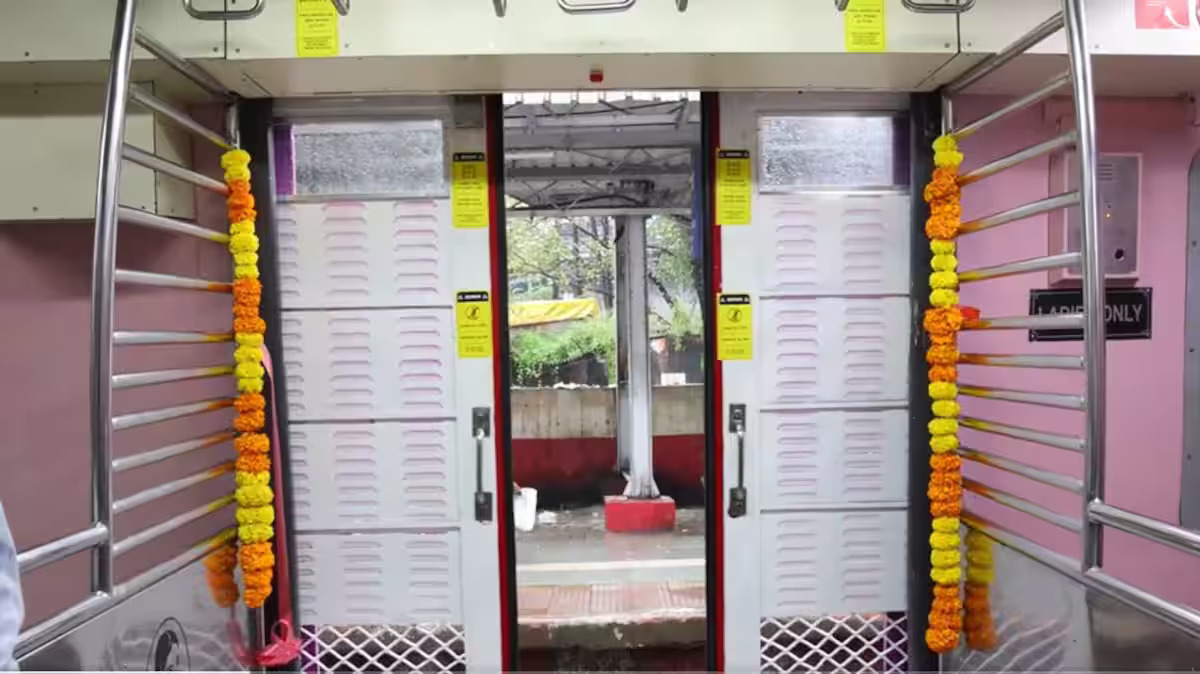
Mumbai’s suburban rail network may soon see a paradigm shift in safety and design. The Central Railway (CR) division has unveiled and trialed a prototype closed-door coach for its non-air-conditioned local trains, a move aimed at reducing accidents and improving commuter well-being. This prototype comes in the wake of a fatal accident earlier this year and forms part of a broader initiative to modernize one of the world’s busiest suburban systems.
The Prototype and Its Features
Developed at CR’s Kurla car shed, the closed-door coach is built using a Siemens rake and replaces the traditional open-door design with ventilated mesh doors. The intention is to retain airflow while improving passenger safety. The doors are controllable by the train motorman or train manager, ensuring centralized operation.
Instead of conventional fiberglass panels, the coach incorporates mesh door frames, allowing air to pass through while maintaining a physical barrier. The doors open and close within approximately 10 seconds, mirroring the timing currently used in air-conditioned locals. An alarm system alerts if doors are in motion while the train is moving. The coach’s design also includes provisions to prevent rainwater ingress during monsoon conditions.
CR officials plan to showcase the prototype during a visit by the Railway Board chairman as part of the appraisal process before wider deployment.
Why the Change Now? Safety Imperative
This innovation follows a tragic accident in June at Mumbra station, where overcrowding and open-door travel contributed to multiple fatalities and injuries. The accident renewed scrutiny of doorless travel practices, especially at peak hours when commuters sometimes hang onto train edges. In response, the Railway Ministry authorized the development of automatic and closed-door solutions for both air-conditioned and non-AC suburban fleets.
In the Mumbai division’s recent trial, closed doors were first implemented on a ladies’ compartment as a pilot step. The broader prototype extends this feature across the coach, serving as a proof-of-concept unit. CR sees this as the first of many incremental safety upgrades.
Challenges and Design Trade-offs
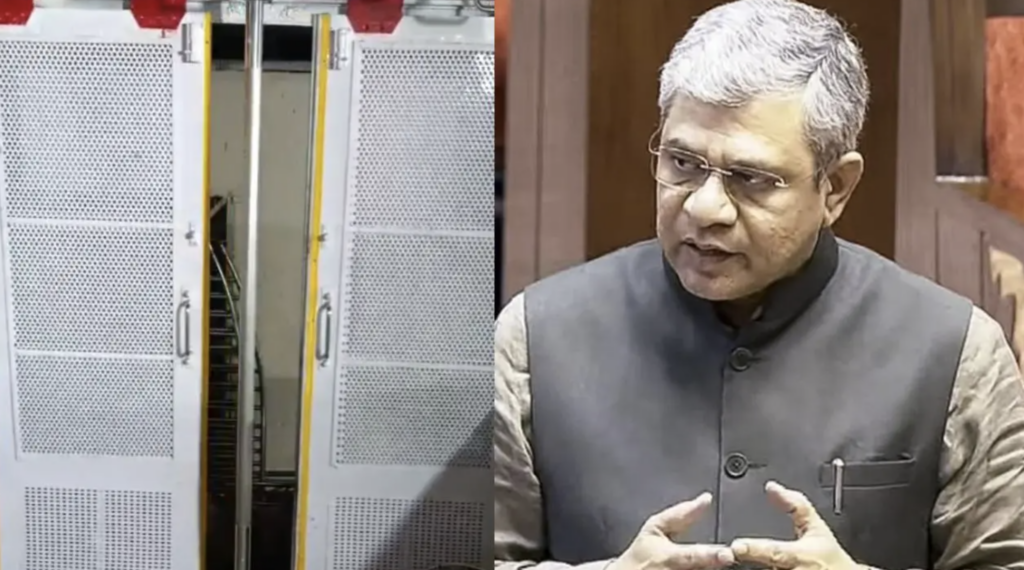
While closed-door technology presents clear safety advantages, its practical implementation is not unchallenged. Previous experiments with enclosed door systems—such as those attempted by Western Railway in 2019—were discontinued due to issues with ventilation and crowd load.
To navigate this, CR officials are exploring louvered panels as an alternative to mesh doors to ensure better airflow while preserving structural strength. Other planned enhancements include improved ceiling-mounted ventilation systems and wider vestibules that enable safer movement between coaches.
Another technical and operational challenge will be integration with existing infrastructure. The new coaches must align with current signaling, platform gaps, power systems, and emergency procedures. Cost considerations and retrofitting logistics will also heavily influence rollout speed.
Broader Reforms in Mumbai Locals
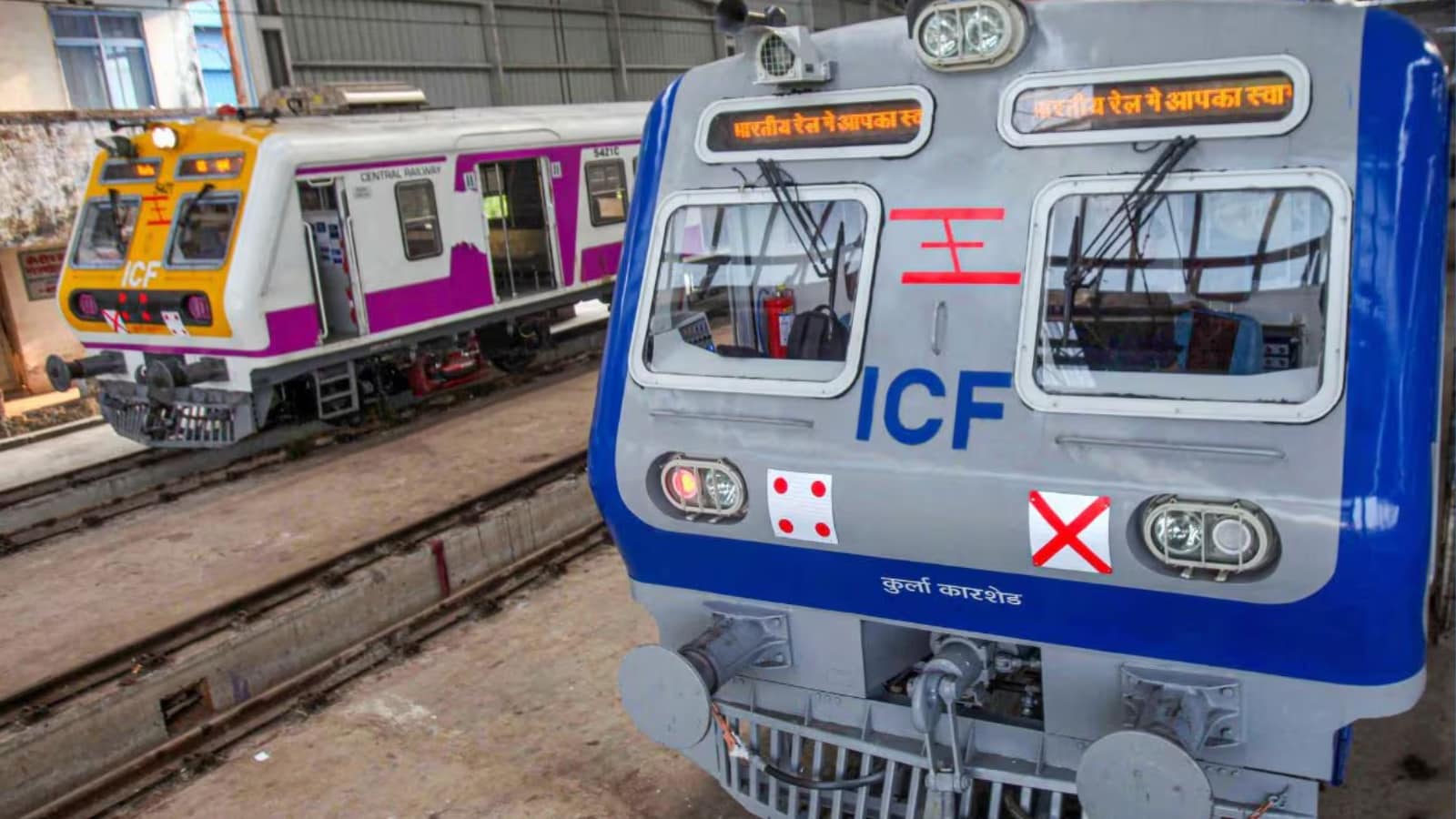
The closed-door innovation is only one among several strategic upgrades underway. Mumbai’s suburban rail system is also being expanded with additional AC trains, longer rakes (increasing from 12 to 15 coaches), and upgraded signaling and station infrastructure to decongest peak-hour traffic.
Moreover, the deployment timeline is ambitious. Railway authorities aim to operationalize such closed-door or automatic-door designs by the end of the year or early next year, pending prototype clearance, safety certifications, and commuter trials.
What to Watch
- Whether the closed-door model passes rigorous safety, ventilation, and commuter comfort testing.
- How many units will be scaled initially (e.g., pilot in select routes) and at what pace.
- Policy decisions regarding retrofitting older coaches versus purchasing new ones with the design baked in.
- Public response from commuters—whether safety gains outweigh any perceived constraints (e.g., reduced ventilation, boarding delays).
- Whether other suburban networks (like in Delhi, Chennai, Kolkata) will observe Mumbai’s model and adopt similar designs.
If successful, the closed-door local coach could mark a turning point in Mumbai’s rail safety paradigm—moving away from ad hoc commuter risks toward systematized protection. For a network that ferries millions daily, even incremental improvements may save lives.