
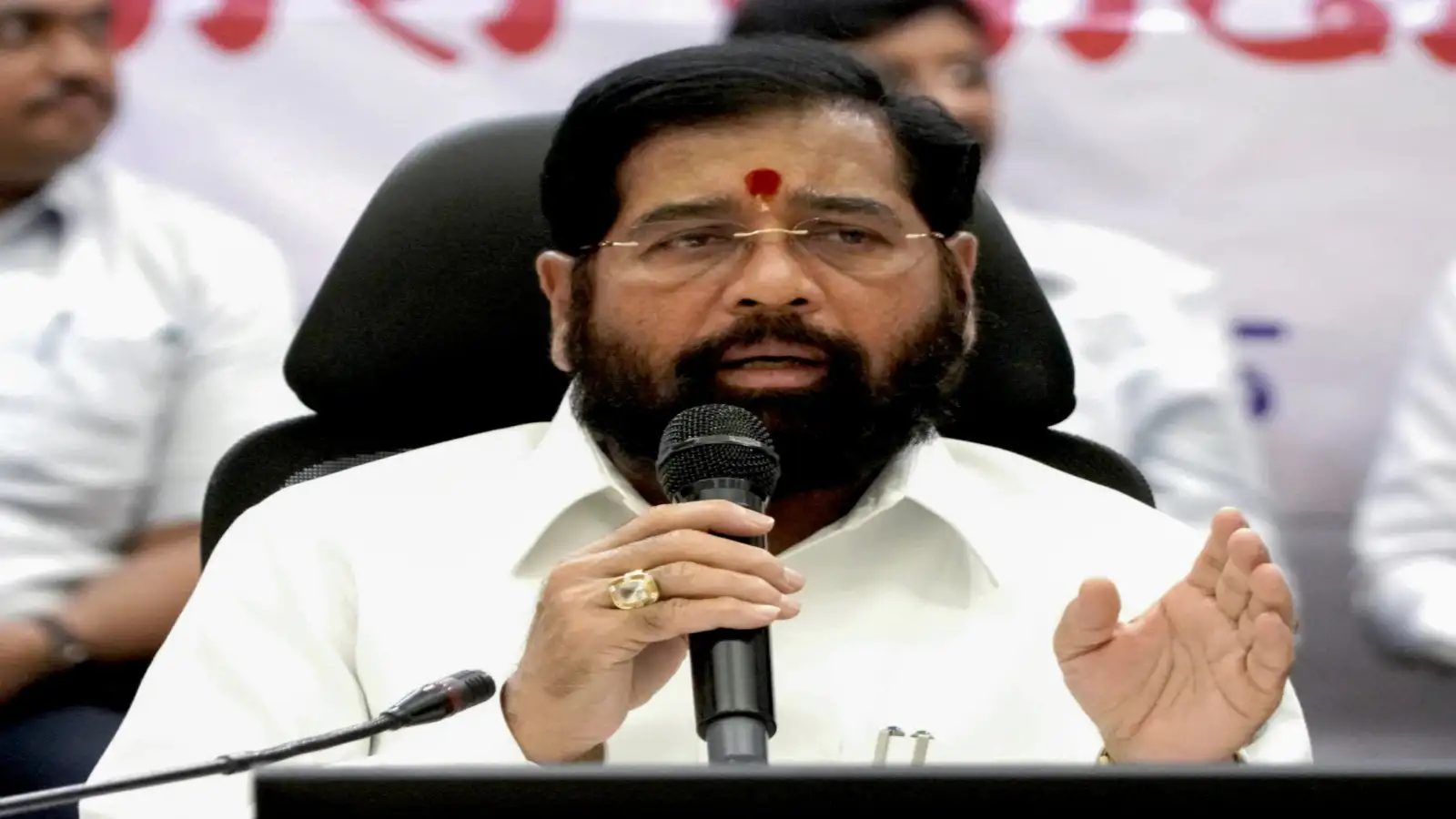
The meeting was held at Nandanvan on Saturday afternoon and was addressed by Shiv Sena chief and Maharashtra Deputy Chief Minister Eknath Shinde. Following the meeting, Shinde instructed all 15 party MPs, including 13 members of the Lok Sabha, to reach New Delhi on Sunday. He asked the parliamentarians to remain united and demonstrate the party’s collective support for the proposed legislative changes.
Shinde described the proposed reforms as an important step towards strengthening Indian democracy and improving women’s representation in elected legislative bodies. The party’s unanimous decision is expected to strengthen the government’s position ahead of the upcoming parliamentary proceedings.
Shiv Sena Expresses Support for Constitutional Amendment and Delimitation
The resolution adopted by the Shiv Sena Parliamentary Party covers the proposed Constitutional Amendment Bill and the associated Delimitation Bill. Both legislative measures are expected to be taken up during the special parliamentary session beginning November 30.
The proposed reforms are closely connected with the expansion of legislative representation and the implementation of women’s reservation. The delimitation exercise is intended to address the existing distribution of parliamentary and assembly constituencies while providing a framework for increasing the overall strength of legislative institutions.
By extending unanimous support to the proposals, the Shinde-led Shiv Sena has indicated that its MPs will stand behind the government’s legislative initiative during the special session.
Previous Constitutional Amendment Bill Failed to Secure Required Majority
The latest political development comes after an earlier attempt by the government to introduce constitutional changes related to women’s reservation and delimitation faced difficulties in Parliament.
In April, the government introduced the 131st Constitutional Amendment Bill along with two other associated pieces of legislation. These proposals were aimed at facilitating women’s reservation and implementing the delimitation process.
However, the legislation failed to secure the constitutionally required majority in the Lok Sabha after opposition parties collectively opposed the proposals. The defeat marked a significant parliamentary setback, as it was the first time since 2011 that a Constitution Amendment Bill had failed to obtain the necessary support in the Lok Sabha.
The earlier defeat highlighted the political challenges surrounding constitutional amendments, particularly those involving parliamentary representation and electoral restructuring.
Since then, political developments within the opposition have reportedly changed the political situation. Differences and internal developments within parties, including the Trinamool Congress and Shiv Sena (Uddhav Balasaheb Thackeray), along with indications of greater willingness from the Dravida Munnetra Kazhagam and the Nationalist Congress Party (Sharadchandra Pawar), have added a new dimension to the political discussions.
These developments could influence the government’s efforts to secure wider parliamentary support for the proposed legislation during the upcoming session.
Proposed Delimitation Could Increase Lok Sabha Strength to 850 Members
One of the most significant aspects of the proposed constitutional changes is the planned expansion of the Lok Sabha.
Under the proposed framework, the maximum strength of the Lok Sabha would increase to 815 members representing states and 35 members representing Union Territories. At present, the corresponding maximum figures are 530 and 20, respectively.
The proposal also seeks to increase the maximum strength of state legislative assemblies to 650 members.
The proposed expansion would represent an increase of approximately 50 per cent in legislative representation. According to the proposed framework, this expansion would be applied to the existing allocation of seats across states and Union Territories, rather than redistributing their relative shares in Parliament based on population differences.
Depending on the rounding of fractional seats, the actual expanded strength of the Lok Sabha could range between 816 and 824 members.
The proposed increase is expected to have considerable implications for parliamentary functioning, constituency representation and the overall structure of India’s electoral system.
Shinde Says Maharashtra Will Have a Stronger Voice in Parliament
Explaining his party’s support for the proposed reforms, Eknath Shinde expressed confidence that the expansion of parliamentary representation would strengthen Maharashtra’s position in the national legislature.
He argued that the proposed changes would provide the state with a stronger voice in Parliament and enable more effective representation of its people.
Maharashtra is among India’s major political and economic states, with an important role in national policymaking. The proposed expansion of legislative representation is therefore being viewed by the Shinde-led Shiv Sena as an opportunity to strengthen the state’s parliamentary presence.
Shinde also highlighted the need to address the growing imbalance in the sizes of parliamentary constituencies. At present, several Lok Sabha MPs represent approximately 2 million to 2.5 million citizens each.
Such large constituencies can create challenges for elected representatives in maintaining direct contact with voters, addressing local concerns and ensuring that citizens’ issues receive adequate attention.
According to Shinde’s position, the proposed delimitation exercise could help improve the effectiveness of representation by addressing these challenges.
Women’s Reservation Remains an Important Part of the Proposed Reforms
The proposed constitutional changes are also connected with the implementation of women’s reservation in legislative bodies.
The government’s legislative initiative seeks to establish the necessary framework for implementing women’s reservation alongside the proposed expansion of legislative representation.
Women’s participation in electoral politics has remained an important subject of political and constitutional debate in India. The proposed reforms are expected to influence how representation is structured in Parliament and state legislative assemblies.
Shinde has described the initiative as a historic step towards strengthening democracy and increasing women’s participation in the country’s political institutions.
However, the proposed legislation will need to navigate parliamentary procedures and secure the required constitutional majority before the changes can be implemented.
Shiv Sena MPs Asked to Maintain Unity Ahead of Special Session
The instruction to all 15 Shiv Sena MPs to reach Delhi on Sunday reflects the party leadership’s emphasis on maintaining a united position during the upcoming parliamentary proceedings.
With the special session scheduled to begin on November 30, the party’s decision to bring all its parliamentarians together is an important organisational step ahead of the legislative discussions.
The unanimous resolution also establishes the party’s formal position on the proposed constitutional and delimitation measures.
The government’s ability to secure the necessary support for the bills will remain an important factor in determining the future of the proposed reforms. The earlier failure of the constitutional amendment legislation demonstrated the importance of building sufficient political consensus.
The Shinde-led Shiv Sena’s decision to support the proposals adds to the government’s backing ahead of the special session. Attention will now turn towards parliamentary discussions, the positions adopted by other political parties and the possibility of securing the required majority.
The November 30 session is therefore expected to be politically significant, particularly because the proposed legislation could bring substantial changes to the size and structure of India’s legislative institutions.