
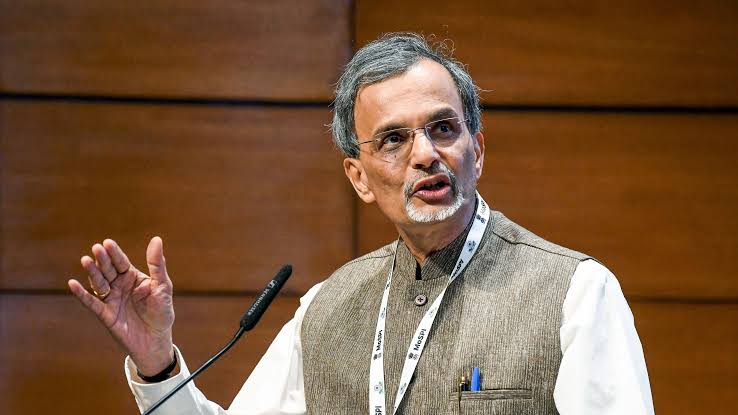
India’s Chief Economic Adviser V. Anantha Nageswaran has suggested that the government consider restoring a lower ethanol-blended petrol option, such as E10, alongside E20, as concerns continue to grow among vehicle owners over the nationwide shift to higher ethanol blending.
Nageswaran made the recommendation in an opinion article co-authored with Akash Poojari, a consultant in the Department of Economic Affairs. The authors argued that allowing consumers to choose between lower and higher ethanol blends could reduce public anxiety while protecting older vehicles during the transition to an ethanol-based fuel system.
E10 option could give consumers greater choice
E20 petrol contains 20% ethanol blended with 80% petrol. Since April 1, 2026, E20 has been the only petrol variant available for sale at fuel stations across the country.
The policy is part of India’s broader strategy to reduce dependence on imported crude oil, lower the country’s fuel import bill and promote the use of domestically produced ethanol. Ethanol blending has also been presented as an important measure for reducing certain emissions and supporting the agricultural sector.
However, the transition to E20 has generated considerable debate. Vehicle owners, particularly those using older cars and two-wheelers, have raised concerns about mileage, performance, compatibility of vehicle components and the long-term impact of higher ethanol content.
Against this backdrop, Nageswaran has argued that bringing back an E10 option could provide a practical way to address consumer concerns without abandoning the broader ethanol-blending programme.
According to the recommendation, motorists could be allowed to purchase E10 or E20 depending on the compatibility of their vehicles. Such a system, the authors suggested, would provide consumers with greater flexibility while older vehicles are gradually adapted to higher ethanol blends.
Concerns about older vehicles remain
A major issue highlighted in the discussion is the large number of older two-wheelers still operating on Indian roads.
The authors estimated that India has approximately 75 million to 80 million older two-wheelers. Many of these vehicles were manufactured before higher ethanol blends became standard and may contain components that were not designed with E20 compatibility in mind.
In particular, older rubber seals and related materials have emerged as a concern. The problem is not necessarily that E20 will cause widespread engine failure, but that certain components in older vehicles may not have been designed to withstand prolonged exposure to higher ethanol concentrations.
Retrofitting these vehicles with compatible components is possible, but the process is expected to take considerable time because of the sheer size of the existing vehicle fleet.
Nageswaran and Poojari therefore argued that policymakers should protect the existing fleet while the transition and retrofitting process continues.
The suggestion effectively places consumer choice at the centre of the debate. Rather than forcing all vehicles to use the same fuel blend immediately, a dual-option system could allow owners of newer, compatible vehicles to continue using E20 while owners of older vehicles could opt for a lower ethanol blend.
No evidence of widespread engine damage from E20
The recommendation for an E10 option does not mean that the authors concluded E20 is inherently damaging to engines.
The opinion piece specifically acknowledged that available evidence does not establish widespread engine damage caused by E20. This distinction is important because much of the public debate has focused on claims that higher ethanol blending could directly harm engines.
Instead, the concern is more closely connected with the compatibility of older vehicle components and the practical challenges of transitioning a large existing fleet to higher ethanol-content fuel.
This distinction has also been emphasised by the government.
Union minister Nitin Gadkari has previously stated that the transition to E20 followed testing of fuel systems, engine durability, drivability, material compatibility and emissions performance. He said tests had not shown engine durability failures attributable to E20 under prescribed conditions.
The government has therefore maintained that E20 is safe for vehicles designed or validated for the fuel.
Fuel quality concerns add another dimension
The debate over E20 has also expanded beyond vehicle compatibility to questions about fuel quality.
Public concern intensified after discussions surrounding the quality and possible contamination of ethanol-blended petrol. State-run oil companies subsequently said that nationwide testing had not found evidence of abnormal moisture or chloride contamination in E20 fuel.
Indian Oil Corporation, Bharat Petroleum Corporation and Hindustan Petroleum Corporation said fuel quality remained within prescribed limits throughout the supply chain. They also pointed to monitoring mechanisms covering refineries, ethanol-producing facilities, storage locations, terminals and retail outlets.
The companies maintained that ethanol used for blending is subject to specified quality requirements and that monitoring has been strengthened to ensure compliance.
These assurances have not completely ended the wider debate, however, because concerns about older vehicles and consumer choice remain separate from questions about whether the fuel supplied at petrol stations meets quality standards.
Government continues to defend ethanol-blending policy
The central government has strongly defended the shift toward higher ethanol blending.
Petroleum and Natural Gas Minister Hardeep Singh Puri has supported the policy and said extensive testing was being conducted across fuel outlets. He has also argued that claims surrounding problems with E20 need to be examined against the results of official testing rather than isolated incidents or unverified reports.
The government’s position is based on the broader economic and environmental objectives of ethanol blending. Increasing ethanol use can help reduce the quantity of petroleum products that India needs to import, potentially lowering exposure to international crude oil prices.
The programme also creates demand for domestically produced ethanol, linking the fuel policy with agricultural and rural economic activity.
At the same time, the growing public debate demonstrates the difficulty of implementing a nationwide fuel transition when millions of vehicles of different ages and technological specifications are involved.
Why Nageswaran’s suggestion is significant
Nageswaran’s comments have attracted attention because he is one of the country’s senior economic policymakers. Although the opinion was presented as a personal view, the recommendation comes from within the government’s economic policy establishment.
The proposal is particularly notable because the government had previously indicated that there was no plan to return to lower ethanol-blended petrol variants such as E0 or E10.
A return of E10 as an additional choice would therefore represent a change in the approach to fuel availability, even if it did not amount to abandoning E20.
The recommendation also reflects a possible compromise between two competing priorities: maintaining India’s long-term ethanol-blending goals while addressing concerns from owners of older vehicles.
Rather than reversing the E20 policy, policymakers could theoretically create a transition period during which both E10 and E20 are available.
Balancing energy goals with consumer concerns
India’s ethanol programme is designed around long-term objectives, including reducing crude oil imports and strengthening domestic energy security. But the transition also affects individual consumers directly because fuel compatibility can influence vehicle maintenance, mileage and operating costs.
For owners of newer vehicles designed to run on E20, the policy may present fewer compatibility concerns. Older vehicles, particularly two-wheelers manufactured before higher ethanol blends became widespread, present a different challenge.
This creates a policy question that goes beyond the technical safety of E20: should consumers with older vehicles have access to a lower-blend fuel while the national vehicle fleet gradually transitions?
Nageswaran’s recommendation suggests that the answer could be yes.
An E10 option would not necessarily undermine the long-term move toward higher ethanol blending. Instead, it could serve as a temporary or parallel measure aimed at protecting vehicles that cannot immediately adapt to E20.
The road ahead for India’s fuel policy
For now, E20 remains the standard petrol available at fuel stations nationwide, and there has been no announced decision to restore E10 as a regular alternative.
The debate, however, is likely to continue as more consumers evaluate the practical effects of E20 on their vehicles. The availability of reliable testing, transparent fuel-quality information and clear guidance for older vehicles will remain important to maintaining public confidence.
The central challenge for policymakers will be finding a balance between India’s long-term energy objectives and the immediate concerns of vehicle owners.
Nageswaran’s proposal offers one possible approach: retain E20 for compatible vehicles while restoring a lower-blend option for consumers who need it. Such a system could provide greater flexibility during the transition and give authorities more time to upgrade or retrofit the country’s older vehicle fleet.
The recommendation therefore adds a new dimension to the E20 debate. Rather than framing the issue solely as a choice between ethanol blending and no blending, it raises the possibility of a more gradual transition in which consumers have access to different fuel options according to their vehicles’ requirements.