
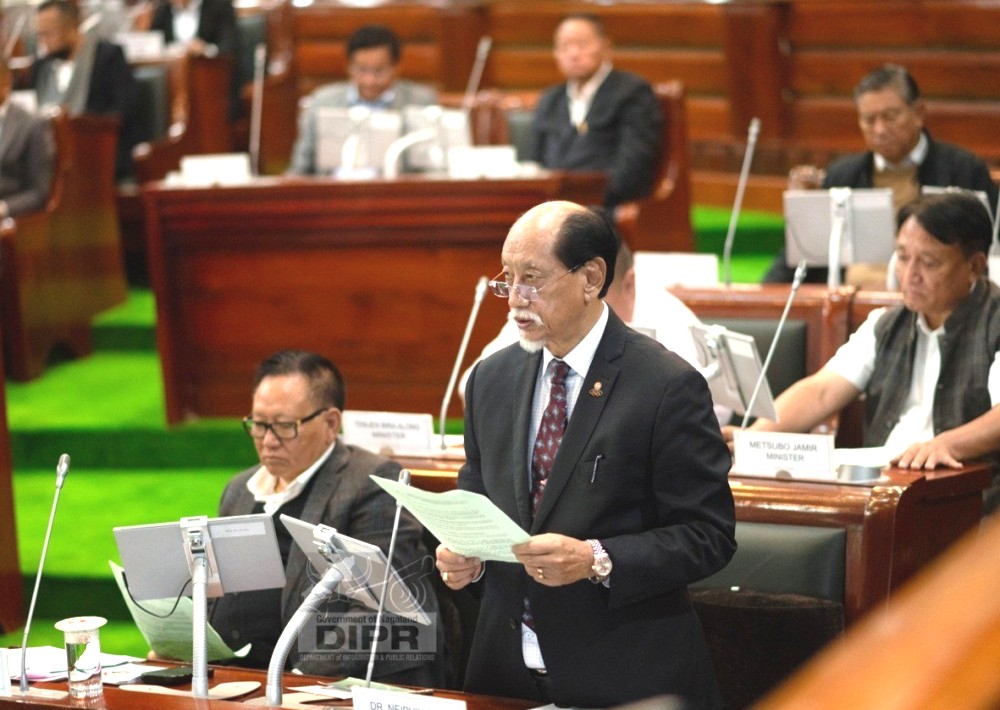
Nagaland Chief Minister Neiphiu Rio has urged the Centre to reconsider the proposed amendments to the Foreign Contribution (Regulation) Act (FCRA), warning that the changes could create additional difficulties for Christian organisations and charitable institutions operating in the northeastern state.
In a letter addressed to Union Home Minister Amit Shah, Rio called for wider consultation with stakeholders and suggested that the proposed Foreign Contribution (Regulation) Amendment Bill, 2026, be examined by a Joint Parliamentary Committee (JPC). His intervention comes amid growing concerns among churches and Christian organisations in several northeastern states over the possible impact of the proposed changes on institutions that receive foreign contributions.
Rio said he had held discussions with Christian leaders, representatives of the Nagaland Baptist Church Council and the Bishop of Kohima before communicating his concerns to the Centre. According to him, these representatives highlighted practical difficulties already faced by churches and Christian organisations while carrying out welfare and humanitarian activities.
Concerns over welfare and social-service programmes
The Nagaland chief minister said the proposed amendments, if implemented in their current form, could make it more difficult for organisations to continue several ongoing programmes.
These activities include welfare initiatives, education, healthcare and other social-service projects, particularly in remote and economically disadvantaged parts of the state. Rio stressed that the possible consequences could be particularly serious for smaller organisations that operate with limited financial and administrative resources.
Many such institutions work at the grassroots level and provide services in areas where access to government and private facilities can be limited. Any additional regulatory or administrative burden, therefore, could affect their ability to maintain existing programmes, Rio indicated.
His concerns are significant given the role played by churches and Christian organisations in Nagaland’s social and community infrastructure. The state has a predominantly Christian population, with Christians accounting for about 87.93 per cent of its population.
Rio calls for Joint Parliamentary Committee review
Rio has asked the Centre to consider referring the proposed legislation to a Joint Parliamentary Committee for detailed examination.
A JPC review would allow lawmakers to examine the proposed amendments in greater detail and hear from affected stakeholders before the legislation is considered for passage. Rio’s request also reflects a broader demand from some northeastern leaders for greater consultation on the proposed changes.
Mizoram Chief Minister Lalduhoma had earlier made a similar request after meeting Amit Shah and raising concerns on behalf of Christian organisations in the state. Meghalaya Chief Minister Conrad Sangma has also raised concerns regarding the possible implications of the proposed amendments for minority institutions.
The intervention by the three northeastern chief ministers underlines the sensitivity of the proposed legislation in states where churches and faith-based organisations have a substantial role in education, healthcare, social welfare and community development. 
Centre seeks wider consensus on FCRA changes
The Centre has been holding consultations with various groups in an effort to address concerns surrounding the proposed amendments.
Amit Shah has met delegations that included representatives of Christian organisations. The government has maintained that the proposed changes are intended to strengthen regulation and transparency surrounding foreign contributions and are not aimed at any particular religious community.
The Centre has also assured stakeholders that the proposed provisions will not operate retrospectively. This means that the amended provisions would not be applied to past actions or transactions in a manner that creates retrospective liability.
However, concerns remain among several organisations over other provisions contained in the proposed legislation.
What the proposed FCRA amendments seek to change
The proposed amendments include provisions concerning the status of organisations whose FCRA registration expires, is not renewed or is refused renewal by the government.
Another significant provision involves the creation of a designated authority that could oversee, manage or dispose of foreign-funded assets in certain circumstances. The proposed framework could apply to assets associated with organisations whose FCRA registration has been cancelled, suspended or not renewed.
These provisions have generated concern among some religious and charitable organisations because many institutions receiving foreign contributions use such funds for long-term infrastructure, educational facilities, hospitals, orphanages, homes for the elderly and other public-service activities.
Critics argue that the proposed powers could have far-reaching consequences for institutions whose licences are cancelled or not renewed. Supporters of the amendments, however, maintain that stronger regulatory mechanisms are necessary to ensure that foreign contributions are used lawfully and transparently.
Debate over impact on Christian institutions
The controversy has become particularly prominent among Christian organisations in parts of the Northeast and southern India.
Nagaland, Mizoram and Meghalaya have large Christian populations, and churches and related organisations have historically been involved in a wide range of social and community services.
Rio’s intervention reflects concerns that additional regulatory requirements could disproportionately affect smaller organisations that do not have the administrative capacity of larger institutions.
The chief minister has therefore sought a careful examination of the legislation, particularly in view of Nagaland’s social, geographical and economic circumstances.
FCRA Bill’s parliamentary future remains uncertain
The immediate parliamentary schedule for the proposed FCRA legislation remains unclear.
Although Mizoram’s chief minister had earlier indicated that the bill could be taken up for discussion on August 12, the parliamentary business advisory process did not allocate time for the legislation during its recent meetings. This has led to speculation that the government may not seek to push the bill through during the ongoing session.
The bill had been introduced in the Lok Sabha during the previous parliamentary session but was not taken up for passage amid opposition protests and political controversy.
The proposed legislation has faced criticism from several opposition leaders and organisations, with demands for either withdrawal of the bill or its referral to a parliamentary committee for detailed consultation.
Opposition demands further scrutiny
Opposition representatives and minority organisations have called for a broader review of the proposed changes.
One of the concerns raised by critics relates to provisions that could allow foreign-funded charitable assets to come under government control in circumstances involving cancellation, suspension or non-renewal of an organisation’s FCRA registration.
Critics argue that such provisions could affect institutions involved in education, healthcare, childcare and other welfare activities. They have called for a detailed examination of the constitutional, legal and practical implications before the amendments are enacted.
Some representatives have also sought changes to existing provisions governing the vesting of foreign-funded assets.
Government maintains focus is on transparency
The Centre has sought to reassure stakeholders that the proposed amendments are intended to improve oversight of foreign contributions rather than target any particular faith.
The government has also indicated that it is willing to consider suggestions from stakeholders. Officials have said that several consultations have already taken place and that additional recommendations from organisations are being sought.
For the government, the central objective is to ensure that foreign funds received by Indian organisations are properly regulated and used for permitted purposes. For organisations opposing or questioning aspects of the bill, the primary concern is whether stricter provisions could interfere with legitimate charitable and humanitarian activities.
The disagreement therefore centres not only on regulation but also on how the proposed framework would operate in practice.
Why the issue matters for Nagaland
The debate has particular importance for Nagaland because of the extensive role played by churches and Christian organisations in community life.
Several institutions associated with churches are involved in education, healthcare, welfare and humanitarian work, including services in remote areas. Rio’s argument is that legislation governing foreign contributions should take into account the practical circumstances of such organisations.
His appeal to the Centre for wider consultation is therefore aimed at ensuring that the proposed changes are examined not only from a regulatory perspective but also in terms of their potential effect on organisations delivering essential social services.
The next stage of the legislative process will determine whether the Centre introduces the bill for discussion during the current parliamentary session or opts for further consultation. For Nagaland and other northeastern states, the outcome could have significant implications for organisations that depend on regulated foreign contributions to support their charitable and community programmes.