
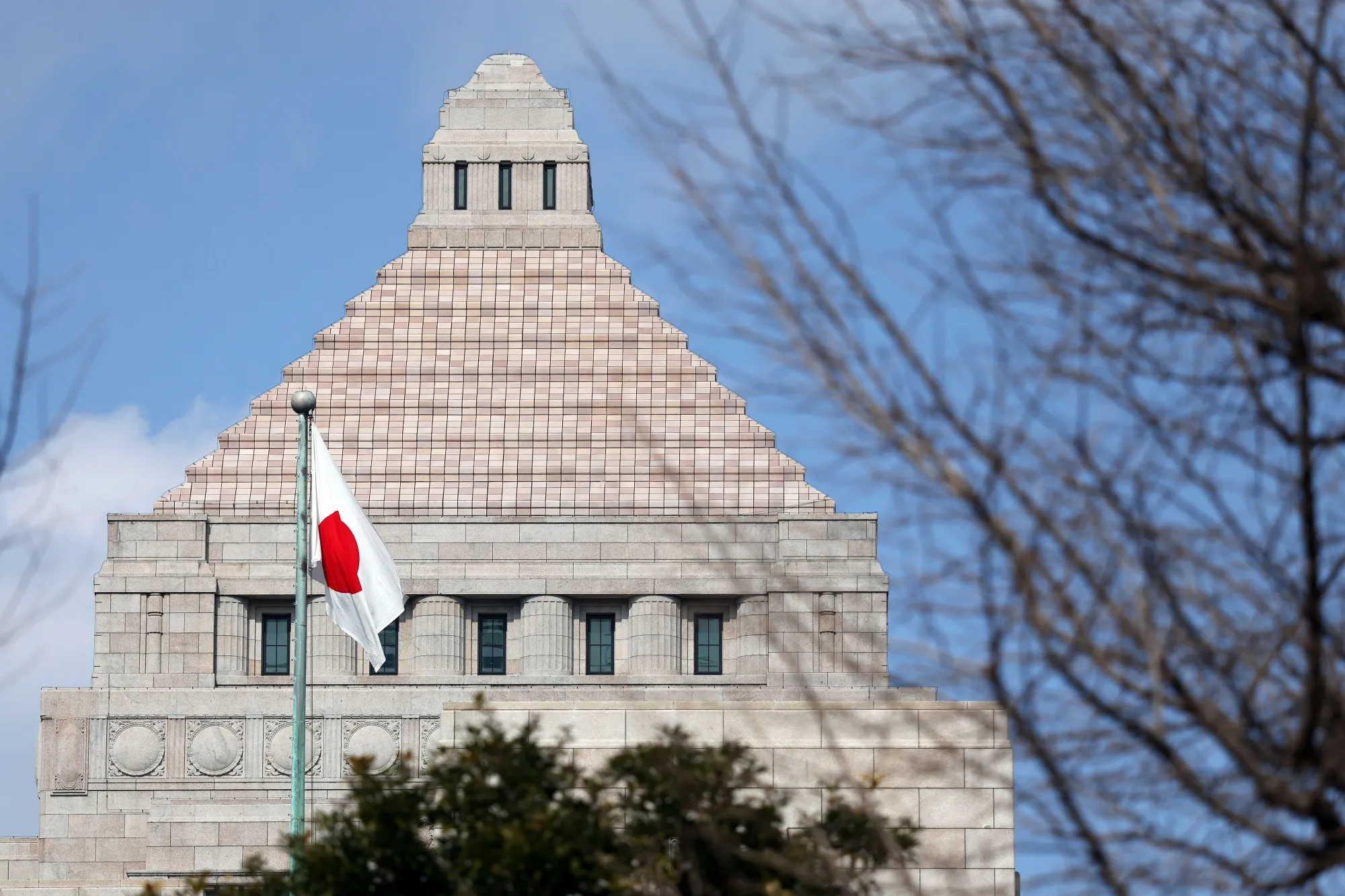
Japan has taken a major step towards creating a backup centre of government outside Tokyo, as concerns grow over the country’s vulnerability to a catastrophic earthquake or other large-scale emergency that could disrupt the capital’s political, administrative and economic functions.
Lawmakers approved legislation in July establishing a legal framework through which one or more regions could eventually be designated as secondary capitals. The proposed arrangement is intended to ensure that the Japanese government can continue operating if Tokyo becomes severely damaged or inaccessible following a major natural disaster.
The move reflects growing concern about Japan’s heavy dependence on Tokyo. The capital is not only the country’s political headquarters but also a major centre for business, finance, administration and corporate activity. Any prolonged disruption in the metropolitan region could therefore have consequences extending far beyond the city itself.
Under the new framework, a designated secondary capital would be expected to temporarily assume important national functions when necessary. The plan also aims to encourage economic development outside Tokyo and reduce the country’s longstanding concentration of population, companies and economic activity in the capital.
Earthquake threat drives the search for an alternative
Japan is one of the world’s most earthquake-prone countries, making disaster preparedness a central part of national planning. Government estimates indicate that there is about a 70% probability of a magnitude-7-class earthquake affecting the Tokyo metropolitan area within the next 30 years.
Such an earthquake could cause extensive damage to government offices, transport networks, financial institutions and critical infrastructure. A severe disaster could potentially disrupt the Prime Minister’s Office, the national parliament, central government ministries and other institutions that are essential to the functioning of the state.
The proposed secondary capital system is designed to provide an additional layer of resilience. If Tokyo were unable to perform its normal functions, a pre-designated region could step in and support the continuity of government.
The concept is not limited to earthquake preparedness. A backup administrative centre could also become important in the event of other major emergencies that prevent Tokyo from functioning normally.
The broader objective is to ensure that Japan does not rely too heavily on a single metropolitan area for its political and economic stability.
Tokyo’s dominance fuels decentralisation debate
Tokyo’s overwhelming importance to Japan is another major reason behind the plan.
The capital produces roughly one-fifth of the country’s economic output and is home to around 30% of Japan’s population. More than half of the country’s listed companies are also based in the metropolitan area.
This concentration has long been criticised by policymakers who argue that it creates economic and administrative vulnerabilities. If a major disaster were to strike Tokyo, the impact could quickly spread through the national economy because so many key institutions and businesses are concentrated in the same region.
The new framework therefore seeks to encourage investment in areas that could serve as alternative centres of national activity. Proposed measures include improvements to government facilities, transportation networks and other infrastructure, alongside tax incentives and regulatory changes designed to attract businesses and private investment.
Supporters argue that such policies could strengthen Japan’s economic resilience while encouraging growth in regions outside the capital.
Osaka emerges as the most politically sensitive contender
Although the new law does not automatically designate Osaka as Japan’s second capital, the city has become the centre of much of the political debate surrounding the proposal.
The idea of making Osaka a secondary capital has been promoted for years by the Japan Innovation Party, commonly known as Ishin, which has a strong political base in the region. The party’s founder, former Osaka Governor Toru Hashimoto, had advocated the concept as far back as 2010.
The secondary capital initiative also played an important role in the formation of the current governing coalition. The proposal was among the commitments made to secure the support of Ishin after the previous long-standing political partnership between the Liberal Democratic Party and Komeito broke down.
This political background has led opponents to question whether the new framework could ultimately channel disproportionate public investment towards Osaka.
Critics have raised concerns that government funding, tax advantages and infrastructure spending could be concentrated in Osaka or a small number of selected regions, potentially leaving other parts of Japan behind.
The government has also not yet provided a detailed estimate of the total cost of establishing and maintaining a secondary capital system or clearly quantified the economic returns it expects from the initiative. That has prompted questions about the financial implications of the policy and the government’s wider spending priorities. 
Osaka’s local political ambitions add another layer
The debate over a second capital is also connected to a separate political issue in Osaka.
The new legislation could provide additional momentum to the Osaka Metropolis Plan, a longstanding proposal supported by Ishin to reorganise local government in the region. The plan seeks to restructure Osaka City in a way that would more closely resemble Tokyo’s ward-based administrative system and reduce overlapping responsibilities between city and prefectural governments.
However, voters have rejected the proposal twice in referendums.
Despite those defeats, Osaka’s governor is seeking another opportunity to put the issue before voters. The debate over a national secondary capital has therefore become intertwined with the region’s own political and administrative future.
Other regions could compete for the designation
The legislation does not limit the possibility of a secondary capital to Osaka. In fact, it allows for the possibility that more than one region could eventually receive the designation.
This provision is significant because it could help address criticism that the law was created primarily to benefit Osaka.
Under the framework, prefectures will be able to put themselves forward for consideration. The final decision will rest with the prime minister.
Potential candidates must meet a number of conditions. They would need to be sufficiently protected from the same disaster affecting Tokyo, meaning that a major emergency in the capital should not simultaneously disable the alternative location.
The prospective region would also need to possess the infrastructure, population, economic strength and administrative capacity necessary to perform critical national functions during an emergency.
Several regions have already shown interest in the possibility. Fukuoka, Hokkaido and Miyagi are among the areas that have been discussed as potential candidates.
Aichi has also expressed interest. Its governor, Hideaki Omura, said soon after the legislation was passed that the prefecture wanted to be among the first to seek secondary-capital status. Aichi is home to a major industrial economy and is closely associated with Japan’s automobile manufacturing sector.
The competition could therefore become a wider national debate about which regions are best positioned to support the country in a crisis.
A political test for Prime Minister Sanae Takaichi
The passage of the legislation represents a political achievement for Prime Minister Sanae Takaichi, particularly because the proposal was a key issue in maintaining support from Ishin.
However, the parliamentary process also exposed the political challenges facing her government.
The bill passed comfortably in the Lower House, where the governing coalition holds a strong majority. Its passage through the opposition-controlled Upper House, however, was considerably tighter, with the measure clearing the chamber by only two votes.
The prolonged parliamentary dispute forced lawmakers to delay their summer recess and highlighted the difficulty the government may face in securing support for other major initiatives.
The narrow vote could also be an indication of the political battles ahead as Takaichi attempts to advance the rest of her legislative programme.
The government has already postponed another important promise to its coalition partner — a proposal to reduce the number of seats in the national parliament — until a later parliamentary session.
Broader concerns over government priorities
The secondary capital policy comes at a time when the Takaichi administration is facing criticism over its priorities and handling of economic pressures.
The prime minister’s approval ratings have reportedly weakened amid concerns that the government is concentrating on politically divisive or longer-term legislative initiatives while voters remain focused on the rising cost of living.
One of the government’s election commitments was to reduce inflationary pressure by cutting the consumption tax on food. The issue has remained contentious, with critics questioning both the timing and the fiscal sustainability of such a measure.
Against this backdrop, the secondary capital project has become part of a broader political debate over government spending, national priorities and long-term economic planning.
Supporters argue that disaster preparedness cannot be treated as an optional policy, particularly in a country where the risk of a major earthquake is well established. Critics, however, want greater clarity on the project’s costs and believe the government must demonstrate that the investment will deliver benefits beyond political considerations.
Japan faces a long road before choosing a second capital
The passage of the law does not mean that Japan now has a second capital. Instead, it establishes a system for identifying and selecting regions that could take on that role.
The government will need to assess potential candidates based on their disaster resilience, infrastructure, economic capacity and ability to maintain essential national functions.
The possibility of selecting multiple secondary capitals could eventually create a more decentralised national system, allowing Japan to distribute critical government and economic functions across several regions rather than concentrating them almost entirely in Tokyo.
For Japan, the issue is ultimately about more than choosing another city. It is about building a system capable of keeping the country functioning when its political and economic heart is under threat.
Tokyo is expected to remain Japan’s primary capital and the centre of national life. But the new legislation signals a growing recognition that a country exposed to significant natural-disaster risks cannot afford to have all of its most important institutions concentrated in one vulnerable metropolitan area.
As the government moves towards identifying potential candidates, the debate is likely to intensify over whether Osaka should take the lead, whether several regions should share the responsibility, and how much public investment should be committed to building an effective national backup.
The final outcome could reshape Japan’s approach to disaster preparedness, regional development and the distribution of political and economic power for decades to come.