
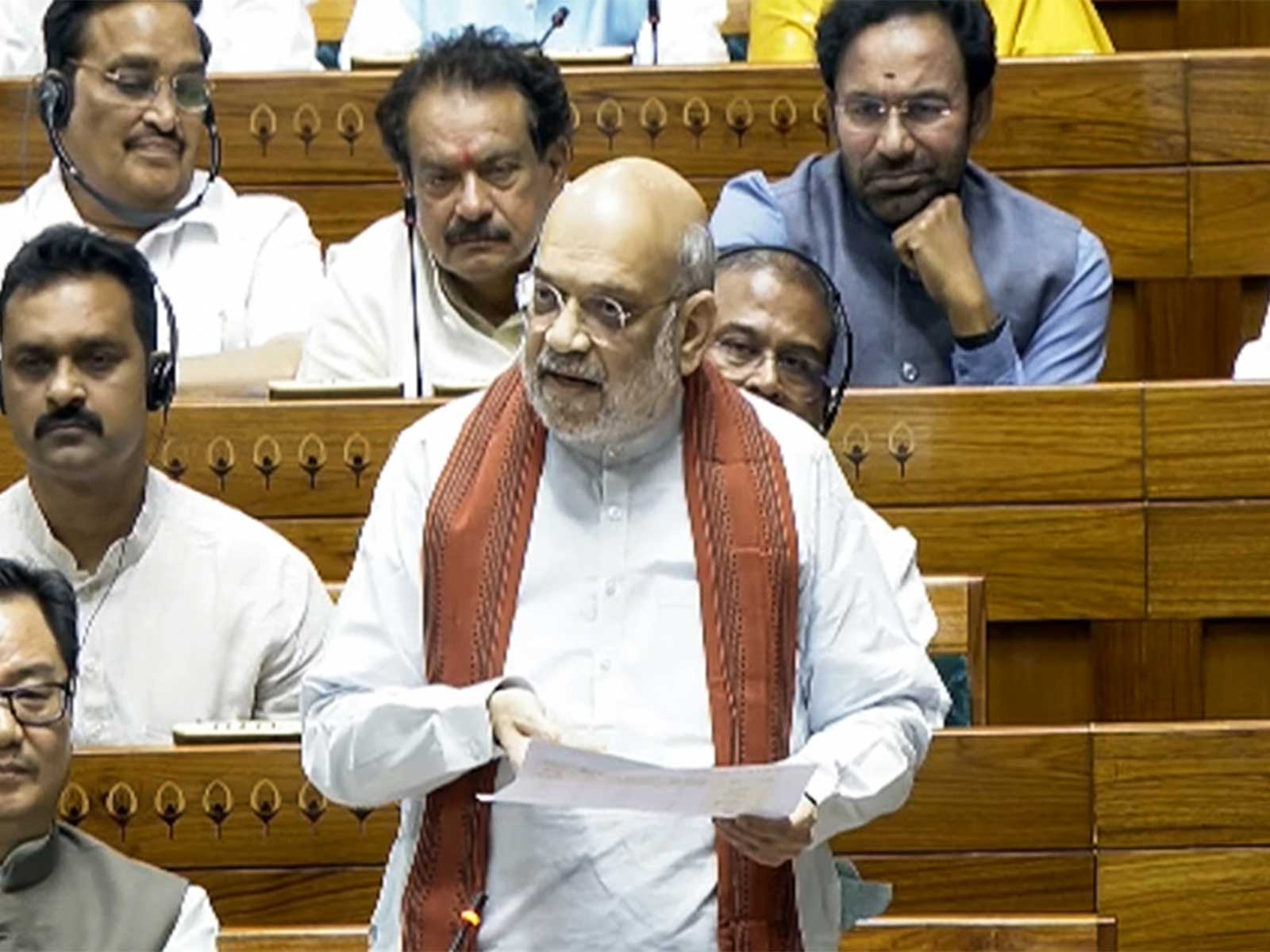
Union Home Minister Amit Shah is set to introduce the Registration of Births and Deaths (Amendment) Bill, 2026, in the Lok Sabha on Wednesday, July 29, as the government advances a series of legislative measures during the ongoing Monsoon Session of Parliament.
The proposed legislation is among several important items listed for consideration by the Lower House. Its introduction comes alongside legislative business concerning examination-related malpractice and the strength of the Supreme Court, making Wednesday’s proceedings significant from both administrative and political perspectives.
According to the revised list of business, Shah will formally move the Registration of Births and Deaths (Amendment) Bill, 2026, for introduction in the Lok Sabha. The proposed amendments are expected to focus on strengthening and modernising India’s civil registration framework, an area that plays a crucial role in maintaining official records of births and deaths across the country.
The registration of births and deaths is a fundamental component of the country’s civil registration system. Such records are important for establishing identity, accessing government services, obtaining official documentation and supporting demographic planning. Any changes to the legal framework governing the system could therefore have implications for citizens, public authorities and government databases.
Several major legislative measures on the agenda
The birth and death registration legislation is not the only major bill scheduled for discussion in the Lok Sabha. The government is also expected to take up the Supreme Court (Number of Judges) Amendment Bill, 2026, for consideration and passage.
Union Minister for Law and Justice Arjun Ram Meghwal is scheduled to move the Supreme Court-related legislation. The proposed measure follows an ordinance issued earlier in 2026 concerning the sanctioned strength of judges in the country’s highest court.
The legislation is also expected to face opposition scrutiny. Opposition MPs, including Trinamool Congress leader Sougata Ray, Revolutionary Socialist Party MP NK Premachandran and Congress MP Dean Kuriakose, have moved a statutory resolution expressing disapproval of the ordinance.
The development is likely to add another layer of political debate to the day’s proceedings, with the government seeking legislative approval for its measures while opposition parties continue to raise questions over several issues during the Monsoon Session.
Anti-paper-leak legislation to see further discussion
The Lok Sabha is also scheduled to continue its consideration of the Public Examinations (Prevention of Unfair Means) Amendment Bill, 2026. Union Minister of State for Science and Technology Jitendra Singh is expected to move the bill for further consideration and passage.
The legislation is aimed at addressing malpractice and unfair practices associated with public examinations. The issue has attracted considerable political attention amid continuing concerns over examination integrity, alleged irregularities and the protection of students and candidates from organised cheating and other forms of misconduct.
The proposed legislation is particularly significant in the context of the broader debate surrounding competitive examinations in India. Public examinations play a major role in determining access to higher education and government employment, and concerns over leaks or other irregularities have repeatedly triggered protests and political criticism.
The government is expected to argue that stronger legal provisions are necessary to deter examination-related malpractice and improve accountability. The Opposition, meanwhile, has been critical of the government’s handling of recent controversies involving examination processes and is likely to seek answers on the effectiveness of existing mechanisms. 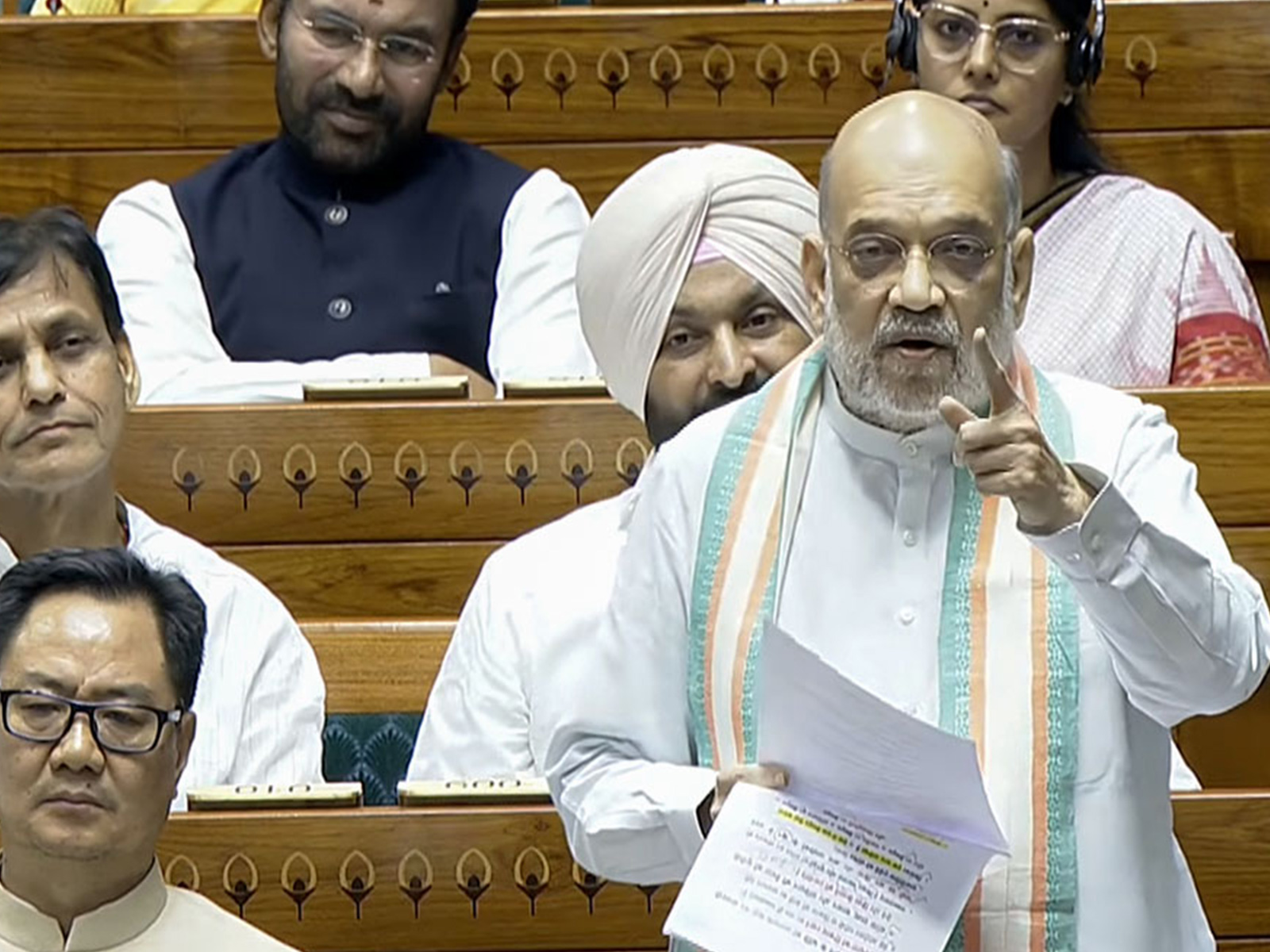
Rahul Gandhi expected to speak during discussion
Leader of Opposition in the Lok Sabha Rahul Gandhi is expected to address the House during the proceedings, particularly in connection with the discussion surrounding the anti-paper-leak legislation.
The debate is likely to provide the Opposition with an opportunity to question the government’s approach to examination reforms and recent controversies affecting students and candidates. The issue has emerged as a politically sensitive subject, with opposition parties demanding greater accountability and stronger safeguards to prevent irregularities in major public examinations.
The discussion could also become a focal point of the day’s parliamentary proceedings, particularly as the government seeks to move forward with legislation aimed at strengthening the legal framework against unfair practices.
Parliament’s legislative agenda remains wide-ranging
Wednesday’s business reflects the government’s broader legislative priorities during the Monsoon Session. Apart from the bills scheduled for introduction and consideration, several Union ministers are expected to place official papers and documents related to their respective ministries before the House.
The proceedings will include matters concerning portfolios such as Earth Sciences, Electronics and Information Technology, Communications and Rural Development, among others.
The Lok Sabha is also expected to consider a motion seeking additional time for a Joint Committee to submit its report on the Constitution (One Hundred and Twenty-Ninth Amendment) Bill, 2024, and the Union Territories Laws (Amendment) Bill, 2024. The proposed extension would allow the committee to present its report during the Winter Session of Parliament in 2026.
Several statements relating to the implementation of recommendations made by parliamentary standing committees are also scheduled. These include matters concerning fake news, the sugar industry, and science and technology grants.
Birth and death records at the centre of proposed reform
The proposed Registration of Births and Deaths (Amendment) Bill, 2026, is expected to draw attention because of the central role that civil registration records play in governance.
Accurate registration of births and deaths is essential for maintaining reliable demographic data and ensuring that public authorities have updated information about population trends. Such information is used in areas ranging from public health and education to social welfare, infrastructure planning and the delivery of government programmes.
A modern and streamlined registration system can also help reduce administrative delays and improve coordination between government departments. At the same time, any changes to the system are likely to be examined closely by lawmakers because birth and death records can have wider implications for identity documentation and access to public services.
The introduction of the amendment bill therefore represents an important step in the government’s effort to update the legal framework governing civil registration. The detailed provisions of the legislation and the government’s rationale behind each proposed change are expected to become clearer as the bill is formally introduced and discussed in Parliament.
Political tensions continue during Monsoon Session
The latest legislative developments come at a time when Parliament’s Monsoon Session has been marked by intense political exchanges and disruptions. Opposition parties have raised several issues and demanded discussions on matters they consider important, while the government has emphasised the need for Parliament to function productively and consider its legislative agenda.
Against this backdrop, the introduction of the birth and death registration bill, along with the examination reform legislation and the Supreme Court judges bill, is expected to make Wednesday’s proceedings closely watched.
The government’s ability to advance its legislative agenda will depend not only on the substance of the proposed bills but also on the extent to which the two Houses are able to conduct uninterrupted business. Opposition parties are expected to scrutinise the government’s proposals and raise concerns on issues they believe require greater parliamentary discussion.
For the government, the day’s agenda represents an opportunity to move forward with several significant legislative measures. For the Opposition, the debates provide a platform to question policy decisions, seek accountability and press for discussions on issues affecting citizens.
The proceedings in the Lok Sabha will therefore be closely monitored as the government seeks to introduce the Registration of Births and Deaths (Amendment) Bill, 2026, while simultaneously taking forward legislation related to examination malpractice and the judiciary.